 King County
 Why Siding Repair Looks Different on Queen Anne Hill
Queen Anne sits on one of Seattle's defining hills, and that elevation changes how weather hits a house here compared to a flatter lot elsewhere in King County. Homes higher on the hill catch wind and driving rain with less to break it up before it arrives, while homes lower on the slope or tucked against neighboring structures see a gentler version of the same storm. The neighborhood's housing stock is a genuine mix — older homes built in the early and mid-20th century sit alongside newer construction and remodels, which means siding age, material, and condition vary block to block far more than in a newer subdivision built all at once.
That variation is exactly why siding repair on Queen Anne needs a real inspection rather than a generic estimate. A crack or a soft spot can mean very different things depending on how old the siding is, what it's made of, and which direction that wall faces. This page covers what actually damages siding in this part of King County, how a correct repair is diagnosed and scoped, and why hiring a crew that already works this hill — instead of one learning it on your project — changes the outcome.
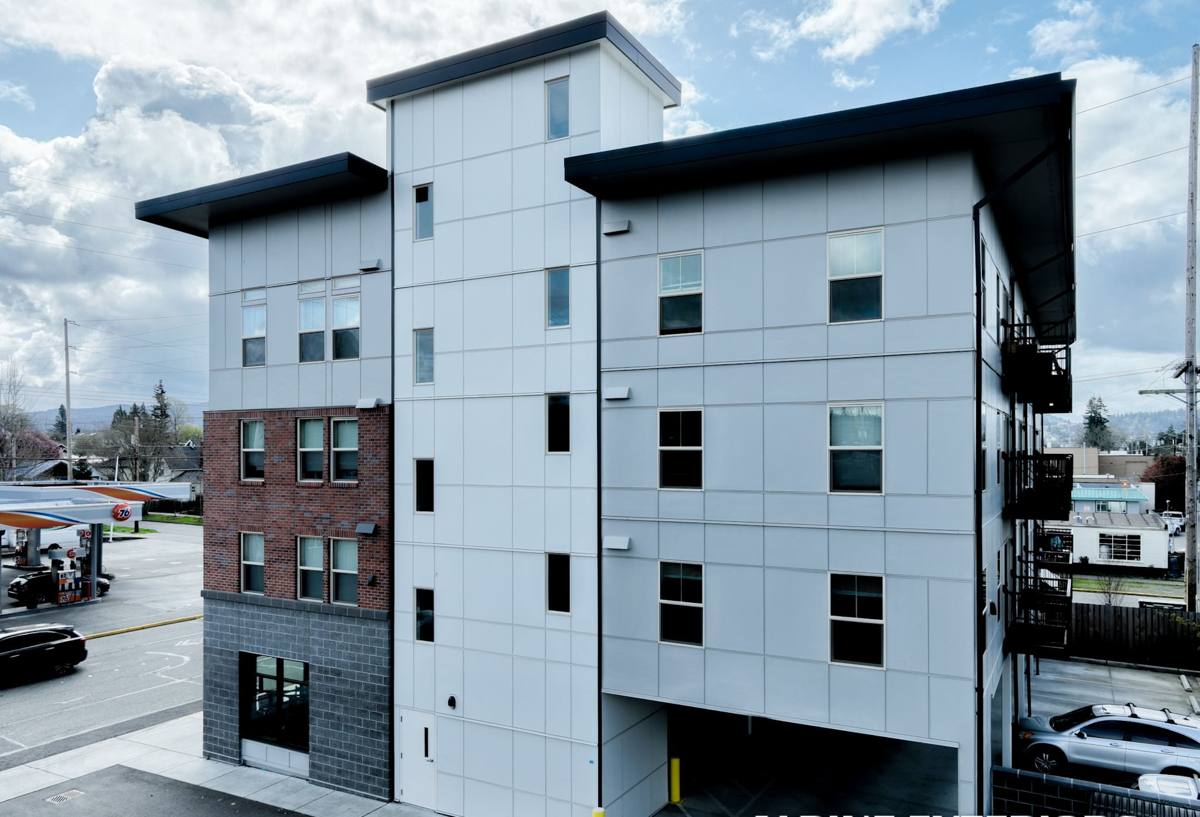
What Actually Damages Siding on Queen Anne
Salt Air Off Puget Sound
Queen Anne's elevation and proximity to Puget Sound mean homes here sit in air that carries a mild salt content, especially on west- and northwest-facing walls with a clearer path toward the water. That salt content settles on siding and fasteners continuously, not just during storms, and it works on unprotected materials and exposed metal over years rather than months. It's a slower kind of damage than a single bad storm — chalking, dulling finishes, and corroding fasteners that show up gradually and get written off as normal aging when they're actually accelerated by this specific exposure.
Driving Rain and Hillside Wind Exposure
Wind moving up and over Queen Anne Hill picks up speed compared to a sheltered inland lot, and that extra force drives rain into siding laps, trim joints, and window flashing harder than the same storm would hit a flatter property. The result is uneven wear across a single house — the wall taking the brunt of prevailing weather often shows problems years before the sheltered sides of the same home. Any repair plan that treats all four walls the same, without accounting for which ones actually take the weather, is starting from the wrong assumption.
A Long Moss and Mildew Season
King County's marine climate keeps humidity elevated and surfaces damp for much of the year, and Queen Anne's tree cover and shaded lots add to that in spots. Moss and mildew don't need much — just a surface that holds moisture instead of shedding it, and enough uninterrupted damp time to establish. Once moss gets a foothold at a siding lap or trim joint, it holds water against the material longer than an open, well-drained surface would, which turns a cosmetic issue into a moisture problem if it's left alone through more than one wet season.
Original or Aging Siding Nearing the End of Its Life
Because so much of Queen Anne's housing stock predates the last couple of decades, a fair amount of the siding repair work here involves original material — wood, older engineered products, or early vinyl — that's simply reaching the end of what it was built to do. Repair still makes sense for a lot of that siding, but knowing whether a given wall has years of useful life left or is failing broadly changes what an honest repair recommendation looks like.
Cosmetic Wear vs. Underlying Damage
Not every mark on a wall means the same thing, and telling cosmetic wear apart from real damage is the first job of any honest repair estimate.
| Symptom | Usually Cosmetic | Often Underlying Damage |
|---|---|---|
| Faded or chalky paint finish | Yes — sun and weathering | Only if the substrate underneath is also soft |
| Moss or algae on siding laps | Cosmetic if surface-level | Can trap moisture against the wall if left untreated |
| Hairline cracking at board ends | Sometimes — minor movement | Often — moisture entry point if joints are open |
| Soft or spongy siding to the touch | No | Yes — rot or saturation, needs attention |
| Bubbling or peeling paint | Rarely on its own | Usually — moisture working from behind the surface |
| Gaps at trim, corners, or window flashing | No | Yes — active moisture path, address promptly |
Cosmetic wear can usually wait for routine maintenance. Anything pointing to moisture behind the siding — softness, bubbling paint, open joints at flashing — shouldn't sit on a list for next season, since that's the category of problem that gets more expensive the longer it's left alone.
How We Diagnose Siding Before Recommending Repair
A repair estimate that's actually useful starts with a real inspection, not a guess from the curb. That typically includes:
- Checking siding by wall orientation, since the side taking prevailing wind and rain often tells a different story than a sheltered wall on the same house
- Probing suspect areas for softness that indicates moisture intrusion, not just a visual scan
- Inspecting trim, corner boards, and window and door flashing, since these transitions are where most siding failures actually start
- Looking for moss or organic buildup at laps and joints and assessing whether it's surface-level or holding moisture against the material
- Identifying the existing siding material and, where it's not Hardie, being upfront about its remaining service life
- Checking fastener condition, especially on walls with more direct salt air exposure
We walk through what we find honestly — what needs attention now, what can be watched, and what's purely cosmetic — before recommending a scope of work.
Repair vs. Replace: How That Decision Actually Gets Made
Homeowners often assume any siding problem means a full re-side, or the opposite — that a patch will always hold. Neither assumption is reliable on its own. The factors that actually drive this decision:
- How localized the damage is. A few damaged boards around a single flashing failure is usually a straightforward repair. Moisture damage spread across a whole wall is a different conversation.
- What the existing material is. Original wood, older vinyl, or aging engineered siding may be past the point where matching and patching makes long-term sense, even if the immediate damage is small.
- How many wet seasons the problem has already been through. Damage that's been sitting through more than one King County winter is usually further along than it looks from outside.
- Whether the wall's overall exposure calls for a different long-term answer. A heavily exposed wall that's had repeat problems may be a better candidate for replacement with a material built for that exposure than for another round of patching.
We'll give a straight answer on which category a given wall falls into, including when a full re-side of just the problem elevation is the more sensible option, rather than defaulting to whichever job is bigger.
What a Correct Repair Involves
Matching Materials to What's Already There
Repairing siding means working with what's already on the wall. If the home has James Hardie fiber cement, we match profile, exposure, and color for a repair that blends in rather than reading as a patch. If the existing siding is wood, vinyl, or another product, we'll be direct about it: we can often repair or replace a damaged section in kind, but where a wall is showing broad failure rather than an isolated issue, our honest recommendation is usually to move that wall — or eventually the house — to Hardie rather than keep matching a product we don't install on new work and have seen struggle with this exact climate.
Correct Flashing and Moisture Detailing, Not Just a Patch
A repair that only replaces the visible damaged boards without correcting the flashing or drainage detail behind them tends to fail again in the same spot. On a hillside wall taking direct wind-driven rain, that detailing matters more than it would on a sheltered lot, and it's the step that's easiest to skip on a quick patch job.
Addressing the Cause, Not Just the Symptom
Soft siding is a symptom. A gap at a window flashing, a failed sealant joint, or moss holding moisture against a lap is usually the cause. We trace the actual source of moisture intrusion before closing up a repair, because replacing the damaged material without fixing what let water in just resets the clock on the same problem.
New Material Goes In to Hardie's Spec
Any James Hardie material we install as part of a repair goes in to the same fastener spacing, clearance, and joint detailing as new construction. A repair patch isn't a lesser scope — it's held to the standard that lets the rest of the wall keep performing the way it's engineered to.
Maintenance That Extends a Repair's Lifespan
- Rinse siding periodically, especially on walls facing prevailing wind, to keep salt residue and organic buildup from working into the surface
- Keep gutters and downspouts clear so runoff isn't sheeting down siding it wasn't meant to handle
- Trim back plants and trees that trap moisture against siding or keep a wall from drying out between rain events
- Check caulking and sealant at trim, corners, and window flashing once a year, since these are the first places a repair can reopen
- Address soft spots, bubbling paint, or new gaps right away rather than waiting for the next inspection
- Remove moss at siding laps promptly instead of letting it establish through another wet season
Why It Matters That We Already Work Queen Anne
A crew that mostly does repair work on flatter, more sheltered King County properties can still do competent work here, but Queen Anne has variables that come up more often on this hill than elsewhere in the county — wind exposure that changes meaningfully by elevation and orientation, an older housing stock where the existing siding material isn't always obvious from the street, and access considerations on steep lots and narrow setbacks that are common on this terrain. Working this neighborhood regularly means we're not guessing at those variables or figuring them out mid-project. We know what a wind-exposed wall on this hill actually needs, how to spot which original siding is a good repair candidate and which isn't, and how to scope a job around the access realities of a hillside lot.
That familiarity also means a more accurate first estimate, with less back-and-forth once work is underway, because the inspection accounted for how this specific hill behaves rather than applying a generic King County checklist to it.
Get an Honest Look at Your Siding
Whether you're dealing with a specific problem — a soft spot, storm damage, moss that keeps coming back — or just want a straight read on where your siding stands, we're glad to walk the exterior and explain what we find plainly, including if the answer is "this doesn't need much yet." Reach out below for a free, no-pressure estimate.