 King County
 Why Rainier Valley Decks Wear Out Faster Than You'd Expect
A deck in Rainier Valley lives a harder life than the same deck would in a drier climate. King County's long wet season means most decks here spend months at a time damp, shaded, and slow to dry between rains. Add mature tree cover common in this part of Seattle, and you get decks that stay in shadow for large stretches of the day even on clear afternoons — which slows drying even further and gives moss and algae exactly the conditions they need to take hold.
The region's marine air adds another layer of wear. Moisture in the air corrodes exposed fasteners, connectors, and hardware over time, even on decks that look fine from a few feet away. Combined with driving, wind-blown rain that gets up under railings and behind ledger boards, it's a combination that finds every weak point in a deck's construction — usually the joints, fastener points, and any spot where water can collect instead of shed.
None of this means a deck is doomed. It means a deck built or repaired for this specific climate needs the right materials, the right flashing details, and fasteners rated for damp, coastal-influenced conditions. A repair that would hold up fine in a dry inland climate can fail here in a couple of seasons if it skips those details.
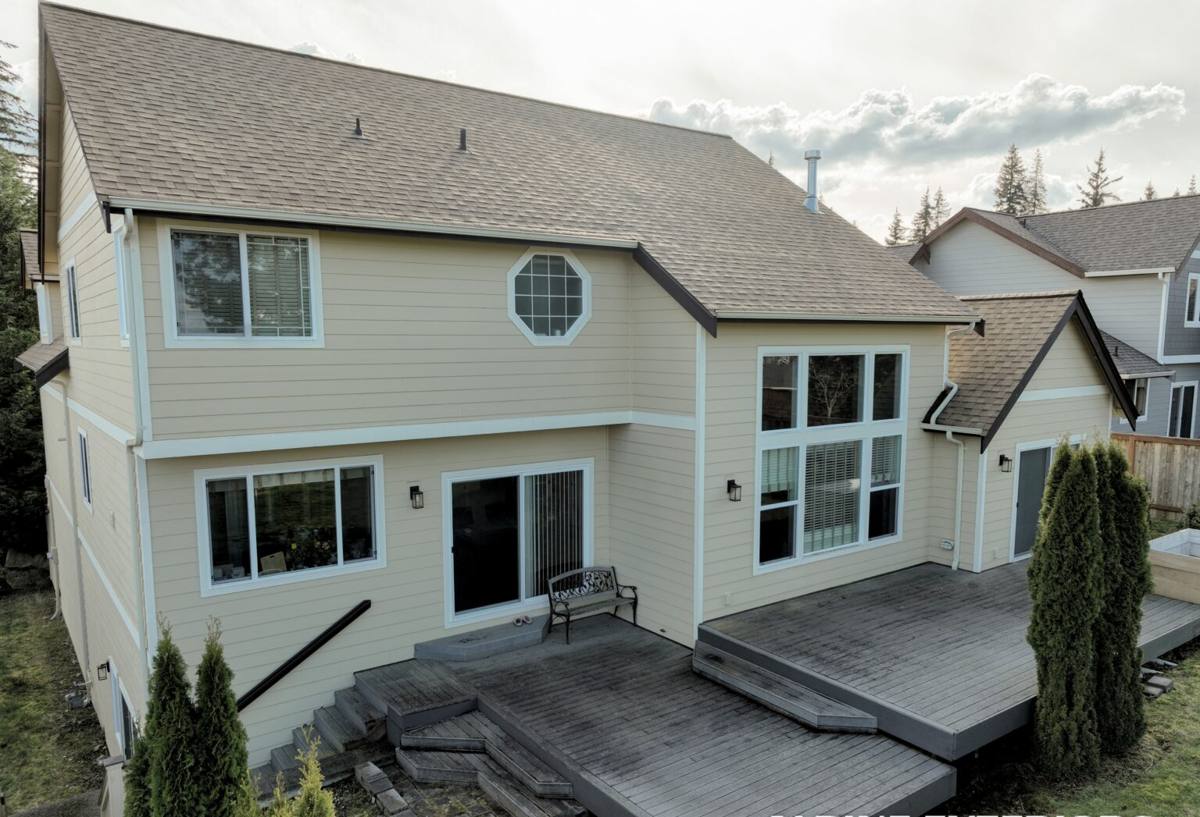
Signs Your Deck Needs Repair — Not a Full Rebuild
Soft, Spongy, or Discolored Decking
Press on the deck boards, especially near the house and along the edges. Soft or spongy spots mean moisture has gotten into the wood and rot has already started. Dark staining or a slightly sunken feel are early warnings — catching this before it spreads is usually the difference between a repair and a rebuild.
Trouble at the Ledger Board
The ledger board — where the deck attaches to the house — is the single most important structural point on most decks, and it's also the point most exposed to water running off the house. Gaps, staining, or soft wood where the deck meets the siding are a serious sign, since a failing ledger connection is a safety issue, not just a cosmetic one.
Rust Streaks and Loose Fasteners
Rust bleeding out around nail or screw heads means the fasteners are corroding, which happens faster here than in drier parts of the country. Wobbly railings, popped nails, and screws that spin freely without biting are all signs that the original hardware wasn't rated for long-term exposure to our climate.
Persistent Moss, Algae, or Slick Spots
Some moss growth on any deck in this region is normal. But heavy, recurring growth that comes back within weeks of cleaning usually means water isn't draining or drying the way it should — often because of board spacing, a low spot, or shade that a repair can address.
What a Proper Deck Repair Actually Involves
A repair that's done right addresses the cause, not just the visible damage. That usually means looking past the boards you can see to the framing and connections underneath them.
- Structural framing: Joists, beams, and posts are checked for rot, splitting, and proper spacing before anything else is touched.
- Ledger board and flashing: Any water intrusion at the house connection is traced to its source and re-flashed correctly, not just caulked over.
- Fasteners and hardware: Corroded nails, screws, and joist hangers are replaced with hardware rated for wet, coastal-influenced exposure.
- Decking boards: Damaged boards are replaced individually where possible, matched as closely as practical to the surrounding material.
- Railings and stairs: Checked for both cosmetic wear and the structural stability that matters for safety.
- Drainage and airflow: Board spacing and any low spots that trap water are corrected so the repair doesn't just fail again next wet season.
Skipping any of these steps is how a "quick fix" ends up needing to be redone in a year or two. It's also why a fair number of the repair calls we get in Rainier Valley are for decks that had cosmetic work done previously — new boards laid over framing that was never actually inspected.
Repair or Replace? How to Think About the Decision
Not every deck problem needs a full rebuild, and not every deck is worth repairing indefinitely. The honest answer depends on how much of the structure is still sound.
| Factor | Leans Toward Repair | Leans Toward Replacement |
|---|---|---|
| Framing condition | Joists and beams are solid, damage is isolated | Widespread rot in the structural framing |
| Ledger board | Sound, properly flashed once repaired | Compromised connection to the house |
| Age of the deck | Newer construction, isolated failure point | Original materials near or past typical service life |
| Extent of damage | A few boards, posts, or hardware points | Damage spread across most of the structure |
| Budget goal | Extend usable life at lower cost now | Avoid paying for repairs on a deck nearing the end anyway |
As a general range, straightforward board and hardware repairs tend to run in the low hundreds to low thousands of dollars depending on scope, while framing or ledger repairs cost more because of the labor involved in accessing and correcting them properly. A full rebuild is a different budget conversation entirely. We'll always tell you plainly which category your deck falls into — there's no benefit to us in talking a homeowner into a rebuild that isn't needed, or into a repair that won't hold.
How Our Deck Repair Process Works
1. On-Site Inspection
We look at the deck from the ground up — framing, ledger connection, fasteners, and surface boards — not just the parts that are visible from the yard. This is also when we check for the shade and drainage patterns that drive moss growth on your specific property.
2. Clear, Written Scope and Estimate
You get a plain description of what's actually wrong, what we recommend fixing, and what it will cost — broken out so you can see what's driving the price. If there's a lower-cost option that will genuinely hold up, we'll tell you.
3. The Repair Work
We replace what needs replacing, correct the flashing and drainage issues causing the damage, and use fasteners and connectors suited to King County's wet climate rather than whatever was on hand originally.
4. Cleanup and a Straight Answer on Maintenance
We leave the site clean and walk you through what to expect going forward — including realistic guidance on cleaning and sealing schedules for this climate, not a generic maintenance sheet.
Materials and Hardware: What We Use and Why
Material choice matters more here than in drier regions, because the margin for error with moisture is smaller. For framing repairs, we use lumber rated for ground or weather exposure as appropriate, and we don't cut corners on flashing at the ledger board — that single detail prevents more repeat repair calls than any other.
For fasteners and hardware, we use corrosion-resistant, exterior-rated products rather than standard hardware. It costs a little more up front, but in a climate with this much sustained moisture and marine air influence, mismatched or under-rated hardware is one of the most common reasons we see repeat failures within a few years. For decking boards themselves, whether your deck is wood or composite, we match materials and fastening methods to what's already there when that's the sound choice, and we'll say so plainly if mixing materials isn't a good idea for your specific deck.
Keeping Moss and Rot From Coming Right Back
A repair is only worth doing if it lasts, and in this climate that means a little routine upkeep. None of it is complicated, but skipping it is how moss and soft spots come back within a season or two.
- Sweep debris and leaves off the deck regularly, especially in shaded areas where moisture lingers longest
- Clean moss and algae buildup before it gets thick enough to hold moisture against the wood
- Check that gaps between boards stay clear so water can drain instead of pooling
- Inspect the ledger board area at the house connection once a year for staining or gaps
- Re-seal or re-stain wood decking on the schedule appropriate for its exposure, not just when it looks worn
- Trim back overhanging branches where practical to reduce shade and debris buildup
Why Hire a Crew That Already Works in Rainier Valley
Deck repair isn't identical everywhere in King County, and a crew that mostly works drier, more open sites can miss the specific patterns that show up in a shaded, tree-covered Seattle neighborhood like Rainier Valley — where moss returns faster, framing stays damp longer, and certain corners of a property simply get less sun no matter what you do. Knowing which spots on a typical local property tend to fail first means less time spent diagnosing and more time spent fixing the actual problem.
It also matters for getting the details right the first time — correct flashing at the ledger, hardware rated for our specific combination of rain and marine air, and a repair scope that's honest about what's needed rather than padded or pared down to hit a number. A repair that's done right the first time, by a crew that understands why King County decks fail the way they do, costs less over the life of the deck than one that has to be revisited every couple of years.
If your deck has soft spots, recurring moss, loose railings, or you're just not sure whether it needs a repair or something more, we're happy to take a look. The estimate is free, there's no pressure either way, and you'll get a straight answer about what your deck actually needs — just fill out the form below to get started.