 King County
 What Rainier Valley's Climate Does to Siding
Rainier Valley sits inside the greater Seattle marine climate belt, which means siding here is dealing with a different set of stresses than siding in a dry inland climate. Moisture-laden air moves through the region for most of the year, driving rain comes in sideways during winter storms, and the combination of shade, humidity, and mild temperatures creates ideal conditions for moss and algae growth on anything that stays damp. Add in the salt-tinged marine air that rolls through the broader King County area off Puget Sound, and you have a climate that is genuinely hard on exterior building materials.
Wood-based siding products are the most vulnerable to this combination. Even a well-painted board absorbs moisture through end grain, seams, and fastener holes over time, and once moisture gets behind the surface, rot and delamination follow. Vinyl siding doesn't rot, but it flexes and gaps with temperature swings, giving wind-driven rain a path behind the panels. James Hardie fiber cement doesn't behave like either of those materials. It's an engineered product made from cement, sand, and cellulose fiber, and it simply does not absorb and swell the way wood-based products do. That's the core reason it holds up in a climate like this one, provided it's installed correctly — which is a bigger "if" than most homeowners realize.
Why This Company Installs Only James Hardie
We don't install LP SmartSide, vinyl, Cemplank, Allura, primed spruce, or cedar. That's not a marketing position — it's a standard we've held ourselves to because of what we've seen play out on homes in this climate over the years. Engineered wood products like LP SmartSide use a resin-treated wood strand core, which performs reasonably well in drier climates but is more sensitive to sustained moisture exposure at cut edges and joints than fiber cement is. Vinyl is inexpensive and low-maintenance in the short term, but it's a petroleum-based product that can warp, fade, and crack, and it offers essentially no fire resistance. Cedar and primed spruce are beautiful materials, but they demand a maintenance commitment — recoating, caulking, and moisture monitoring — that most homeowners underestimate until the first sign of rot shows up.
James Hardie fiber cement is non-combustible, which matters increasingly in the Pacific Northwest as wildfire smoke and ember exposure become a bigger part of the regional conversation. It carries a factory-applied ColorPlus finish that's baked on and warrantied separately from the substrate, so you're not relying on field-applied paint to protect the material. And Hardie engineers specific product formulations, including HZ5 versions, for climate zones like ours, which is a level of climate-specific engineering that most competing products simply don't offer. We'd rather install one product well than install five products adequately.
What a Correct James Hardie Installation Actually Involves
Fiber cement siding is only as good as the installation behind it. Hardie's own technical bulletins are detailed for a reason — most siding failures that get blamed on "the product" are actually installation failures. Here's what has to happen for the material to perform the way it's designed to.
Water-Resistive Barrier First
Before a single piece of siding goes up, the wall needs a continuous, correctly lapped water-resistive barrier. In a climate with as much driving rain as ours, gaps or improperly shingled house wrap are one of the most common root causes of moisture intrusion behind siding — and the siding itself gets blamed years later when the damage finally shows.
Flashing and Z-Flashing
Every horizontal joint, window head, and penetration needs proper flashing so water is directed out and away from the wall assembly rather than allowed to sit against a seam. This is detail work that takes longer and costs more in labor than skipping it, which is exactly why it gets skipped by crews working fast and cheap.
Fastening Pattern and Clearances
Hardie specifies exact fastener spacing, minimum clearance from the ground, roofline, and deck surfaces, and gaps at butt joints. Nailing too tight, fastening through both pieces at a joint, or setting boards too close to grade or a hard surface all void the warranty and set up long-term moisture problems, even though the mistake is invisible on installation day.
Caulking and Sealant Strategy
Not every joint should be caulked, and the ones that should need the right sealant applied correctly. Over-caulking traps moisture just as effectively as under-caulking lets it in. This is a judgment call that comes from experience with the product, not a generic caulk-everything approach.
James Hardie Product Lines for Rainier Valley Homes
Hardie makes several distinct product lines, and picking the right one is about matching the home's architecture and exposure, not just picking a look.
| Product | Best Use | What It Offers |
|---|---|---|
| HardiePlank Lap Siding | Most home styles, full re-sides | Traditional horizontal lap look, widest color and texture range, the most common choice in this region |
| HardieShingle | Accent gables, Craftsman and cottage-style homes | Staggered or straight-edge shingle profile without the moisture sensitivity of real wood shingles |
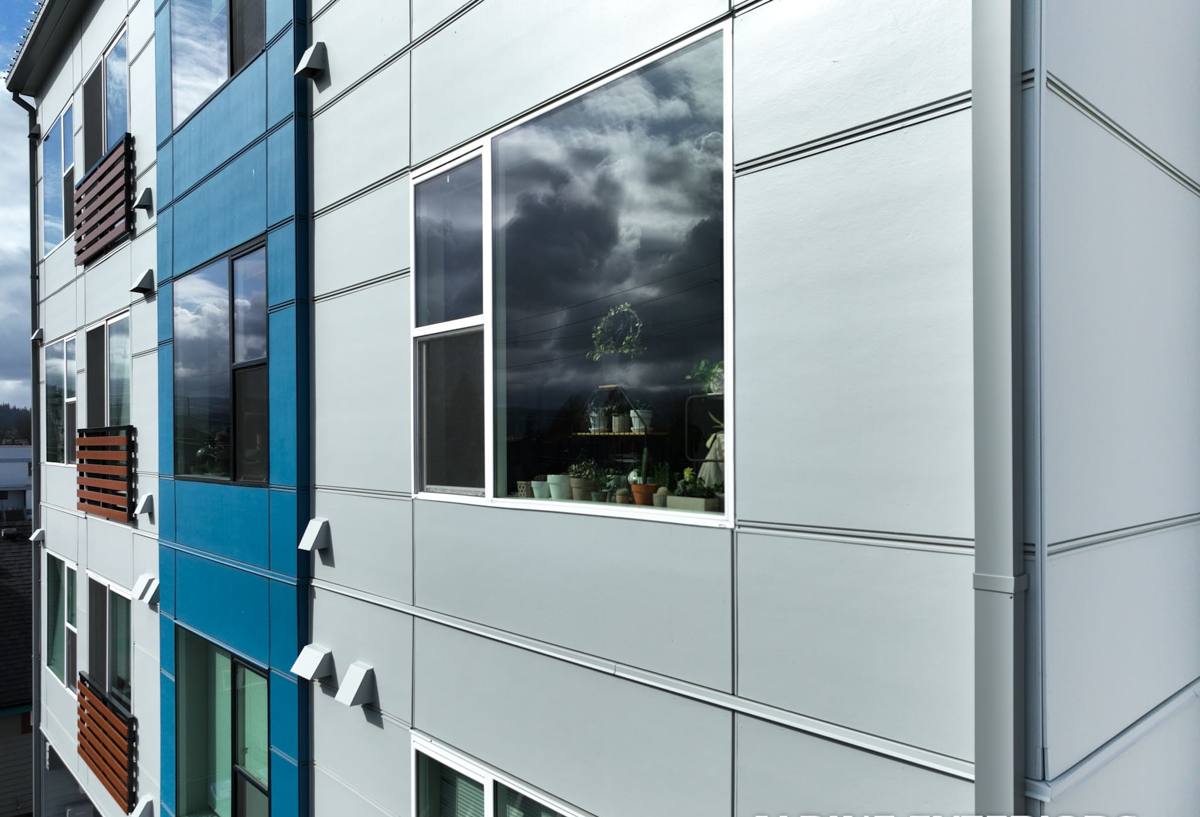
| HardiePanel | Modern facades, accent walls | Large-format vertical panels, often paired with battens for a clean contemporary look |
| HardieTrim | Corners, window and door surrounds, fascia | Matches the siding's durability so trim doesn't rot out faster than the field siding around it |
On a lot of Rainier Valley homes we see a mix — HardiePlank as the primary field material with HardieShingle on a gable end or HardieTrim replacing rotted wood trim around windows even when the rest of the siding is being kept. That kind of mixed approach only works if the crew is fluent in how the different product lines integrate at transitions, which is another reason we've narrowed our focus to one manufacturer's full system rather than stocking pieces from several brands.
Our Process, Start to Finish
Assessment and Moisture Check
We start by looking at what's actually happening behind the existing siding, not just what it looks like from the curb. On older homes especially, we're checking for soft sheathing, past water intrusion around windows and trim, and any signs that a previous repair was patched rather than properly flashed.
Tear-Off and Sheathing Repair
Existing siding comes off, damaged sheathing gets replaced rather than covered over, and the water-resistive barrier goes on fresh. This step is where a lot of hidden problems get found — and it's also where a rushed job cuts corners that won't show up for years.
Installation to Manufacturer Spec
Siding goes up following Hardie's fastening, clearance, and flashing specifications, not a generalized "how we've always done it" approach. This is what keeps the manufacturer's warranty intact and what actually determines how the siding performs in King County's wet season year after year.
Final Inspection and Warranty Registration
We walk the finished job looking specifically for the details that are easy to miss — caulk lines, corner treatments, clearances at grade and decks — and get the installation registered so the warranty coverage is active from day one.
What Affects the Cost of a Rainier Valley Siding Job
Every home is different, but the same handful of factors drive most of the cost variation we see on siding jobs in this area.
| Factor | Why It Matters |
|---|---|
| Condition of existing sheathing | Hidden rot found during tear-off means repair work before new siding can go on |
| Home size and wall complexity | More corners, gables, and dormers mean more cutting, flashing, and labor time |
| Product line and finish selection | HardieShingle accents and premium ColorPlus finishes cost more than standard lap profiles |
| Trim and accessory scope | Replacing trim, fascia, and soffit alongside siding adds material and labor but avoids mismatched future repairs |
| Access and site conditions | Tight lots, slopes, fencing, and landscaping affect how efficiently a crew can stage and work the job |
We don't quote a job over the phone based on square footage alone, because the sheathing condition and complexity of a given home genuinely change the scope. A walk-through gives both sides an honest number instead of a low estimate that grows once work starts.
Living with Hardie Siding Through King County's Moss Season
Even a well-installed, moisture-resistant material still lives outside in a climate that grows moss and algae readily. Fiber cement doesn't feed rot the way wood does, but shaded, north-facing walls and areas under tree cover can still develop surface growth over time, especially through the long wet stretch of fall and winter. The good news is that this is a surface-level cosmetic issue on Hardie siding, not a structural one — a periodic soft wash keeps it looking clean without damaging the ColorPlus finish, and there's no recoating or resealing schedule to keep up with the way there is on wood or field-painted siding. Keeping gutters clear and trimming back vegetation that shades and dampens a wall section goes a long way toward slowing regrowth between cleanings.
Why a Crew That Already Works Rainier Valley Matters
Siding installation quality depends heavily on details that are specific to the conditions a home actually faces — how much rain exposure a given wall gets, how a lot's grading affects water runoff at the foundation line, and how King County's permitting and inspection process works for exterior work. A crew that's worked this area regularly isn't guessing at any of that. They know what moisture problems tend to look like on homes of a given age and construction type in this part of the county, and they're not learning King County's process for the first time on your project. That local familiarity shows up in fewer surprises during tear-off and a smoother permitting and inspection process from start to finish.
Questions to Ask Before You Hire
- Are you a certified James Hardie installer, and can you explain your fastening and clearance practices in detail?
- Will you inspect and repair sheathing before installing new siding, not just cover what's there?
- What water-resistive barrier and flashing approach do you use at windows, doors, and horizontal joints?
- Do you register the manufacturer's warranty after installation, and what does that warranty actually cover?
- Can you provide a written, itemized estimate rather than a rough square-footage price?
- Have you worked on homes in this part of King County before, and do you know the local permitting process?
A contractor who can answer these clearly, without hedging, is a contractor who actually understands the product and the climate it's going into.
If you're weighing a siding replacement on a Rainier Valley home and want a straight answer about what your walls actually need, we're happy to take a look and walk you through it. Reach out for a free, no-pressure estimate using the form below.