 King County
 Why Sammamish Decks Wear Differently Than You'd Expect
Sammamish sits on a wooded plateau between Lake Sammamish and Lake Washington, and that setting shapes how decks age here. The tree canopy that makes the area attractive also means many decks spend a good part of the day in shade, especially on lots backing up to greenbelts or mature landscaping. Shade plus King County's long, wet winter season is a slow-motion recipe for trouble: moisture sits on deck boards and framing longer than it would on a sun-exposed deck across a more open neighborhood, and that extra dwell time is what drives rot, mildew, and moss growth.
Add in the driving rain that comes through the Puget Sound region several months a year, and you get water finding its way into every gap, fastener hole, and seam a deck has. It's not usually one dramatic storm that damages a deck around here — it's the cumulative effect of one wet season after another, working on the same weak points until they finally fail. A deck that looked fine in July can show real structural softness by the following spring if those weak points went unaddressed.
We've repaired enough decks in this part of King County to know the pattern: problems cluster where water collects and can't dry out, not evenly across the whole structure. That's good news, because it means most repairs can target specific areas rather than requiring a full teardown — if you catch things early enough.
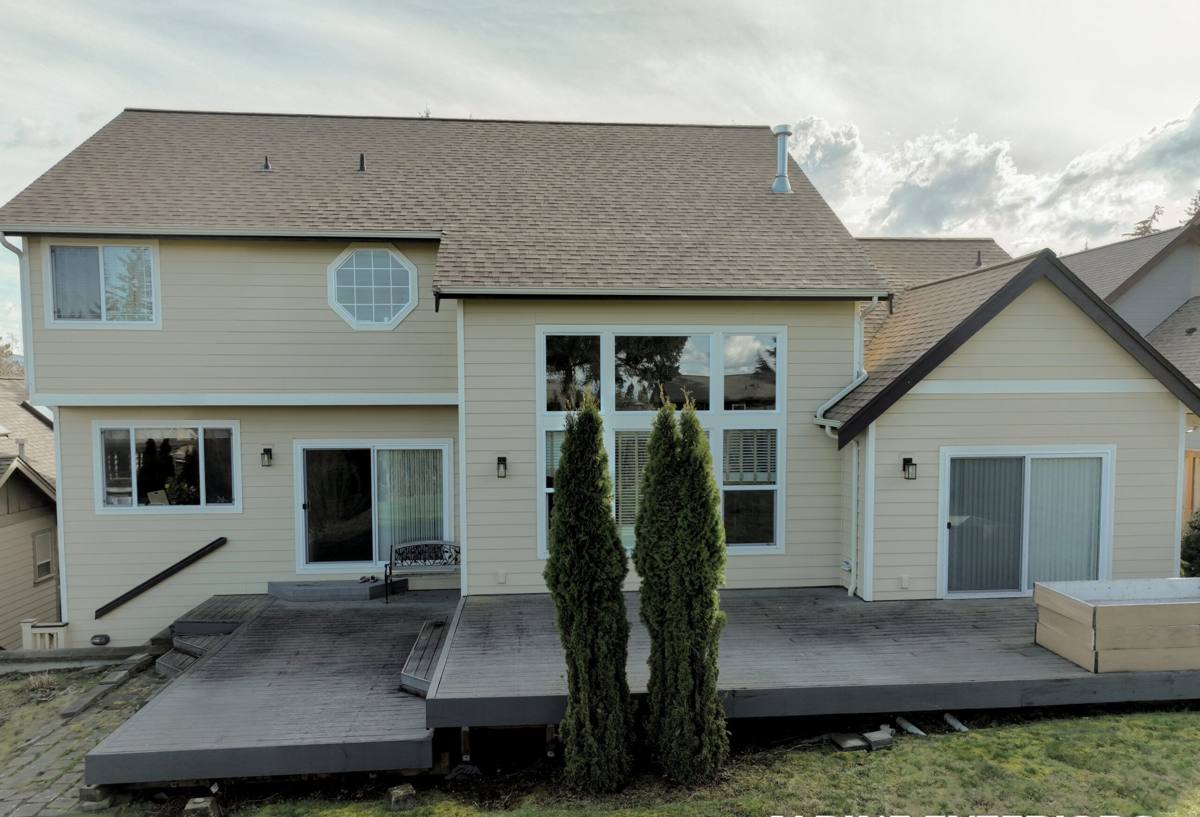
Signs Your Sammamish Deck Needs Repair, Not Just Cleaning
A lot of homeowners pressure-wash a deck, see it look better for a season, and assume the underlying wood is fine. Surface cleaning and structural health are two different things. Here's what actually tells you a deck needs repair work:
- Boards that feel spongy, springy, or noticeably softer underfoot in one area compared to the rest
- Visible gaps opening up between boards, or boards that have cupped or crowned
- Rust streaks around fasteners, or screw heads that have popped up or stripped out
- Moss or dark green-black staining that keeps coming back within weeks of cleaning, especially on the shaded side of the deck
- Railings or posts that wiggle more than they should when you lean on them
- Any sign of rot at the ledger board — where the deck attaches to the house — including staining on the siding above it
- Stair stringers that flex or crack under normal foot traffic
- Gaps or separation where support posts meet footings, or footings that look like they've shifted
The ledger board deserves special attention. It's the single most common source of serious deck failure nationally, and it's also one of the hardest problems to spot without pulling back flashing or siding, because the damage often starts on the hidden side of the board. If your deck is more than 10-15 years old and you've never had the ledger connection inspected, that's worth doing before it becomes an emergency.
What Moss Season Actually Costs You
Moss isn't just cosmetic. Once it establishes on decking or framing, it holds moisture against the wood constantly, which accelerates decay far faster than open exposure to rain would. In shaded Sammamish yards, moss can take hold within a single wet season if boards aren't cleaned and, more importantly, if the deck doesn't have enough airflow underneath to dry out between rain events. A repair that doesn't address drainage and ventilation is a repair that invites the same moss problem back within a year or two.
What a Correct Deck Repair Actually Involves
"Deck repair" covers a wide range of work, and the honest answer is that it depends entirely on what's actually failing. A correct repair starts with an inspection, not a quote based on square footage. We look at four systems separately, because they fail independently:
Ledger and Attachment
The connection between deck and house has to be checked for proper flashing, correct fastener type and spacing, and any water intrusion behind the rim joist. If flashing was installed incorrectly or is missing — common on older decks — that gets corrected as part of the repair, not just patched over.
Framing and Support
Joists, beams, posts, and footings carry the structural load. Any joist with rot, splitting, or insect damage gets sistered (reinforced with new lumber alongside it) or replaced outright, depending on severity. Posts that have settled or footings that have heaved from freeze-thaw cycles need to be reset, not just shimmed.
Decking and Railings
This is the visible layer — the boards you walk on and the railings you lean against. Individual board replacement is straightforward when the framing underneath is sound. Railings are a safety item as much as a cosmetic one; code requirements for baluster spacing and railing height come into play on any repair that touches the railing system.
Fasteners and Hardware
Corroded or undersized fasteners are a quiet cause of deck failures. Structural connectors — joist hangers, post bases, hurricane ties where used — need to be rated for the load and compatible with the lumber treatment. Mixing incompatible metals accelerates corrosion, which is a mistake we see on older repairs done without attention to hardware compatibility.
Repair or Replace? How We Help You Decide
Not every deck problem calls for a full rebuild, and not every deck is worth repairing piece by piece. The decision usually comes down to how much of the structural system — not just the surface boards — is still sound.
| Factor | Leans Toward Repair | Leans Toward Replacement |
|---|---|---|
| Ledger board condition | Solid, properly flashed | Rotted or improperly flashed at the house connection |
| Framing (joists, beams, posts) | Isolated problem areas | Widespread rot or undersized for current code |
| Footings | Stable, no visible movement | Heaved, cracked, or below current frost depth requirements |
| Decking boards | Scattered bad boards among otherwise sound ones | Majority of boards cupped, splitting, or soft |
| Age of structure | Under 15-20 years, built to a reasonable standard | Older structure with outdated or unknown construction methods |
| Deck size/layout goals | You're happy with the current footprint | You want a different size, shape, or added features |
As a general rule, if the framing and footings are sound, repair is almost always the more cost-effective path, and it's what we recommend. If those foundational elements are compromised, patching the visible layer just delays a bigger problem and can waste money on materials that will need to come back out later.
Materials: What We Repair and How We Match Them
Wood Decking (Cedar and Pressure-Treated)
Wood is still common on Sammamish decks, and repairs need to account for weathering. A brand-new cedar board next to five-year-old weathered cedar will stand out sharply until it weathers in, which typically takes a season or two. We can talk through options for blending new material or refinishing the whole surface if visual consistency matters to you.
Composite and PVC Decking
Composite decking handles King County's wet climate well in terms of rot resistance, but it comes with its own repair considerations — many composite boards use hidden fastener systems, and matching an older composite color exactly can be difficult if the product line has been discontinued or the boards have faded. We'll be upfront if an exact match isn't realistic so you can decide whether a partial refresh or different approach makes more sense.
Railing Systems
Whether your railings are wood, metal, cable, or composite, repairs need to preserve code-compliant spacing and secure post attachment. We don't cut corners on railing safety to save time, since this is one area where a shortcut has real consequences.
Our Deck Repair Process
- On-site inspection. We walk the full deck, check underneath where accessible, test the ledger connection, and probe suspect boards and framing for soft spots.
- Honest scope and estimate. You get a clear picture of what's failing, what's still sound, and what repair or replacement will actually cost — no inflated scope to pad the job.
- Repair work. We address problems in the right order: structural issues first (framing, footings, ledger), then decking and railings, then fasteners and hardware.
- Drainage and ventilation check. Given how much moisture and shade Sammamish decks deal with, we make sure water can actually shed off the deck and air can move underneath it, since that's what prevents the next round of rot and moss.
- Final walkthrough. We go over the finished repair with you, including any maintenance steps that will extend its life.
Keeping a Repaired Deck in Good Shape Through the Wet Season
A good repair buys you years, but King County's climate doesn't let any deck coast on a one-time fix. A little seasonal attention goes a long way:
- Clear leaves and debris from between boards regularly, especially in fall — trapped debris holds moisture against the wood
- Keep gutters and downspouts near the deck clear so runoff isn't dumping directly onto or under it
- Sweep or rinse off moss growth as soon as you see it start, rather than waiting until it's established
- Check fasteners and railings for looseness once a year, ideally before the wet season starts
- Reseal or refinish wood decking on the manufacturer's recommended schedule — skipping a cycle in this climate shows up fast
- Trim back vegetation that's shading or touching the deck surface, if that's a realistic option for your yard
What Happens If You Skip Maintenance
Decks that get no attention between repairs don't fail all at once — they degrade a little more each wet season until a small, cheap fix has turned into a structural one. Given how much moisture this area sees for a good chunk of the year, that timeline can move faster here than it would in a drier climate. The maintenance list above isn't about perfection; it's about not letting small problems compound.
Why Hiring a Crew That Already Works Sammamish Matters
A deck repair crew that mainly works drier, sunnier regions can miss the specific failure patterns that show up here — shaded framing that never fully dries, moss that returns despite cleaning, ledger boards that were flashed for a lighter rain load than King County actually delivers. We work throughout the county and see these patterns repeatedly, which shapes how we diagnose and repair decks in wooded, lake-adjacent neighborhoods like this one.
It also means we're realistic about timing. Wet-season scheduling, drying time for framing repairs before decking goes back down, and coordinating around King County permitting when a repair crosses into replacement territory are all things we plan for up front rather than discovering mid-project.
Get a Straight Answer About Your Deck
If you're not sure whether your deck needs a few boards replaced or something more involved, the best next step is having someone look at it in person — moisture damage isn't always visible from the surface. We offer free, no-pressure estimates for Sammamish homeowners: we'll walk the deck, tell you honestly what we find, and lay out your options without pushing you toward the most expensive one. Use the form below to get started.