 King County
 Why Deck Replacement Looks Different in Sammamish
Sammamish sits in one of the wetter corners of King County, tucked between the lake and the forested ridgelines that hold onto moisture long after the rest of the region has dried out. That geography matters when it comes to decks. Homes here deal with a long, low-angle rainy season, heavy tree cover that keeps boards shaded and damp, and the broader Puget Sound climate pattern that carries salt-tinged marine air across the county and accelerates corrosion in fasteners, flashing, and hardware. Add in a moss season that can run from October through May, and you have conditions that punish a deck built with the wrong materials or the wrong details a lot faster than they would in a drier climate.
A deck replacement here isn't just a cosmetic upgrade. It's an opportunity to fix the structural and drainage problems that caused the last deck to fail, and to build something that's actually matched to how wet this area stays for most of the year.
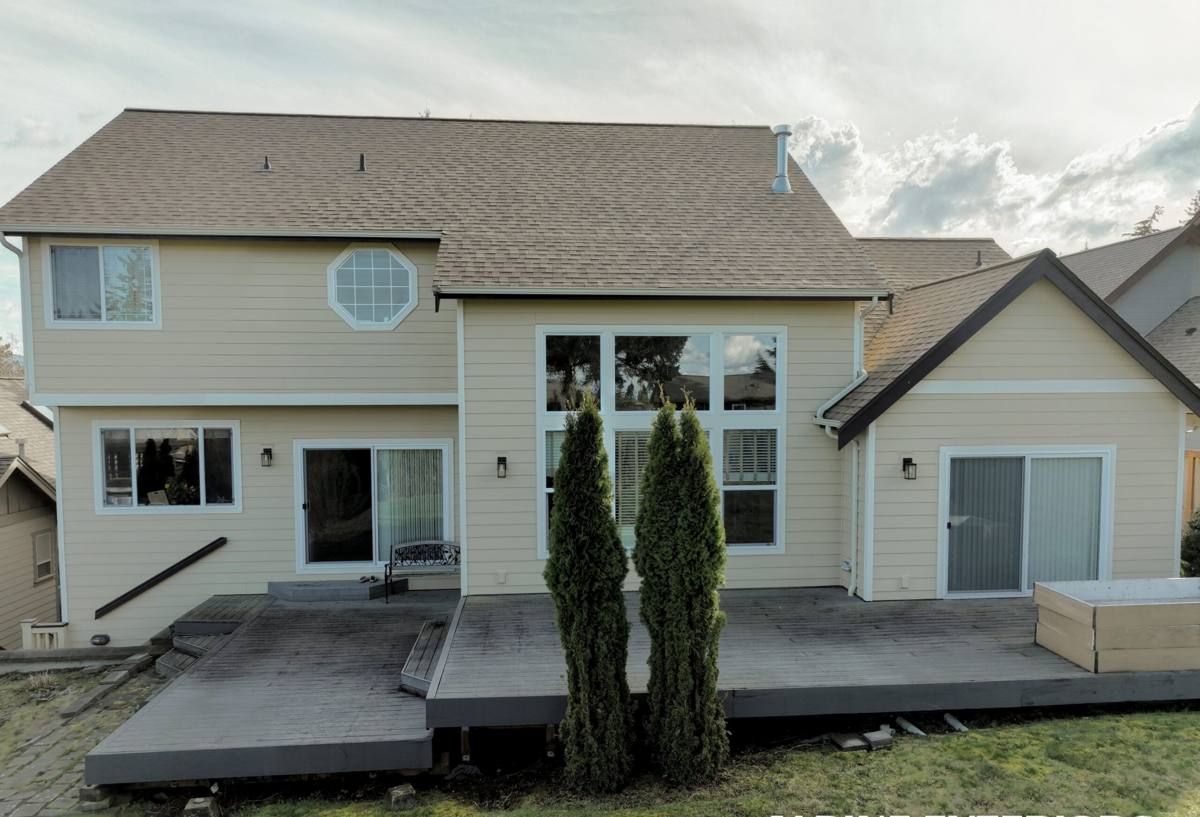
How King County's Climate Wears Down a Deck
Driving Rain and Standing Moisture
Wind-driven rain doesn't just fall straight down — it gets pushed sideways into ledger connections, under railings, and into any gap where flashing was skipped or installed poorly. Over years, that moisture works its way into framing lumber, and by the time it shows up as soft decking or a spongy stair stringer, the damage is usually already deep in the structure.
Moss and Organic Growth
A long moss season means algae and moss get a real foothold on any deck surface that doesn't drain and dry quickly. Moss holds moisture against the board surface, which speeds up rot in wood decking and can make composite surfaces dangerously slippery if they weren't installed with proper drainage and grooved or brushed-texture boards.
Corrosion from Marine Air
The marine influence that moves across King County brings a low level of salt in the air, even away from the immediate shoreline. Over a couple of decades, that's enough to corrode cheap fasteners, joist hangers, and structural screws — which is why hardware selection matters as much as the decking material itself.
Signs Your Sammamish Deck Needs Replacing, Not Just Repair
- Soft, spongy, or bouncy spots in the decking or near stair landings
- Visible gaps, cracking, or delamination where boards meet the ledger board against the house
- Rust staining around fasteners or joist hangers
- Persistent moss or dark staining that comes back within weeks of cleaning
- Railings that flex or wiggle when you lean on them
- A ledger board connection with no visible flashing, or flashing that's cracked and pulling away
- Support posts sitting directly on soil or a cracked, unlevel footing
If you're only seeing one or two of these, repair may still make sense. Once you're seeing several at once, especially anything involving the ledger connection or footings, replacement is almost always the more honest recommendation — patching a structure that's failing at multiple points just delays the same conversation a year or two down the road.
What a Correct Deck Replacement Involves
A deck that's actually built for this climate gets a few things right that are easy to skip and expensive to fix later:
Ledger Flashing Done Properly
The ledger board — where the deck attaches to the house — is the single most common failure point on Pacific Northwest decks. Correct flashing (typically a metal flashing under the siding paired with a self-adhering waterproof membrane) keeps rain from tracking behind the siding and into the rim joist. This step gets skipped or rushed more than almost any other part of deck construction, and it's the one that causes the most hidden rot.
Structural Hardware Rated for Wet Exposure
Joist hangers, structural screws, and post bases should be rated for ground contact and exterior exposure, with a coating designed to resist the corrosion that comes from sustained moisture and the region's marine air. Mixing incompatible metals — like the wrong screw in a coated joist hanger — sets up galvanic corrosion that eats through hardware years before it should fail.
Footings and Post Bases That Handle Wet Soil
King County code requires footings below frost depth with proper post bases that keep wood off the concrete and off the soil. In a lot of older decks, especially ones built or replaced without a permit, we find posts sitting directly on grade or on undersized pier blocks that have shifted over time.
Drainage Built Into the Structure
Sloping the surface slightly away from the house, spacing boards for airflow, and keeping any under-deck area ventilated all reduce how long moisture sits against the wood. This is especially important under shaded, tree-covered lots common around Sammamish, where surfaces can stay damp for days after a storm.
Choosing the Right Decking Material for This Climate
There's no single "best" decking material — the right choice depends on how much maintenance you want to do, your budget, and how much shade and moisture the deck actually sees.
| Material | How It Handles Moss & Rain | Maintenance | Typical Lifespan |
|---|---|---|---|
| Pressure-treated wood | Needs regular cleaning and sealing to resist moss and rot | Annual cleaning, re-sealing every 1-2 years | 10-15 years with upkeep |
| Cedar | Naturally rot-resistant but still needs sealing in shaded, damp spots | Sealing every 1-2 years | 15-20 years with upkeep |
| Composite decking | Sheds moisture well; grooved/brushed textures resist moss buildup better than smooth boards | Occasional washing, no sealing or staining | 25-30 year manufacturer warranties, typical |
| PVC decking | Fully synthetic, handles standing moisture and moss the best of any option | Lowest maintenance; occasional washing | Comparable to or longer than composite, typical |
We don't push one material on every job. Composite and PVC cost more up front but make sense for shaded, moss-prone lots where a homeowner doesn't want an annual sealing routine. Wood costs less initially and looks great, but only holds up if someone actually keeps up with cleaning and sealing on the schedule this climate demands. We'll walk through the honest trade-offs for your specific lot and sun exposure rather than defaulting to whatever's easiest to sell.
Permits and Code in King County
Deck replacements in King County typically require a permit, particularly when the deck is attached to the house, elevated more than a couple feet, or involves a full structural rebuild rather than a board swap. Permitted work means an inspector checks the footings, framing, and ledger flashing before it's covered up — which is exactly the work that's impossible to verify once the decking goes down. Guardrail height, baluster spacing, and stair rise/run also have to meet code, and older decks built without a permit often fall short on one or more of these once you actually measure them.
Skipping the permit might save a little time, but it also means nobody with code knowledge is checking the parts of the deck you can't see once it's finished. We pull permits as a standard part of the job, not an upsell.
How Our Deck Replacement Process Works
- On-site assessment — we look at the existing deck's framing, ledger connection, footings, and any rot or moisture damage before quoting anything.
- Honest scope and material conversation — we tell you what's actually failing, what can be reused if anything, and which materials fit your budget and sun/shade situation.
- Permit and design — we handle the permit application and make sure the plan meets current King County code for footings, railings, and stairs.
- Demolition and disposal — full removal of the old structure, checking for any hidden rot in ledger framing or posts that a surface-level look wouldn't catch.
- Framing, flashing, and footings — the structural work that determines how long the new deck actually lasts, built and inspected before decking goes on.
- Decking, railings, and finish work — installed per manufacturer spec (especially important for composite and PVC warranty coverage).
- Final walkthrough — we go over the finished deck with you and cover basic care specific to whatever material you chose.
Why Hiring a Crew That Already Works in Sammamish Matters
A deck built for a drier climate, or built by a crew that doesn't regularly deal with King County's rain and moss patterns, tends to show its weak points within a few years — usually right at the ledger connection or wherever drainage wasn't considered. A crew that already works in and around Sammamish knows the local permitting process, has a feel for how shaded, tree-covered lots behave differently than open lots even a few miles away, and isn't guessing at what materials and details actually hold up here long-term. That local experience shows up less in the sales pitch and more in the parts of the job you don't see once it's finished — the flashing, the fastener choice, the footing depth.
What to Check Before You Hire Anyone for a Deck Replacement
- Do they pull permits for attached, elevated decks as standard practice?
- Can they explain, specifically, how they'll flash the ledger board?
- Are they using fasteners and hardware rated for exterior, wet-climate exposure?
- Do they give you a real material comparison instead of pushing one product?
- Are they licensed and insured for work in Washington State?
- Will they show you the footings and framing before decking goes on, or just cover it and move on?
Get a Straight Answer About Your Deck
If your deck in Sammamish is showing soft spots, persistent moss, rust stains, or a shaky railing, it's worth having someone take an honest look before you decide between a repair and a full replacement. We offer free, no-pressure estimates — fill out the form below and we'll walk through what your deck actually needs.