 King County
 Why Sammamish Roofs Wear Differently Than You'd Expect
Sammamish sits under some of the heaviest tree canopy in King County. That's part of what makes the area desirable to live in, but it's also exactly what shortens roof life here. Overhanging cedars and firs drop needles and debris into valleys and gutters year-round, shade keeps roof decks from drying out between storms, and the result is a moss season that runs far longer than most homeowners realize. Add in the driving, wind-pushed rain that comes through the Puget Sound lowlands each fall and winter, and you have a climate that tests every seam, fastener, and flashing detail on a roof.
None of this means Sammamish roofs fail faster than they should. It means they need repairs done by someone who understands how moisture actually moves through a roof system in this specific environment — not a generic patch job that looks fine for a season and fails again by the next wet one.
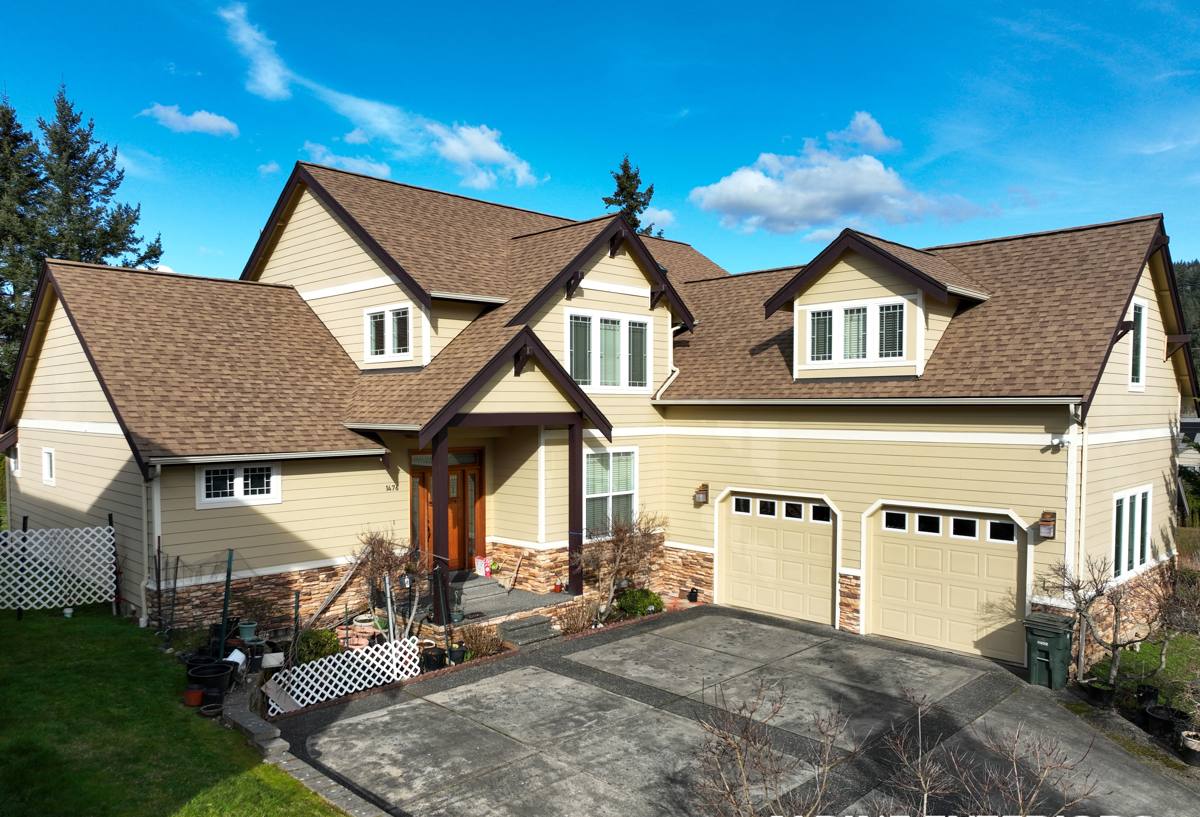
What Local Conditions Actually Do to a Roof
Moss and Organic Growth
Moss doesn't just look bad — it holds moisture directly against shingles and roofing felt, and its root structure works into granule beds and shingle laps. On a shaded, tree-covered lot, moss can establish itself within a single wet season if gutters and valleys aren't kept clear. Left unaddressed, it lifts shingle edges, traps water underneath, and accelerates granule loss, which is one of the most common reasons we get called out to older Sammamish roofs.
Driving Rain and Wind-Driven Water
Rain in this region rarely falls straight down. Storms moving through the lowlands push rain sideways, which means it finds its way under shingle edges, around chimney flashing, and into any gap in a roof-wall intersection that would stay dry in a calmer climate. Repairs that only address the visible symptom — a stained ceiling, a drip — without correcting the flashing or underlayment detail that let water in will fail again the next time wind direction shifts.
Debris and Clogged Drainage
Tree cover means needles, cones, and leaf litter collect in valleys, behind chimneys, and in gutters faster than on an open lot. When water can't shed off the roof and out through the gutter system, it backs up under shingles and rots decking from below — damage that's often worse than it looks from the ground.
Signs a Sammamish Roof Needs Repair
Most roof problems here start small and stay hidden until they show up as a stain on a ceiling or ice-cold air leaking into an attic. Catching them earlier keeps a repair a repair instead of a full section replacement.
- Moss or dark streaking concentrated on shaded slopes or north-facing sections
- Granules collecting in gutters or at downspout outlets
- Curling, cracked, or missing shingles, especially after a windstorm
- Soft or spongy spots when walking the roof (a sign of decking rot underneath)
- Water stains on interior ceilings or in the attic, particularly near chimneys, skylights, or roof-wall intersections
- Daylight visible through the roof deck from inside the attic
- Sagging in valleys or along the ridge line
- Gutters that overflow during moderate rain, not just downpours
What a Correct Repair Actually Involves
A roof repair done right isn't just swapping out the damaged shingle you can see. It starts with figuring out why that spot failed in the first place, because in this climate the visible damage is usually downstream of a drainage, flashing, or ventilation issue.
1. Diagnosis First
We trace leaks back to their actual entry point, not just the spot where water showed up inside the house — water can travel several feet along rafters or decking before it drips through a ceiling.
2. Check What's Underneath
Once shingles are pulled back, we look at the decking and underlayment. If wood has softened or delaminated from sustained moisture, that gets addressed as part of the repair, not left in place under new shingles.
3. Correct the Root Cause
If the failure was a flashing detail, a clogged valley, or inadequate ventilation trapping moisture in the attic, that gets fixed alongside the visible repair. Otherwise the same spot fails again in a year or two.
4. Match Materials and Reseal Properly
New shingles, flashing, and sealant are tied into the existing roof system correctly — proper overlap, proper fastening, and compatible materials — so the repaired section performs the same as the rest of the roof.
Common Repair Types We Handle in Sammamish
| Repair Type | Typical Local Cause | What's Involved |
|---|---|---|
| Moss and organic buildup removal | Heavy tree canopy, shaded roof slopes | Soft-wash removal, granule and shingle condition check, treatment to slow regrowth |
| Flashing repair (chimney, skylight, walls) | Wind-driven rain finding gaps at penetrations | Removal and reflashing with proper step and counter-flashing detail |
| Shingle replacement | Windstorm damage, age, granule loss | Matching shingle replacement tied into surrounding courses |
| Decking repair | Long-term hidden leak or clogged drainage | Removal of affected roofing, decking replacement, dry-in before reroofing the section |
| Gutter and valley clearing/repair | Needle and debris buildup from surrounding trees | Clearing, resealing valley metal, correcting pitch where drainage is poor |
| Ventilation correction | Trapped attic moisture accelerating deck rot | Adding or correcting intake/exhaust venting to balance airflow |
Repair vs. Replacement: How We Help You Decide
Not every roof problem in Sammamish means a full replacement, and we don't push one when a targeted repair will hold up. The decision usually comes down to a few honest factors.
| Factor | Favors Repair | Favors Replacement |
|---|---|---|
| Age of roof | Under roughly 15 years, asphalt shingle | Nearing or past manufacturer's expected service life |
| Extent of damage | Isolated to one area or slope | Widespread granule loss, multiple failure points |
| Decking condition | Solid, no rot beyond the repair area | Rot or soft decking found in multiple spots |
| History of leaks | First occurrence, clear root cause | Recurring leaks in different locations over time |
| Moss/organic damage | Surface-level, caught early | Long-term growth has degraded shingle mat broadly |
We'll tell you plainly which category your roof falls into. If a repair is the honest answer, that's what we'll recommend and price — a full tear-off isn't something we sell when it isn't needed.
How Our Sammamish Repair Process Works
We keep the process straightforward, because most homeowners calling about a leak just want a clear answer and a fix that lasts.
- Inspection and diagnosis — we get on the roof (not just a ground-level look) and identify the actual cause, not just the visible symptom.
- Written scope and estimate — you get a clear explanation of what's wrong, what we're proposing to fix, and why, before any work starts.
- Repair work — most repairs are completed in a single visit; larger decking or multi-area repairs may take longer and we'll tell you that upfront.
- Cleanup and walkthrough — debris removed, work reviewed with you before we consider the job done.
What We Look For That Others Might Miss
Because we work roofs across King County's tree-heavy neighborhoods regularly, we know to check ventilation and moisture balance in the attic even when the customer only called about a visible leak — trapped moisture from poor airflow is a frequent contributor to repeat failures on shaded Sammamish lots, and it's easy to miss if you're only looking at the roof surface from a ladder.
Materials and Workmanship Standards
We use roofing materials and flashing details appropriate to Pacific Northwest conditions — not because certain products are inherently bad, but because some material and installation choices carry real trade-offs in a climate this wet: higher maintenance needs, less forgiving installation tolerances, or moisture behavior that doesn't suit heavily shaded roofs. Where a repair calls for judgment on material selection, we'll walk you through the honest trade-offs rather than defaulting to whatever's cheapest or fastest to install. On a roof that's going to sit under tree cover through another ten wet seasons, those decisions matter more than they would in a drier climate.
Why a Crew That Already Works Sammamish Matters
Roofing problems here aren't generic. A crew that mostly works drier or more open regions won't necessarily think to check ventilation balance, valley debris buildup, or the specific flashing vulnerabilities that show up on heavily shaded, tree-lined lots. Working this area regularly means we've seen how these roofs actually fail over time — not just how they're supposed to be built on paper — and we bring that pattern recognition to every repair estimate, so you're not paying to have the same issue diagnosed twice.
It also means faster response. When a storm knocks a branch loose or wind lifts a section of shingles, having a crew that's already local and familiar with the area cuts down the time between your call and a tarp or repair going up, which matters when rain is in the forecast the next day.
Get a Free, No-Pressure Estimate
If you're seeing moss buildup, a stain on a ceiling, or storm damage on your Sammamish roof, we're happy to take a look and give you a straight answer on what it needs — repair or otherwise. Fill out the form below for a free estimate with no pressure to move forward.