 King County
 Seattle Roofs Take a Different Kind of Beating
A roof in Seattle isn't fighting the same battle as one in a dry inland climate. It's fighting salt-laden air rolling in off Puget Sound, months of driving rain that finds every weak seam, and a moss season that can stretch from fall through spring. None of these show up as one dramatic event — they build up, storm by storm, until a windstorm or a heavy atmospheric river finally exposes the weak point that's been forming for years.
That's the core difference between storm damage repair here and storm damage repair almost anywhere else in the country. The storm is often just the trigger. The real damage is usually a combination of sudden wind or impact stress layered on top of slow moisture and moss deterioration that was already underway. A repair that only addresses the visible, sudden part of the damage and ignores the underlying condition tends to fail again at the next storm.
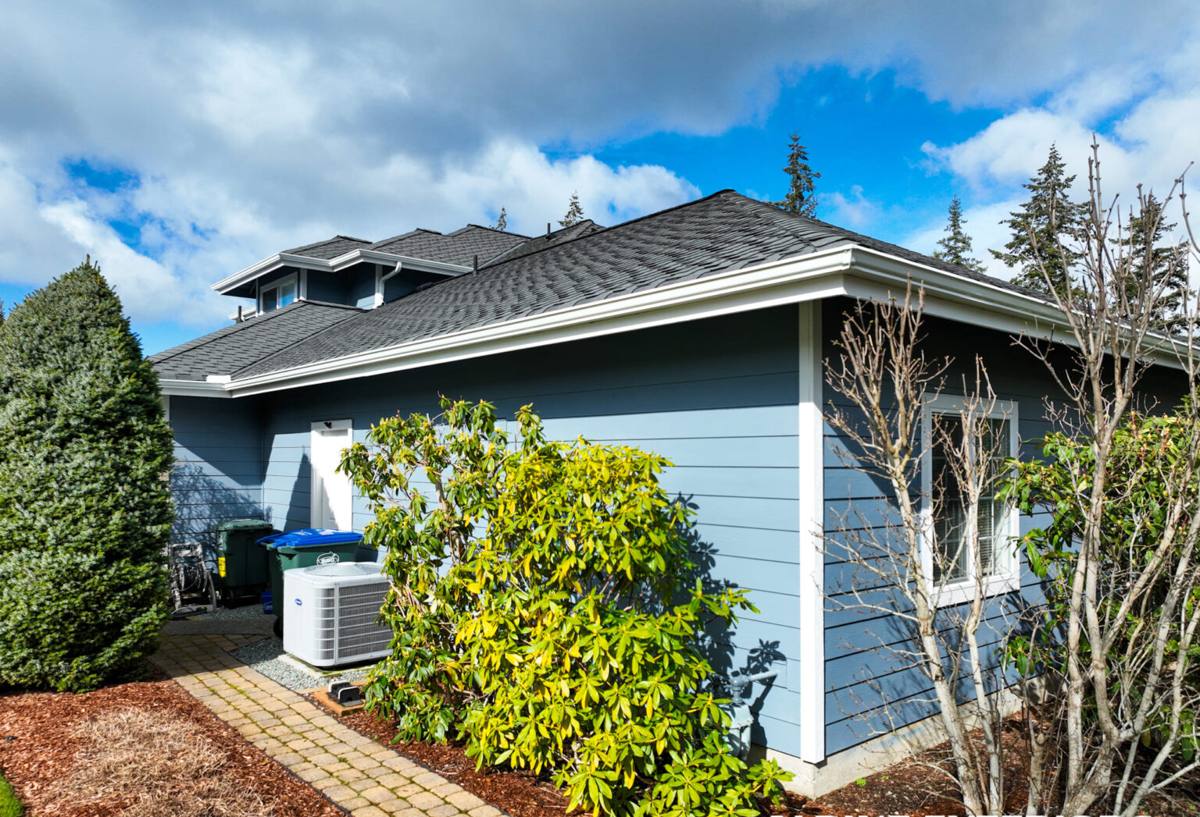
What Storm Damage Actually Looks Like on a King County Roof
Wind and Impact Damage
Strong gusts off the Sound and through the county's tree-lined neighborhoods do two things to a roof: they lift shingles at the tab line, breaking the seal strip underneath, and they drive branches and debris into the roof surface. Lifted shingles don't always tear off completely — sometimes they just lose their seal and start flapping in the next wind event, letting water underneath with every rain.
Rain-Driven Damage
Seattle's rain is rarely a short downpour. It's frequently a long, low-intensity soak that finds its way into any gap a storm has already opened — a lifted shingle edge, a cracked pipe boot, a flashing seam that popped loose in the wind. Water doesn't need a big hole to cause real damage; it needs time and a path, and our weather pattern provides plenty of both.
Moss-Related Damage
Moss doesn't cause storm damage directly, but it sets the stage for it. Moss holds moisture against the roof surface, works its way under shingle edges, and gradually lifts and loosens shingles that would otherwise have shed wind and rain without issue. A roof with an active moss problem is simply more vulnerable when a storm hits — the shingles are already partially compromised before the wind even arrives.
The Hidden Damage Homeowners Usually Miss
The damage you can see from the ground — a missing shingle, a dented gutter, a branch on the roof — is rarely the whole story. What matters more is what's happening underneath:
- Saturated or delaminating roof decking under a spot that's been leaking slowly for weeks
- Rusted or displaced flashing around chimneys, skylights, and roof-to-wall transitions
- Compromised underlayment beneath shingles that still look intact from a distance
- Gutter and downspout damage that's redirecting water back under the roof edge instead of away from the house
- Attic insulation or framing that's already showing moisture staining before any interior leak is visible
This is why a storm damage inspection needs to go past the shingles. A repair that patches the surface but misses saturated decking or a compromised flashing seam is a repair that buys you a season, not a fix.
What a Correct Storm Damage Repair Involves
Inspection Before Anything Else
A proper repair starts with getting on the roof, not just looking at it with binoculars from the yard. That means checking the full slope, the flashing details, the decking underneath any suspect area, and the attic from the inside where accessible. Storm damage is often worse — or sometimes less severe — than it looks from the ground, and you don't know which until someone actually inspects it.
Stabilizing the Roof First
If a storm has left the roof actively exposed — a torn-back section, missing shingles, an open flashing gap — the first job is stopping ongoing water intrusion, typically with temporary tarping or sealing. This isn't the repair itself, but it's what keeps a bad situation from becoming a much more expensive one while the full repair is scoped and materials are sourced.
Matching Materials, Not Just Covering the Spot
A storm repair should blend into the existing roof, not stand out as an obvious patch. That means matching shingle style, color, and where possible, manufacturer — and it means replacing damaged underlayment and flashing to the same standard as the surrounding roof, not a lesser one just because it's a "repair" rather than a full replacement.
Addressing the Root Cause
If moss contributed to the failure, the repair should include moss removal and treatment in that area, not just new shingles laid over the same conditions that caused the problem. If a flashing detail was undersized or poorly installed originally, a proper repair corrects the detail rather than reproducing it.
Repair or Replace: What Actually Tips the Decision
Not every storm-damaged roof needs a full replacement, and not every roof that looks fine after a storm is actually fine underneath. The honest answer depends on a handful of factors:
| Factor | Leans Toward Repair | Leans Toward Replacement |
|---|---|---|
| Age of roof | Under 10-12 years, most of roof in good condition | Nearing or past expected lifespan for the material |
| Extent of damage | Isolated to one slope or section | Damage scattered across multiple slopes |
| Decking condition | Solid, dry decking under the damaged area | Widespread rot or saturation found during inspection |
| Moss history | Minor, treatable moss presence | Long-term moss damage affecting shingle integrity broadly |
| Prior repairs | First significant repair needed | Roof already has multiple past patches |
We'll tell you honestly which side of that table your roof falls on. There's no advantage to us in recommending a full replacement when a solid repair will hold — and no advantage in patching a roof that's genuinely at the end of its service life.
How Our Storm Damage Repair Process Works
- Assessment: A full roof and attic inspection, including areas not visibly damaged, since storm stress often shows up away from the obvious impact point.
- Documentation: Clear notes and photos of the damage, useful whether you're paying out of pocket or working with an insurance adjuster.
- Stabilization: Temporary protection if the roof is actively exposed, so the situation doesn't worsen while repair details are finalized.
- Written scope: A clear explanation of what's damaged, what needs to be repaired versus replaced, and why — no vague line items.
- Repair: Matched materials, corrected flashing details, and moss treatment where relevant, done to the same standard as new construction.
- Final walkthrough: We show you the completed work and explain what was done before we consider the job finished.
Working With Insurance on Storm Claims
Many storm damage repairs in King County are at least partly covered by homeowners insurance, particularly when the damage traces back to a specific wind event. We can document the damage clearly enough to support a claim, and we're glad to speak with your adjuster about what we found. What we won't do is promise a claim will be approved or inflate a scope to hit a number — that's between you and your insurer, and our job is to give you an accurate, honest picture of the roof's actual condition.
Cost for storm repairs varies a lot depending on scope — a single section of flashing and shingle repair might run a few hundred dollars, while damage that involves decking replacement or multiple roof sections can run into the thousands. We'll give you a real number after we've actually inspected the roof, not a guess over the phone.
Why a Crew That Already Works Seattle Roofs Matters
Storm damage repair isn't just a technical skill — it's a familiarity skill. A crew that regularly works roofs across King County has already seen how moss builds up on north-facing slopes shaded by mature trees, how wind moves differently through more exposed lots versus sheltered ones, and which flashing details tend to fail first under our specific combination of salt air and sustained rain. That experience shows up in faster, more accurate diagnosis and repairs that are built for the conditions the roof will actually face again next winter, not generic conditions from a training manual.
It also matters for response time. Storm damage doesn't wait for a convenient week, and a local crew can typically get eyes on a damaged roof and temporary protection in place faster than one traveling in from outside the area.
Signs Your Roof May Have Storm Damage Right Now
- Shingles that look lifted, curled, or out of alignment compared to the rest of the roof
- Granules collecting in gutters or at downspout outlets after a storm
- A new or worsening leak, stain, or damp smell in the attic or top-floor ceiling
- Visible daylight through the roof deck when viewed from inside the attic
- Flashing that looks bent, separated, or missing around chimneys, vents, or skylights
- Moss growth that's noticeably thicker or has spread since last season
- Debris — branches, needles, gravel — accumulating in one area more than the rest of the roof
If you're seeing any of these after a windstorm or a stretch of heavy rain, it's worth having it looked at before the next system rolls through. A small, contained repair now is almost always less disruptive and less costly than what the same damage turns into after a second or third storm gets underneath it.
If your roof took a hit in a recent storm — or you're just not sure whether what you're seeing is a problem — we're happy to take a look. The estimate is free, there's no pressure to move forward, and you'll get a straight answer about what's actually going on up there. Use the form below to get started.