 King County
 Queen Anne's Hilltop Exposure Means Siding Works Harder Here
Queen Anne sits high above the rest of Seattle, and that elevation is exactly what makes it one of the more demanding spots in King County for exterior siding. Homes on the hill catch wind and weather that lower, more sheltered neighborhoods never see — gusts off Puget Sound, driving rain that arrives sideways instead of straight down, and a damp, shaded season that can stretch for months at a time. Siding that would hold up fine on a wind-sheltered valley lot can fail years early on an exposed slope, and that gap shows up first on the walls facing the water and the weather.
We've installed and repaired siding on enough Queen Anne homes to know which walls take the worst of it, which installation details fail first, and which siding system actually holds up to the combination of wind-driven rain and salt-laden air this hill sees. This page covers what that means for a siding installation job done right here — not a generic rundown of siding in general.
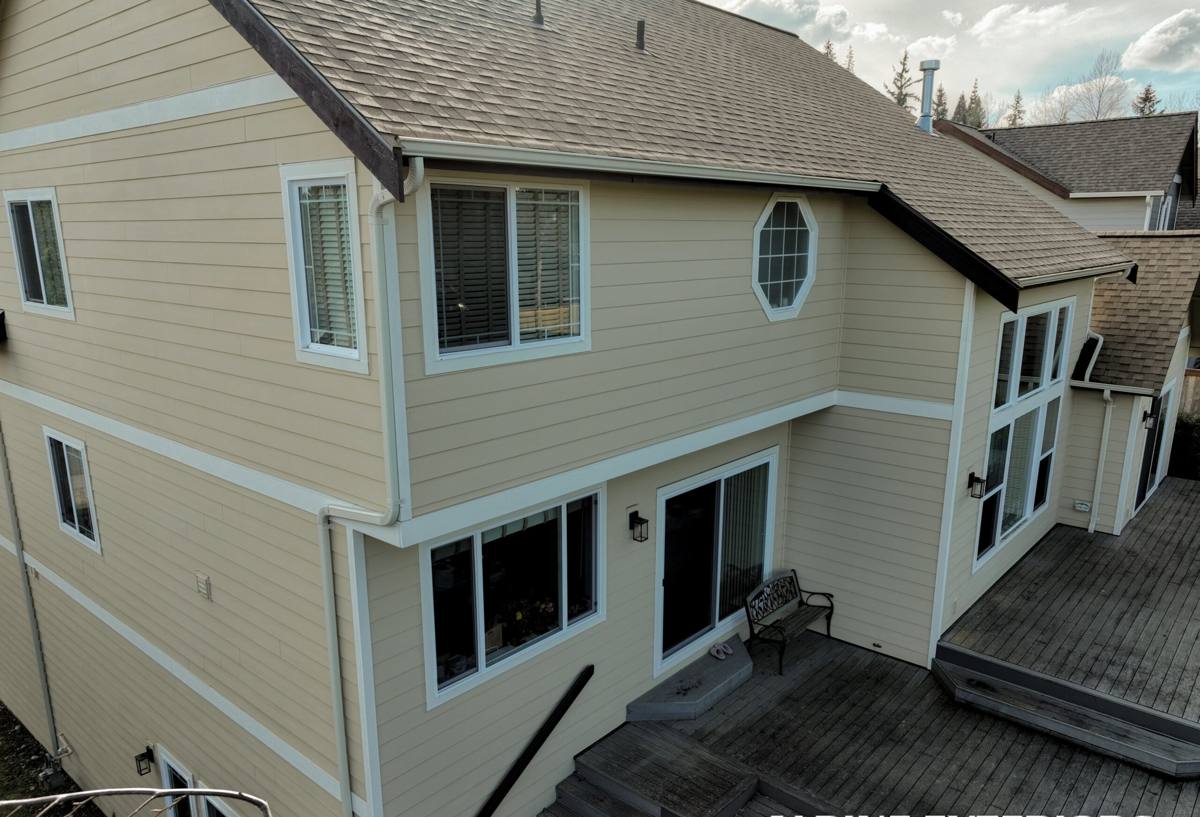
What Salt Air, Driving Rain, and Moss Actually Do to Siding
Salt Air and Fasteners
Queen Anne's elevation and proximity to Puget Sound mean prevailing winds carry a fine load of salt spray onto west- and north-facing walls, especially higher up the hill. Over years, that salt content accelerates corrosion on anything metal — fasteners, flashing, trim caps — long before the siding material itself would normally show its age. A siding system is only as good as the metal that holds it together, which is why fastener spec and flashing material matter more here than they would on an inland King County lot.
Driving Rain and Wall Assemblies
Wind-driven rain doesn't just wet the face of the siding — it pushes water sideways and upward into laps, seams, and butt joints that were only ever designed to shed water falling straight down. On an exposed hill lot, that means the weather-resistive barrier behind the siding, the flashing at every penetration, and the lap gaps themselves all have to be installed to a stricter standard than a sheltered lot would require. Skip any one of those details and water finds its way behind the cladding, where it does the real damage — rot, mold, and siding that looks fine from the curb but is failing from the inside out.
The Long Moss Season
North- and east-facing walls that stay shaded for much of the year, along with any siding tucked under overhangs or mature trees, spend a good part of the year damp. That's exactly the environment moss and algae need to take hold. Once established, moss holds moisture directly against the siding surface, which is hard on paint film and caulking — and if it's left to build up for years, it can begin to affect the substrate underneath, whatever that substrate happens to be.
Why This Climate Is a Real Argument for James Hardie Fiber Cement
We install James Hardie fiber cement exclusively, and Queen Anne's weather is a big part of why. Fiber cement doesn't absorb and swell with moisture the way wood-based products can, and it won't rot if a flashing detail eventually needs attention. James Hardie's HZ5 product line is engineered for the kind of moisture cycling the Pacific Northwest sees, and the factory-applied ColorPlus finish resists the fading and film breakdown that field-applied paint struggles with under year-round damp and UV exposure. None of that makes a siding job maintenance-free — nothing is, on this hill — but it removes an entire category of failure that we'd otherwise be fighting for the life of the house.
We don't install vinyl, LP SmartSide, cedar, primed spruce, or other fiber cement brands, and Queen Anne's exposure is one of the clearest reasons why. Wood-based siding needs its paint film and caulking maintained on a strict schedule to keep moisture out, and on a wind-exposed hill lot that schedule gets tested constantly. Vinyl can hold up to moisture fine, but it isn't the look most Queen Anne homes are built around, and it has its own limits under sustained wind exposure. Fiber cement, installed correctly, gives this specific climate the best combination of durability, appearance, and long-term cost we've found in the field.
Warranty Protection That Matches the Investment
Siding is a long-term investment, and on an exposure like this one, the warranty behind it matters as much as the product itself. James Hardie backs its fiber cement with a manufacturer's limited warranty on the substrate, plus a separate finish warranty on ColorPlus products covering the factory finish itself. Those warranties are transferable to a subsequent owner within a defined window, which matters on a hill where homes change hands and buyers want to know what they're inheriting. A warranty is only as good as the installation behind it, though — Hardie's own terms require installation to its published instructions, which is one more reason correct detailing isn't optional.
What a Correct Siding Installation Involves
The material is only half the job. Most siding failures we get called out to inspect on the hill trace back to installation details, not the product itself. A correct installation includes:
- A continuous, properly lapped weather-resistive barrier behind the siding — not a tarp stapled up as an afterthought
- Correct flashing at every window, door, deck ledger, and penetration, integrated with the barrier so water is directed out, not in
- Proper lap gaps and butt joint treatment sized for wind-driven rain, not just straight-down weather
- Fasteners matched to the substrate and spec'd for coastal-influenced, corrosion-prone conditions — not just whatever's on the truck
- Correct nailing pattern and blind- versus face-nailing per the manufacturer's installation instructions, since this is what keeps a warranty valid
- Caulking and sealant only where the manufacturer's details actually call for it — over-caulking traps water just as badly as under-caulking
James Hardie publishes detailed installation instructions for a reason: siding installed outside spec can void the manufacturer's warranty even when the material itself is sound. That's the gap between a siding job that looks right at close-out and one that's still performing correctly a decade later on an exposed hill lot.
Our Process for a Queen Anne Installation
Assessment and Wall-by-Wall Read
Every Queen Anne property gets read wall by wall before we quote anything. A west wall catching Sound-driven wind and rain needs different flashing attention than a shaded north wall dealing with moss and slow-drying moisture. We look at existing damage, trim and window condition, and how the current siding has actually performed — not just its age — before recommending a scope of work.
Tear-Off, Prep, and What's Underneath
Once the old siding comes off, we inspect the sheathing and existing weather barrier before anything new goes up. Any soft or water-damaged sheathing gets addressed at this stage — covering it over is how small problems on the hill turn into expensive ones later. This is also when we correct any flashing that was undersized or missing on the original build, which is common on older homes that predate current flashing standards.
Install and Finish
We install to James Hardie's published fastening, gapping, and flashing specifications, matched to the exposure category of each wall — the exposed elevations get the fuller detailing they need, not the same treatment applied uniformly across the house. Trim, corners, and any transitions to masonry or other materials are finished to shed water the way the wall assembly was actually designed to.
Permits and Working Within Local Requirements
Siding scope of work determines whether a permit is required, and that varies by jurisdiction and by how much of the wall assembly is being disturbed. We handle that determination as part of the process rather than leaving a homeowner to sort it out with the City of Seattle or King County on their own, so the job stays compliant from the start.
Signs a Queen Anne Home Needs Siding Attention Now
Given the exposure this hill sees, a few warning signs are worth acting on before they turn into a bigger repair:
- Visible moss or algae buildup that returns shortly after cleaning, especially on shaded north or east walls
- Soft spots, or a give when you press on the siding near the bottom courses or around penetrations
- Peeling, bubbling, or chalking paint that keeps recurring in the same spots year after year
- Staining or discoloration below window sills, deck ledgers, or other flashing points
- Visible gaps, warping, or cupping in lap siding, particularly on wind-exposed elevations
- A musty smell or noticeable moisture inside exterior walls that wasn't there before
Any one of these on its own might be minor. Several together, especially on the walls that catch the worst of the hill's weather, usually mean the wall assembly behind the siding is already wet.
Matching Siding to Queen Anne's Housing Stock
Queen Anne's homes span a wide range of eras and styles — early-1900s craftsman and foursquare houses, mid-century remodels, and newer infill construction mixed in among them. James Hardie's product lines give us the range to match that variety honestly rather than forcing every house into the same look. Lap siding in varying exposures suits the older, more traditional homes on the hill; panel systems with battens work well for a more modern build; and shingle-profile Hardie products can approximate a period look on a home where that character matters, without the maintenance burden of the original material.
Cost Factors on a Hill Lot
Pricing for any siding job depends on square footage and site conditions, but a few factors specific to Queen Anne's terrain and housing stock affect the estimate more than they would on a flat, easy-access lot elsewhere in King County.
| Factor | Why It Affects the Estimate |
|---|---|
| Site access and staging | Steep lots, narrow streets, and limited parking common on the hill can add setup time and equipment needs |
| Height and story count | Multi-story homes built to take advantage of the view require more scaffolding and fall-protection setup |
| Existing damage found at tear-off | Sheathing or framing repairs found once old siding comes off are priced once they're actually visible |
| Wall exposure mix | Homes with more wind- and rain-exposed wall area need fuller flashing detail on those elevations |
| Trim and architectural detail | Older, more detailed homes take more time to trim out correctly than a simple modern box |
We walk every property in person and give a written estimate based on what we actually find — not a phone quote based on square footage alone.
Why Hiring a Crew That Already Works This Hill Matters
Siding crews that mostly work flatter, more sheltered parts of King County can underestimate what a Queen Anne installation actually needs — lighter flashing details, standard fastener specs, and gapping sized for calmer weather. That's how a siding job passes a walk-through and still starts showing problems in five years instead of twenty. A crew that already works this hill knows which walls need the fuller treatment before they even start the estimate.
Questions worth asking any contractor before hiring for a Queen Anne siding project:
- Are you a factory-certified installer for the specific James Hardie products you're proposing?
- Will you detail flashing and fastener spec differently for wind-exposed walls versus sheltered ones?
- What's your plan for sheathing or framing damage found once the old siding comes off?
- Do you carry current licensing and insurance for work in King County and the City of Seattle?
- Can you show how your installation details meet the manufacturer's published instructions, not just your own in-house standard?
If a contractor can't answer those clearly, that's worth knowing before the tear-off starts, not after.
If you're weighing a siding replacement or repair on Queen Anne Hill, we'd rather walk the property and give you a straight answer than guess over the phone. Reach out for a free, no-pressure estimate — the form below gets you started.