 King County
 Board & Batten in a Wet, Wooded Corner of King County
Woodinville sits in one of the greener, tree-heavier pockets of King County, and that setting cuts both ways. The tree canopy and rolling terrain are a big part of why people love living there, but they also mean more shade on north- and east-facing walls, slower drying after storms, and a longer moss season than you'll see on more open lots closer to the water. Board and batten siding — with its strong vertical lines and crisp shadow reveals — looks especially good against that wooded backdrop, but it's also a siding style that punishes a sloppy install more than most. The vertical battens create dozens of extra seams and fastening points compared to lapped horizontal siding, and every one of those seams is a place water can find its way in if it isn't detailed correctly.
This page is about doing board and batten right for a Woodinville property specifically — not board and batten in general. The climate here, the shade patterns typical of the area, and the driving rain that comes off Puget Sound storms all factor into how we spec, flash, and install this siding style.
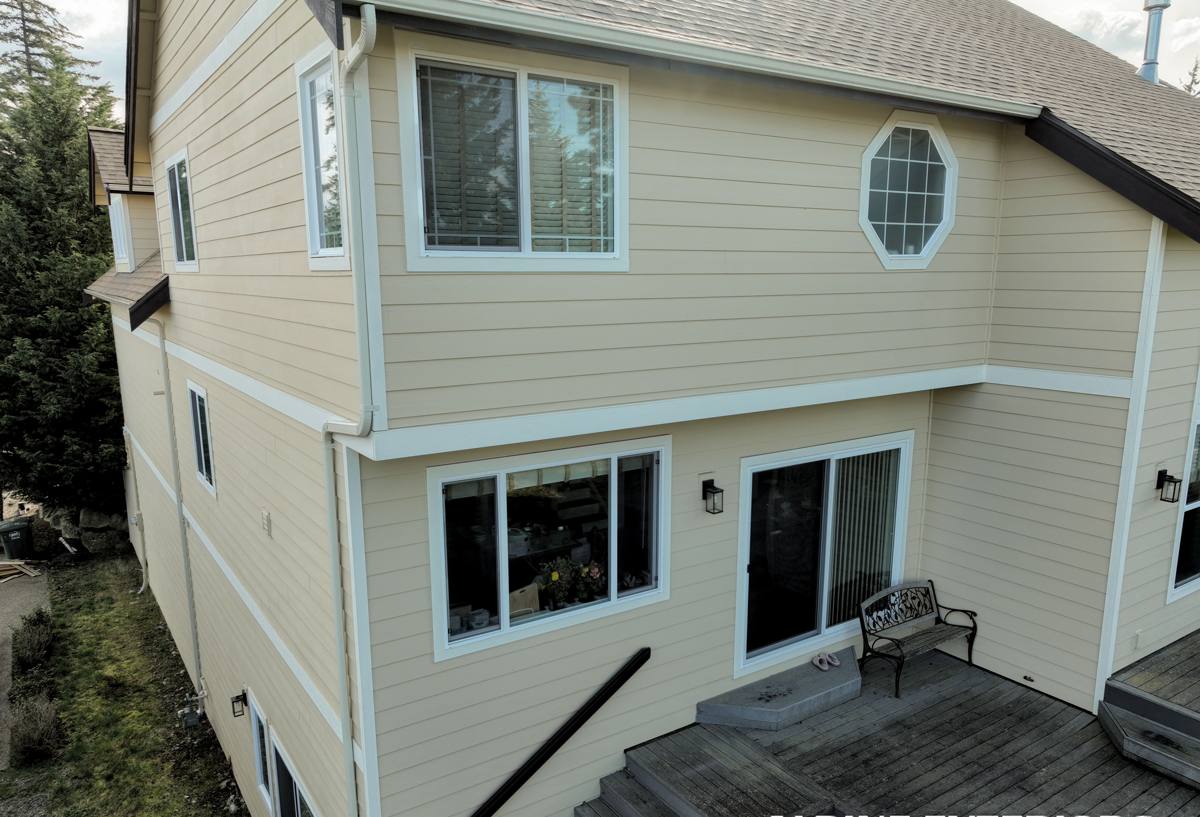
What Woodinville's Climate Does to Vertical Siding
Board and batten fails in predictable ways when it's installed without regard for the Pacific Northwest's wet season. Understanding those failure patterns is exactly why our process looks the way it does.
Driving Rain and Wind-Driven Moisture
Vertical battens create a series of narrow channels running down the wall. In a light rain those channels shed water fine. In a wind-driven storm — which King County gets regularly in the fall and winter — water can be pushed sideways into those seams instead of running straight down them. If the boards underneath aren't lapped and flashed correctly, or if the housewrap behind them isn't detailed to drain, that moisture works its way behind the siding instead of off of it.
Shade, Tree Cover, and Moss
Moss doesn't need much: shade, moisture, and time. Woodinville's tree cover gives it two of the three for free, and our long wet season supplies the third. Moss and algae growth on siding isn't just cosmetic — sustained organic growth holds moisture against the material and, on the wrong substrate, accelerates deterioration. Board and batten's vertical battens actually help here, since they shed standing moisture faster than a flat panel would, but the caps and reveals still need a material that won't degrade under long-term dampness.
Freeze-Thaw and Seasonal Movement
King County doesn't get brutal winters, but Woodinville does see enough freeze-thaw cycling each year to matter. Materials that absorb water and then freeze — expanding and contracting repeatedly — will eventually crack, cup, or pull fasteners loose faster than a stable, engineered material will.
What a Correct Board & Batten Job Actually Involves
Board and batten is deceptively simple-looking from the curb. Underneath, a correct installation has more moving parts than most homeowners realize.
- Water-resistive barrier: A continuous housewrap or building paper behind the siding, lapped correctly so water sheds outward and down, not into the wall assembly.
- Furring or drainage gap: A small air gap behind the siding lets any moisture that does get past the outer layer drain and dry instead of sitting against the sheathing.
- Correct fastener pattern: Battens and boards fastened per the manufacturer's schedule — not just "close enough" — so the assembly can expand and contract without splitting the material or backing fasteners out.
- Flashing at every penetration: Windows, doors, hose bibs, light fixtures, and vents all need proper flashing details, since a vertical batten run gives water more vertical seams to travel down toward a poorly flashed opening.
- Butt joint and corner treatment: Vertical board runs eventually need a joint somewhere on a tall wall. Those joints need to be staggered, flashed, and caulked with a product rated for the material and our climate — not just caulked and painted over.
- Ground and roof clearance: Proper clearance from grade, decks, and roof lines so the bottom of the siding isn't sitting in standing water or splashback all winter.
Skip any one of these and the siding can still look good for a year or two. The problems that come from cut corners on board and batten tend to show up two, three, or five years in — after the crew that installed it is long gone.
Why We Install James Hardie — Not Vinyl, Not Wood, Not LP
We install James Hardie fiber cement exclusively. Other vertical siding materials aren't bad products in every situation, but here's the honest trade-off math for a shaded, wet King County property like the ones common in Woodinville:
| Material | How it handles our wet season | Long-term consideration |
|---|---|---|
| Cedar / primed spruce board and batten | Attractive, but wood absorbs moisture and is a direct food source for the moss, mildew, and rot organisms that thrive in shaded, damp conditions | Needs regular refinishing, caulking, and vigilant maintenance to hold up long-term |
| Vinyl vertical siding | Sheds water fine but doesn't hold paint, warps under summer sun/shade temperature swings, and battens are often just applied trim over a flat panel | Limited color life, brittle in cold, doesn't replicate a true batten shadow line |
| LP SmartSide (engineered wood) | Better moisture resistance than raw wood, but it's still a wood-based product that depends on an intact factory coating to keep water out | Any breach in that coating — a scratch, a poor cut, a failed caulk joint — opens the door to swelling at the substrate |
| James Hardie fiber cement | Non-combustible, dimensionally stable, and engineered specifically for Pacific Northwest moisture cycles (HZ5 product line) | Factory ColorPlus finish holds color without repainting on the manufacturer's schedule; strong transferable warranty |
We standardized on Hardie because it's the one material in that comparison that doesn't ask a Woodinville homeowner to fight the local climate every few years. That doesn't mean zero maintenance — every siding needs occasional cleaning and inspection — but it means the material itself isn't the weak point in the assembly.
Our Woodinville Board & Batten Process
1. On-Site Assessment
We walk the property and look at exposure: which walls get the most shade, where water currently sheds off the roofline, where existing siding shows moss or moisture staining, and what the substrate underneath looks like once we open it up.
2. Tear-Off and Substrate Check
Old siding comes off and we inspect the sheathing underneath for rot or existing water damage before anything new goes up. This is the step that gets skipped by crews trying to move fast — and it's the one that matters most.
3. Water-Resistive Barrier and Flashing
New housewrap, flashing at every window, door, and penetration, and a drainage plane detailed for our rain patterns — not a generic install.
4. Board & Batten Installation
James Hardie vertical panel or board-and-batten system installed to manufacturer fastening and clearance specs, with attention to the shaded walls where moisture sits longest.
5. Caulking, Trim, and Final Inspection
Joints sealed with climate-appropriate sealant, trim and corners finished, and a final walk-through before we call the job done.
Why a Local King County Crew Matters Here
Board and batten done wrong doesn't usually fail in the first month — it fails in year three or four, after moisture has had time to work behind the boards. A crew that's used to working through a King County wet season — and understands how shade, tree cover, and driving rain interact with a vertical siding system — is going to flash and detail that siding differently than a crew that mostly works in a drier climate. We also know the practical side of working in this area: typical permitting expectations for exterior work, realistic scheduling around our wet months, and what it takes to keep a job site clean and safe on a wooded lot.
Keeping Board & Batten Siding in Good Shape
- Rinse siding annually (a garden hose is usually enough) to keep moss and algae from getting a foothold, especially on shaded walls
- Trim back tree branches and shrubs that keep siding shaded and damp longer than necessary
- Check caulking at trim, corners, and penetrations every year or two and re-caulk any joints that have opened up
- Keep gutters clear so roof water isn't dumping directly onto siding runs
- Watch for staining or soft spots near the bottom of walls, which can signal a grade or flashing issue worth addressing early
What This Costs to Do Right
Board and batten pricing depends on wall square footage, how much tear-off and substrate repair is needed, the height and complexity of the walls, and trim detailing. We won't quote a number without seeing the property, but we're happy to walk you through the real cost drivers and give you a straight answer during a site visit — not a lowball number that grows once the walls are open.
If you're weighing board and batten for a Woodinville home, we'll come take a look, tell you honestly what your walls need, and put together a free, no-pressure estimate — no obligation either way.