 King County
 Building Decks for Woodinville's Wooded, Wet Climate
Woodinville sits in a part of King County where tree cover, river-valley moisture, and long stretches of gray, drippy weather are just part of life. That's great for the wineries and the greenery, but it's tough on an outdoor deck. A deck built the same way you'd build one in a dry climate will fail here faster than most homeowners expect — not because the wood or the fasteners are bad, but because the build didn't account for how much water this region actually sees and how long it sits before it dries out again.
We build and repair decks throughout King County, and Woodinville jobs have their own personality: shaded lots, moss creeping onto north-facing boards within a season or two, and a rainy stretch from fall through spring that can leave a poorly-built deck damp for weeks at a time. This page covers what a deck actually needs to hold up here, what a correct build looks like, and how we approach the work.
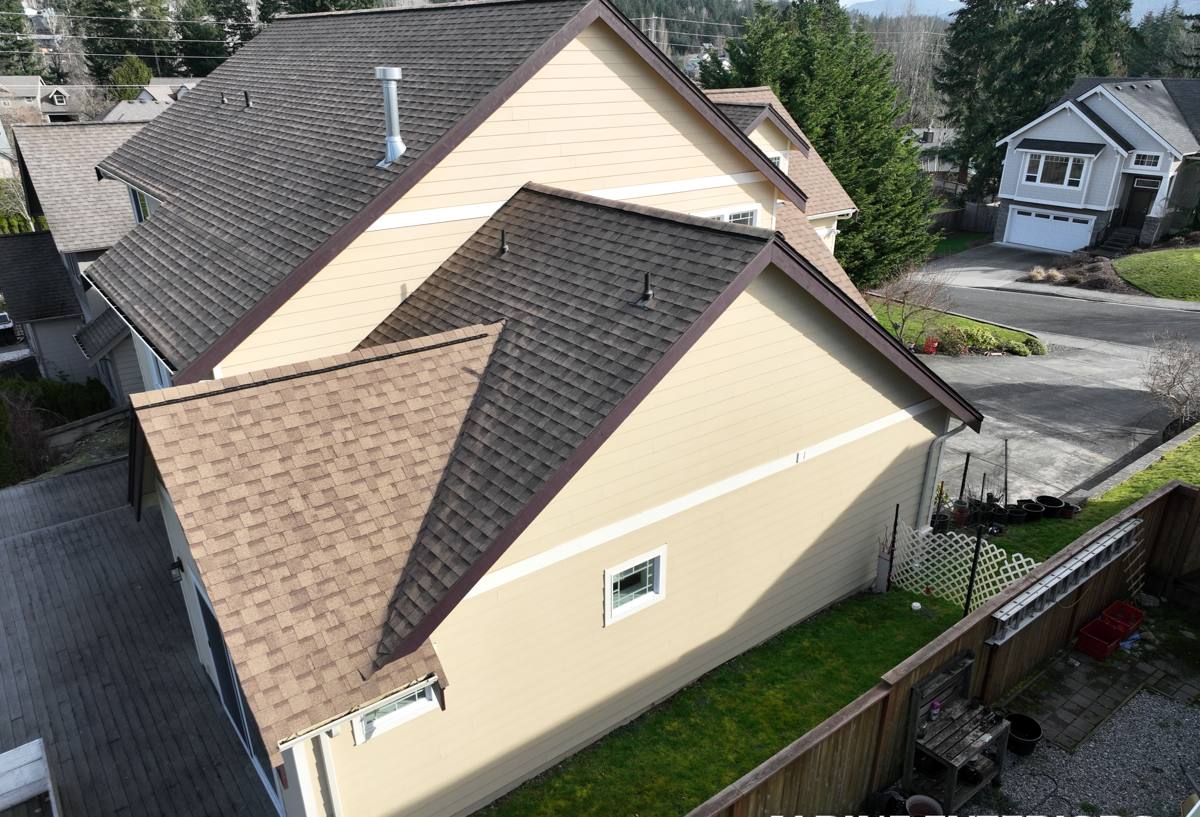
What Our Climate Does to a Deck Over Time
The marine air that moves through the Puget Sound region carries moisture inland, and King County's rainy season means a deck can go months without a truly dry week. Add tree canopy — common on Woodinville lots — and you get shade that keeps boards damp long after the rain stops, plus a steady drop of leaves, needles, and pollen that traps moisture against the deck surface.
The three things we see fail first
- Ledger board rot — where the deck attaches to the house is the single most common failure point when flashing wasn't installed correctly
- Moss and algae growth — shaded, poorly-ventilated decks grow a slick green film that's a slip hazard and holds moisture against the wood
- Fastener corrosion — standard screws and nails rust and stain in our damp climate, weakening connections over the years
None of these are inevitable. They're the result of shortcuts at the build stage, and they're exactly what we design around.
The Non-Negotiables of a Correct Deck Build
A deck is only as good as what's underneath and behind it — the parts nobody sees once it's finished. In our climate, a few details matter more than they would somewhere drier.
Ledger flashing
The ledger board — where the deck bolts to the house — needs proper flashing that directs water away from the house sheathing, not just a bead of caulk. This is the single most important detail on the entire structure. Done wrong, water gets behind the siding and rots the house framing before anyone notices, since it's hidden behind the decking.
Footings below the frost line
Post footings need to be poured to the depth required by King County code so they don't heave during the freeze-thaw cycles we get most winters. A footing that's too shallow will shift over a few seasons, and a shifting footing telegraphs into a bouncy or uneven deck.
Joist hangers and structural hardware
Every joist connection should use proper hangers rated for the load, not toe-nailed framing. This is a code requirement, and it's also just good building — toe-nailed joists loosen over time as wood dries and swells with the seasons.
Fasteners and hardware rated for wet climates
We use coated or stainless fasteners rated for ground contact and wet exposure. It costs a little more up front than standard hardware, but it's the difference between hardware that lasts the life of the deck and hardware that streaks and weakens within a few years.
Airflow and drainage underneath
Boards need consistent spacing so water sheds through rather than pooling, and the ground or structure underneath needs a way to drain and dry out. A deck built tight against a damp, shaded hillside without airflow underneath will stay wet far longer than one with room to breathe.
Choosing the Right Decking Material
There's no single "best" decking material — it's a trade-off between upfront cost, maintenance commitment, and how the material behaves in a wet, shaded climate. Here's how the common options compare for a Woodinville-area build.
| Material | Upfront Cost | Maintenance | Moisture Behavior |
|---|---|---|---|
| Pressure-treated lumber | Lowest | Needs re-staining/sealing every 1-2 years | Prone to checking and splintering if not maintained |
| Cedar | Moderate | Annual cleaning, periodic sealing to hold color | Naturally rot-resistant but still needs upkeep in shade |
| Composite decking | Highest | Occasional washing, no staining/sealing | Resists rot and moss better, though budget composites can still stain in deep shade |
On heavily shaded Woodinville lots, we often steer homeowners toward composite or at least a higher-grade cedar with a real maintenance plan, simply because the extra shade means everything stays damp longer. That said, plenty of homeowners prefer the look and feel of real wood and are willing to keep up with sealing — that's a legitimate choice as long as it's an informed one. We'll walk through the honest trade-offs for your specific lot rather than pushing one product.
Permits, Setbacks, and Code in King County
Most deck projects above a certain height or size require a permit, and King County has specific requirements around guardrail height, stair rise and run, footing depth, and ledger attachment. Setback rules can also affect how close a deck can sit to a property line, which matters on some of the tighter or more wooded Woodinville lots.
We handle the permitting and inspection process as part of the job. That includes drawing the plans to match what the county actually wants to see, scheduling inspections at the right build stages, and making sure the finished structure passes without a scramble at the end. Skipping the permit might save time upfront, but it can create real problems later — at resale, with insurance, or if something needs to be corrected down the line.
How We Approach a Deck Build
1. Site visit and assessment
We look at the lot, the slope, the tree cover, drainage patterns, and how the deck will attach to the house. Shaded, sloped lots common around Woodinville often need extra thought given to footing placement and under-deck drainage.
2. Design and material selection
We talk through decking material, railing style, and layout based on how you'll actually use the space, your maintenance appetite, and your budget — not a one-size-fits-all package.
3. Permit and engineering
We prepare and submit what King County requires, including engineering details for footings and ledger attachment where needed.
4. Build
Framing first, with attention to ledger flashing, footing depth, and joist hardware — the parts that determine whether the deck lasts fifteen years or thirty. Decking and railing go on last.
5. Inspection and walk-through
We schedule required inspections and walk the finished deck with you, covering how to maintain it going forward.
Keeping a Deck Healthy After It's Built
Even a correctly built deck needs some upkeep in our climate. Here's what actually matters:
- Sweep leaves, needles, and debris off the surface regularly, especially in fall
- Clean moss and algae off the surface and railings at least once a year, more often in deep shade
- Check and re-seal wood decking on the schedule the material calls for — don't wait until it looks dry and gray
- Keep gutters and downspouts clear so roof runoff isn't dumping extra water onto or near the deck
- Trim back overhanging branches to cut down on shade, debris, and moss growth
- Inspect the ledger connection and any visible flashing once a year for signs of water staining
When to Repair vs. Replace
Soft spots in the decking boards, rust streaks around fasteners, or a ledger area that stays damp longer than the rest of the deck are all signs it's time to have it looked at. Structural issues — a wobbly railing, a bouncy joist, a shifting post — are worth addressing quickly rather than waiting, since in a wet climate small problems don't stay small for long.
Why a Crew That Already Works Woodinville Matters
Deck building looks similar on paper everywhere, but a crew that regularly works King County knows the local permitting office's expectations, the inspection sequence, and how the region's rain and shade patterns actually play out on a finished deck a few years down the road. That's the difference between a deck built to pass an inspection and a deck built to actually hold up here.
We're not a national franchise passing through — we're a local crew that builds and repairs decks across King County, including Woodinville, and stands behind that work because we're not going anywhere.
If you're planning a new deck or need an honest look at one that's showing its age, we're glad to come take a look. Fill out the form below for a free, no-pressure estimate.