 King County
 Building Decks That Actually Hold Up on Mercer Island
Mercer Island sits surrounded by Lake Washington, tucked between Seattle and Bellevue in King County. That location gives homeowners here some of the best outdoor living in the region — but it also means decks take a beating from conditions that a lot of generic deck-building advice never accounts for. Constant moisture off the water, long stretches of driving rain, heavy tree canopy in older neighborhoods, and a moss season that can stretch from October through April all work against a deck that isn't built and finished correctly from day one.
We build decks specifically with this island's conditions in mind, not a one-size-fits-all approach borrowed from drier parts of the state. That means different fastener choices, different drainage details, and a maintenance conversation up front so you know what you're actually signing up for.
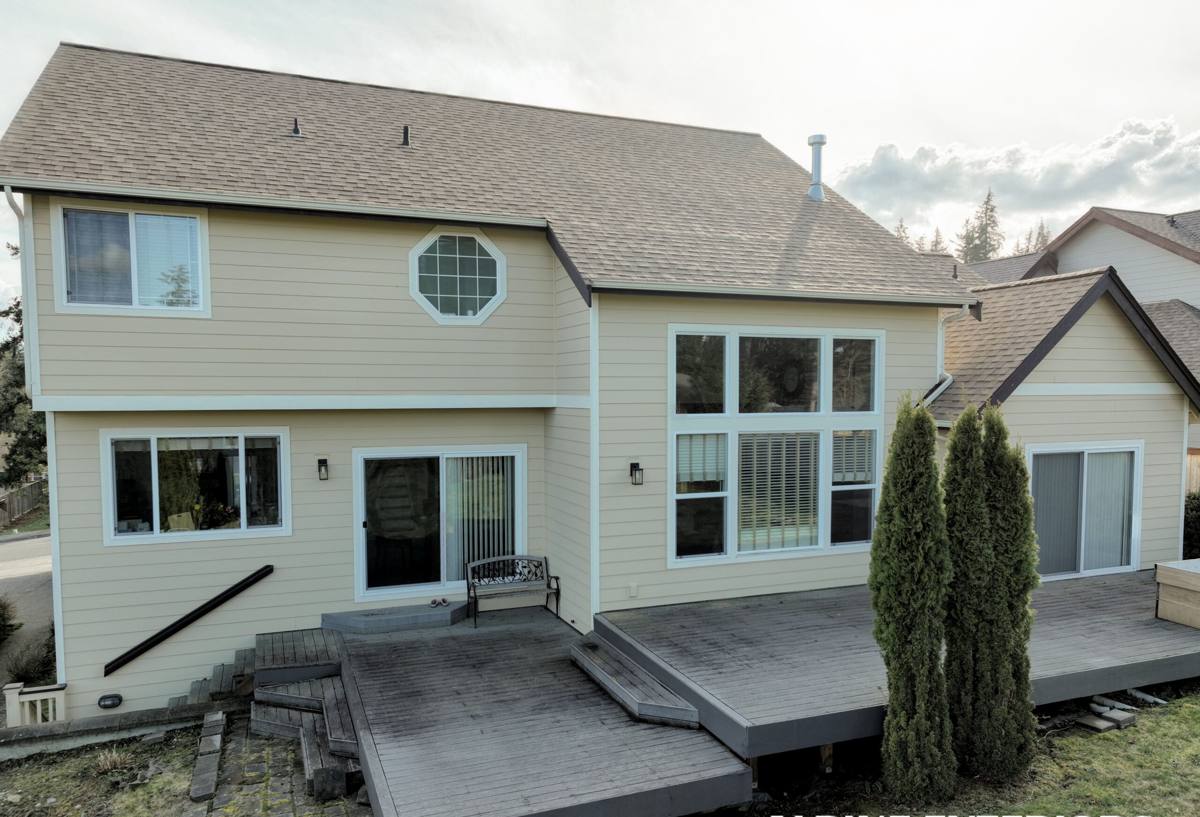
What Mercer Island's Climate Does to a Deck
Moisture That Never Fully Lets Up
Being surrounded by water keeps humidity high nearly year-round, even on days without rain. That moisture works into end grain, fastener holes, and any spot where two boards meet tightly. Over time it's what causes cupping, splitting, and the slow rot that homeowners usually don't notice until a board actually gives underfoot.
Driving Rain and Wind-Driven Water
Western Washington rain rarely falls straight down. Wind off the lake pushes it sideways into ledger connections, stair stringers, and any place decking meets the house. If flashing and gaps aren't done right, water gets pushed into places it was never designed to sit.
A Long Moss and Algae Season
Shaded, moisture-heavy decks on Mercer Island grow moss and algae for a good chunk of the year, especially on the north or east sides of a house or under mature trees. Beyond looking bad, moss holds water against the wood surface and turns a deck slick and genuinely dangerous underfoot in wet weather.
Mature Tree Cover
A lot of Mercer Island's older neighborhoods have significant tree canopy, which is part of the island's appeal but also means decks get less direct sun to dry out between rain events. Design and material choice both need to account for a deck that may stay damp longer than one built in full sun.
Choosing a Decking Material That Fits This Climate
There's no universally "right" decking material — every option is a trade-off between upfront cost, appearance, and how much upkeep you're willing to put in given the moisture load a Mercer Island deck deals with.
| Material | Upfront Cost | Maintenance | How It Handles This Climate |
|---|---|---|---|
| Pressure-treated lumber | Lowest | Annual cleaning, periodic sealing | Affordable and repairable, but needs consistent sealing or moisture works into end grain and fastener holes |
| Cedar | Mid-range | Regular sealing to hold color | Naturally resists rot better than most softwoods, but still needs upkeep in a wet, shaded yard |
| Composite decking | Higher | Occasional washing, no sealing | Won't rot or splinter; still needs periodic cleaning to keep moss and algae from taking hold in shaded spots |
| PVC / capped composite | Highest | Lowest ongoing effort | Best moisture resistance of the group; premium cost reflects that |
We'll walk you through this honestly based on your yard's actual sun exposure, your budget, and how much maintenance you realistically want to do. There's no upsell agenda — a well-installed pressure-treated deck that's sealed on schedule can last for decades here.
What a Correctly Built Deck Actually Involves
Footings and Framing
Everything starts below the surface. Footings need to be sized and set below frost depth, and framing needs proper spacing for the specific decking material you choose — composite and PVC generally need tighter joist spacing than solid wood, and skipping that step is a common shortcut that shows up as bounce and premature sagging.
Ledger Board Attachment and Flashing
Where the deck ties into your house is the single most important connection on the whole structure, structurally and for moisture control. It has to be properly flashed so wind-driven rain can't work its way behind the siding or into the rim joist. This is the detail we see done wrong most often on decks we're asked to repair or replace.
Fasteners and Hardware
In a climate with this much sustained moisture, we use corrosion-resistant, code-rated hardware and fasteners matched to whatever decking material is going on top. Mismatched metals or bargain fasteners are a slow-motion failure — they hold fine for a few years, then start staining the wood or losing grip exactly where you can't see it.
Drainage and Airflow Underneath
A deck that can't dry out underneath stays damp longer after every rain, which speeds up rot in framing and encourages moss growth on the surface above. Proper grading, ventilation, and gaps between boards all matter more here than they would in a drier climate.
Railings and Stairs
Elevated decks need code-compliant guardrails and stair geometry — rise, run, and railing height all have real safety implications, not just inspection checkboxes. We build these to hold up structurally and to actually look intentional, not bolted on as an afterthought.
Our Process, Start to Finish
1. On-Site Consultation
We come look at your actual yard — sun exposure, drainage, slope, and how the space connects to your house — before talking materials or price. A deck plan that ignores your specific site is just a guess.
2. Design and Material Selection
We talk through material trade-offs honestly against your budget and how much maintenance you want to take on, and put together a plan that fits both your house and how you'll actually use the space.
3. Permitting
Mercer Island is its own incorporated city with its own permitting process, separate from unincorporated King County. We handle the permit application and inspection scheduling so you're not stuck untangling which jurisdiction to call.
4. Construction
Footings, framing, ledger and flashing work, decking, and railings — built in that order, with each stage checked before we move to the next rather than rushing to a finished look.
5. Final Walkthrough
We walk the finished deck with you, cover basic care for whatever material you chose, and make sure you know what maintenance schedule actually keeps your warranty and your deck's lifespan intact.
Permits and Code on Mercer Island
Because Mercer Island is its own city rather than unincorporated King County, deck permits go through the City of Mercer Island rather than the county. Most raised decks require a permit, and code touches on things like guardrail height for elevated decks, stair and railing geometry, and setback distance from property lines. Skipping the permit step is a real risk — beyond the legal exposure, it can complicate a future home sale when an unpermitted structure shows up in an inspection. We handle this as a standard part of the job, not an add-on.
Keeping a Mercer Island Deck Looking Good Year After Year
Whatever material you choose, a few habits make the biggest difference in a climate like this:
- Sweep leaves and debris off regularly, especially in fall — trapped organic matter holds moisture against the surface and feeds moss growth
- Clean moss and algae off before it builds up, rather than after it's already staining or degrading the surface
- Check and reseal wood decking on the schedule appropriate to that product — don't wait until it visibly looks dry and gray
- Keep gutters and downspouts near the deck clear so runoff isn't dumping extra water directly onto or under it
- Look underneath the deck once a year for standing water, soft framing, or fastener corrosion — problems here are far cheaper to catch early
- Trim back tree limbs that keep sections of the deck shaded and damp for most of the day
Why It Matters to Hire a Crew That Already Works This Island
Deck building isn't identical from town to town. A crew that mostly works drier, sunnier parts of the state can build a technically sound deck that still struggles here, simply because they're not used to designing for this much sustained moisture and shade. Knowing Mercer Island's permitting process, the moss and drainage issues specific to lakefront-adjacent, tree-covered lots, and which material and fastener choices actually hold up in this climate isn't something you pick up from a general playbook — it comes from building here repeatedly and seeing what does and doesn't last.
If you're planning a new deck or replacing one that's showing its age, we're happy to take a look and give you an honest, no-pressure estimate — just fill out the form below.