 King County
 Mercer Island Homes Face a Specific Kind of Weather Load
Mercer Island sits inside Lake Washington, in the middle of King County, which means every home here deals with a version of the Pacific Northwest's toughest combination: near-constant moisture, heavy tree cover, and long stretches of the year where surfaces simply don't dry out. Add in the marine air that moves through the broader Puget Sound region and settles across King County, and you get siding conditions that punish shortcuts. Driving rain finds every gap. Shade from mature trees keeps north- and east-facing walls damp for days after a storm. And moss doesn't need much encouragement to take hold on a wall that stays wet.
None of this means siding on Mercer Island is doomed to fail early. It means the material and the installation both have to be matched to the job. That's the whole basis for what we do here: we install James Hardie fiber cement siding, and only James Hardie fiber cement siding, because it's the product we trust to hold up to this specific climate when it's put on correctly.
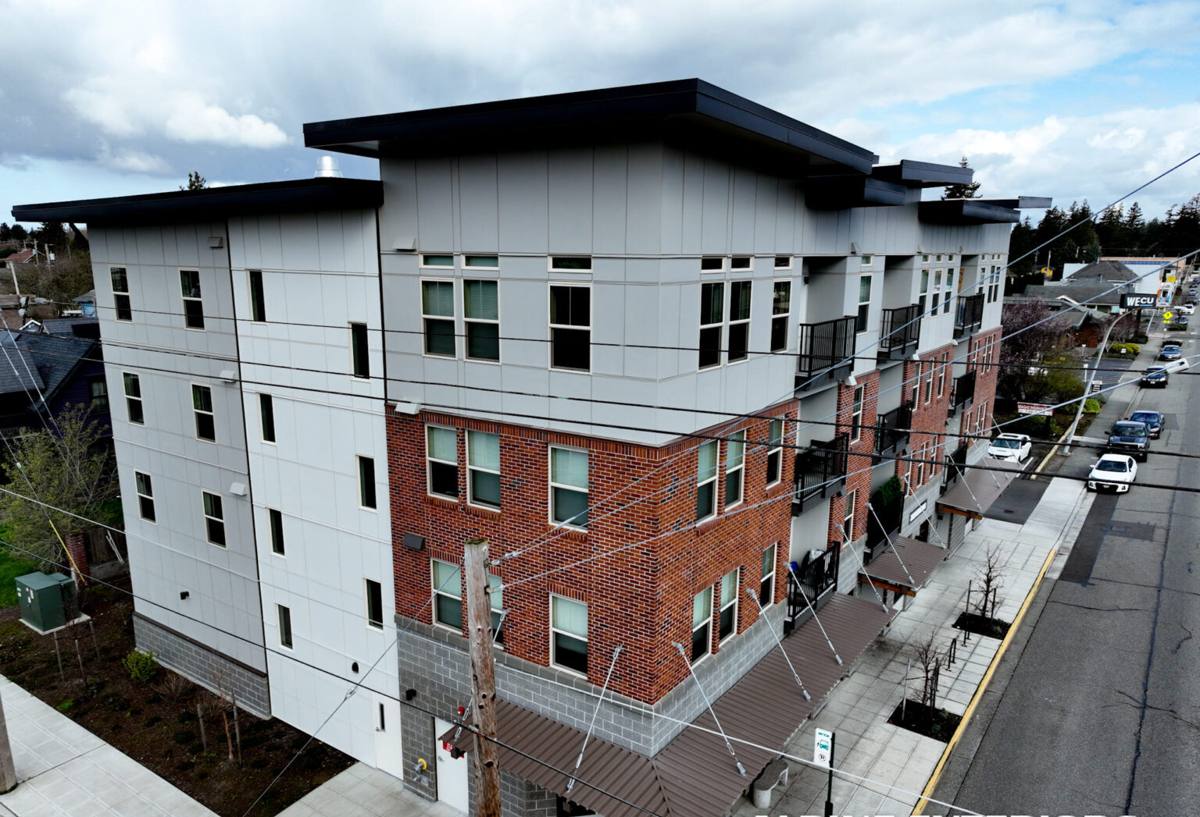
Why Fiber Cement Is the Right Category for This Climate
Fiber cement is cement, sand, and cellulose fiber pressed and cured into a rigid board. It doesn't absorb water the way wood-based products do, it doesn't expand and contract with humidity the way vinyl does, and it's non-combustible, which matters given King County's increasing wildfire-smoke and ember exposure during dry summer stretches. For a lake-adjacent, tree-shaded property, the practical benefit is simpler: fiber cement doesn't rot, and it doesn't feed the moss and mildew that a damp wood or engineered-wood surface will host indefinitely.
We standardized on James Hardie specifically, not fiber cement in general, because Hardie engineers its boards by climate zone and backs the installation with a real specification. Other fiber cement brands exist, and some are reasonable products. But we've built our crew's training, our fastening schedules, our flashing details, and our warranty conversations around one manufacturer's system, and we'd rather be excellent at installing one product correctly than average at installing several.
HardieZone and Why It Matters Here
James Hardie rates its siding by climate zone. King County, including Mercer Island, falls in the HZ5 zone, which is engineered for regions with freeze-thaw cycles and sustained moisture rather than extreme heat or termite pressure. That's a meaningful distinction: the same-looking board sold in a hot, humid climate is formulated differently than the one we install here. Using the correctly zoned product is a baseline requirement, not an upsell.
What a Correct Fiber Cement Installation Actually Involves
Fiber cement siding fails prematurely almost exclusively because of installation mistakes, not because the material itself gave out. On a damp, shaded property like a typical Mercer Island lot, those mistakes show up faster than they would somewhere drier. A correct job follows the manufacturer's written installation instructions closely, because that's also what keeps the warranty intact.
- Minimum clearance maintained between the bottom of the siding and the ground, roofline, decks, and walkways so water can't wick into the board
- Correct fastener type, size, and spacing driven into framing, not just sheathing, at the depth Hardie specifies
- All factory-cut and field-cut ends primed or sealed before installation, since raw cut edges are the fastest path for moisture intrusion
- Flashing installed at every window, door, penetration, and horizontal transition, lapped so water sheds outward and down
- A weather-resistive barrier behind the siding, installed and lapped correctly, with any rainscreen gap detailed per code and manufacturer guidance
- Joints and butt seams caulked with a quality, paintable sealant rated for the exposure, not just whatever's on the truck
Skip any one of these steps and the board itself can still be excellent — it just won't perform the way it's supposed to. This is where a lot of siding problems on older King County homes actually originate: not a bad product, but a rushed or incomplete installation.
Moss, Shade, and Moisture: The Mercer Island Variable
Mercer Island's tree canopy is part of what makes the island desirable, but it also means many homes have walls that get partial or no direct sun for long stretches, especially in the darker months. That extends drying time after every rain event and creates ideal conditions for moss and algae growth on any surface that holds moisture at the face. ColorPlus Technology, Hardie's factory-applied finish, gives the surface better resistance to this kind of buildup than field-applied paint, and it holds color and sheen longer under repeated wet-dry cycling. It won't stop moss from ever forming — nothing painted will, on a shaded wall in this climate — but it makes routine cleaning simpler and reduces how often the finish itself needs attention.
Our Process on Mercer Island Projects
- Assessment: We look at existing siding condition, sheathing and framing underneath where accessible, drainage around the foundation, and any areas showing staining, softness, or active moss growth.
- Scope and product selection: We determine whether the project is a full tear-off or, in limited cases, an overlay situation, and confirm the right HardiePlank, HardiePanel, or HardieShingle profile and ColorPlus finish for the home.
- Prep: Removal of failing material, repair of any compromised sheathing found underneath, and correct installation of the weather-resistive barrier before a single piece of new siding goes up.
- Installation: Siding, trim, and flashing installed to Hardie's written specification, with fastening and clearances checked as the work progresses, not just at the end.
- Final inspection and walkthrough: We check caulking, seams, and clearances, and walk the finished job with the homeowner before calling it done.
What Drives the Cost of a Fiber Cement Project Here
Every home is different, and we don't quote a job without seeing it, but the same handful of factors move the price on most Mercer Island properties.
| Factor | Why It Matters |
|---|---|
| Extent of tear-off vs. new construction | Removing failing siding and repairing water damage underneath takes more labor than siding over sound sheathing |
| Home height and access | Multi-story homes, steep lots, and lake-side elevations often need more scaffolding or lift access |
| Trim, soffit, and accessory scope | Full trim replacement and detailed architectural features add material and labor beyond the flat wall area |
| Siding profile selected | Lap siding, shingle-style panels, and vertical panel systems differ in material and labor time |
| Condition found underneath | Rot or moisture damage discovered during tear-off can add repair scope not visible at the estimate stage |
Maintaining Fiber Cement Siding Once It's Installed
One of the honest selling points of fiber cement is how little ongoing work it demands compared to wood or wood-composite siding, but "low maintenance" isn't "no maintenance," especially in a climate that grows moss on almost anything.
- Rinse the siding down at least once a year, more often on shaded or north-facing walls, to keep moss and organic buildup from establishing
- Keep gutters clear so water isn't sheeting down the wall face during heavy rain
- Trim back vegetation and tree limbs that keep a wall section shaded and damp longer than the rest of the house
- Inspect caulking at joints and trim every couple of years and touch up any that's cracked or pulled away
- Address any impact damage or cracked boards promptly — it's a small repair early and a moisture problem later
Why a Crew That Already Works Mercer Island Matters
Siding work on Mercer Island has its own logistics: bridge and ferry-adjacent scheduling, narrower lot access on some properties, and, in many cases, homeowners association or design review requirements that don't exist in unincorporated parts of King County. A crew that's worked the island before knows to ask about those reviews up front instead of discovering a delay mid-project. Local experience also means we've already seen how differently a north-facing, tree-shaded wall on a lake lot ages compared to a south-facing wall with full sun exposure, and we plan the job — and set expectations — accordingly.
Just as important: this is a small, higher-end market where reputation travels fast. A crew planning to keep working on Mercer Island has every incentive to do the job right the first time, because the next homeowner considering us is often a neighbor.
Ready to Talk About Your Siding?
If your Mercer Island home has siding that's showing its age, holding moisture, or growing moss faster than it should, we're happy to take a look and give you an honest read on what's going on and what it would take to fix it. There's no pressure and no obligation — just fill out the form below and we'll set up a free estimate.