 King County
 Why Queen Anne's Exposure Matters More Than Most Neighborhoods
Queen Anne sits high and exposed, which means it catches wind and moisture in a way that flatter, more sheltered King County neighborhoods don't. Homes here take on salt-tinged air moving in off Puget Sound, driving rain that hits siding at an angle instead of falling straight down, and a moss season that can stretch from October through May in a wet year. None of that is unusual for this part of Washington, but it does mean siding decisions that work fine in a dry climate can fail here in ways homeowners don't expect until year six or seven.
Fiber cement siding was engineered for exactly this kind of exposure, but the material only performs as promised when it's installed correctly for the conditions it's actually facing. That's the gap we see most often on Queen Anne homes: siding that looks right from the street but was installed using generic practices that don't account for wind-driven rain, elevation, or the moss and mildew pressure that comes with sustained dampness.
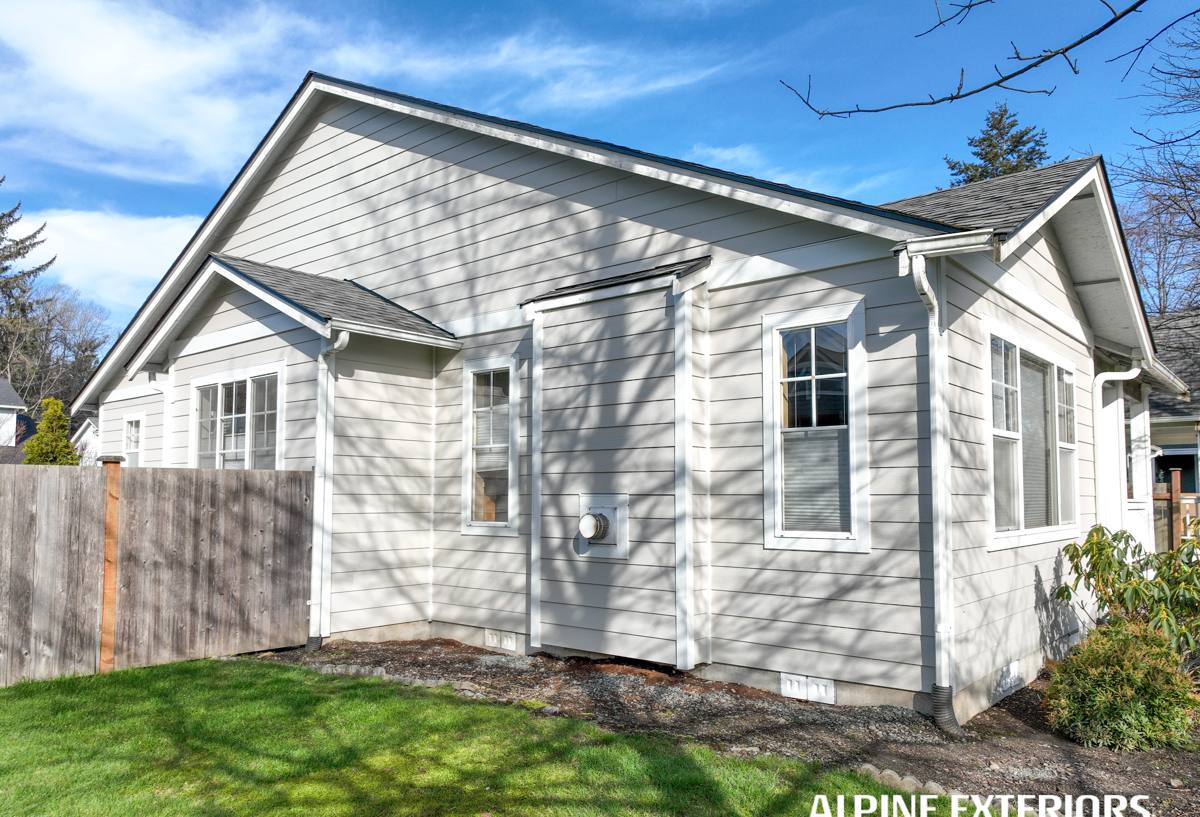
What Salt Air, Rain, and Moss Actually Do to Siding
Salt-Laden Air
Homes closer to the water pick up airborne salt that settles on exterior surfaces. Over time this accelerates corrosion of fasteners, trim flashing, and any metal components in the wall assembly. It also breaks down cheaper factory finishes faster than inland exposure would, which is part of why finish quality matters as much as the substrate underneath it.
Driving Rain
Elevation and open exposure mean rain on Queen Anne often arrives sideways rather than straight down. That pushes water into laps, seams, and butt joints that would stay dry in a more sheltered spot. If those details aren't sealed and flashed with that reality in mind, water finds its way behind the siding rather than running off the face of it.
Extended Moss and Mildew Season
Sustained dampness, filtered light from mature trees, and mild temperatures give moss and mildew a long runway on the Sound. Moss on a roof is a maintenance nuisance; moss and mold on siding is a sign that a surface is staying wet longer than it should, which points to a ventilation or drainage-plane issue underneath the finish, not just a cosmetic problem.
Why James Hardie Fits This Climate
We install James Hardie fiber cement exclusively, and Queen Anne's climate is a large part of why. Hardie's HZ5 product line is engineered specifically for climates with sustained moisture exposure — freeze-thaw cycling, high humidity, and repeated wetting and drying. Fiber cement itself doesn't absorb water the way wood-based or wood-fiber products can, so it doesn't swell, cup, or rot the way untreated wood siding will if a seal fails somewhere.
The factory-applied ColorPlus finish also matters more here than in a milder climate. Because it's baked on in a controlled factory environment rather than field-applied, it holds up better against the combination of UV, moisture, and salt air than a job-site paint job would, and it comes with a finish warranty separate from the product warranty. That's a meaningful distinction in a neighborhood where repainting siding every few years isn't something most homeowners want to plan around.
Why We Don't Install Other Sidings on Sound-Facing Homes
We get asked fairly often about vinyl or engineered wood products, usually because they cost less up front. Vinyl expands and contracts significantly with temperature swings, and its seams and J-channels are exactly the kind of detail that wind-driven rain exploits over time. Engineered wood products can perform well when maintained perfectly, but they depend on an intact factory coating to keep moisture out — and a long moss season is unforgiving of any gap in that coating. We're not saying these products fail everywhere; we're saying that for the specific exposure profile on Queen Anne, we don't think they're the right trade-off, and we've standardized on a product system that doesn't ask homeowners to manage that risk.
What a Correct Installation Involves Here
The siding panel is only one part of the system. On an exposed, rain-driven site like Queen Anne, the details around it decide whether the job holds up:
- Drainage plane and rainscreen gap: A ventilated air gap behind the siding lets any moisture that does get past the face material drain and dry out instead of sitting against the sheathing.
- Flashing at every horizontal transition: Window heads, deck ledgers, and roof-to-wall intersections need step and head flashing sized for wind-driven rain, not just standard runoff.
- Correct fastener spacing and type: Hardie specifies fastener patterns and corrosion-resistant fastener types for a reason — under-fastened or improperly spaced panels are a common cause of premature failure.
- Sealed and back-primed cut edges: Any field-cut panel edge needs to be sealed per manufacturer spec, especially at trim returns and inside corners where water tends to collect.
- Proper clearance from grade and roof lines: Siding installed too close to soil, decking, or roofing traps moisture against the bottom edge of the panel, which is often where moss and mildew take hold first.
Skipping any one of these doesn't necessarily show up in year one. It shows up in year five or six, as staining, soft trim, or panels that have started to separate at the seams.
Our Process for Queen Anne Homes
1. On-Site Assessment
We look at the home's specific exposure — how much direct wind and rain it takes, whether tree cover is contributing to moss growth, and the condition of the existing wall assembly once siding is removed.
2. Wall Prep and Moisture Check
Before new siding goes up, we check sheathing condition and existing moisture damage. Covering a compromised wall with new siding just hides the problem; it doesn't solve it.
3. Drainage Plane Installation
We install a proper water-resistive barrier and rainscreen system suited to the home's exposure, not a one-size-fits-all wrap.
4. Hardie Panel and Trim Installation to Spec
Panels, fasteners, and flashing are installed to Hardie's published specifications for our climate zone, with particular attention to seams and butt joints given the sideways rain this area sees.
5. Final Detailing and Walkthrough
We check caulking, trim returns, and clearances before calling the job finished, and walk the homeowner through what to expect as the finish weathers in.
Comparing Siding Options for This Exposure
| Factor | Vinyl Siding | Engineered Wood | James Hardie Fiber Cement |
|---|---|---|---|
| Moisture absorption | Low, but seams leak under wind-driven rain | Moderate if coating fails | Very low; doesn't swell or rot |
| Salt air durability | Can chalk and fade faster near water | Coating can degrade under salt exposure | Factory finish holds color and integrity longer |
| Moss/mildew resistance | Moderate; surface-level growth | Vulnerable if surface stays damp | Resistant; won't rot if surface growth occurs |
| Fire resistance | Low; melts and contributes fuel | Combustible | Non-combustible |
| Typical warranty structure | Prorated, product only | Varies, often shorter finish warranty | Long-term product and finish warranty, transferable |
Why Local Installation Experience Matters
Fiber cement is a forgiving material when installed correctly and an unforgiving one when it isn't. A crew that mostly works drier, more sheltered parts of King County may not default to rainscreen detailing or the flashing sequence that a wind-exposed Queen Anne lot actually needs — not because they're careless, but because it isn't the habit their normal job sites demand. A crew that works this neighborhood regularly builds those details in as standard practice, because they've seen what happens when they're skipped.
That local pattern-recognition also shows up in smaller ways: knowing which sides of a house typically take the worst weather given the terrain, recognizing early moss growth as a sign of a ventilation issue rather than just a cleaning job, and knowing how to sequence a re-side around King County's wetter months so the wall assembly isn't left exposed during a heavy rain stretch.
Signs Your Queen Anne Home May Need a Closer Look
- Persistent moss or dark streaking on siding that comes back shortly after cleaning
- Soft or spongy trim boards, especially near window sills and the bottom courses of siding
- Visible gaps, cupping, or separation at panel seams and butt joints
- Peeling or chalking paint on wood-based or older engineered siding
- Interior signs like musty smells or staining on walls that back up to exterior siding
Any one of these is worth a professional look before it's addressed with a simple repaint or spot repair, since the underlying cause is often moisture management, not just surface wear.
What to Expect Cost-Wise
Full re-siding costs vary by home size, existing wall condition, trim complexity, and how much repair work is needed once old siding comes off. Homes that need sheathing repair or updated flashing as part of the job will cost more than a straightforward tear-off and replace. We won't quote a number without seeing the home, but we can say that skipping the drainage plane or flashing details to hit a lower price is the kind of shortcut that costs more in repairs than it saves upfront — especially in an exposure like this one.
If you're weighing a siding project on Queen Anne, we're happy to take a look and walk you through what your home specifically needs. Reach out for a free, no-pressure estimate using the form below.