 King County
 Building a Deck That Holds Up in Rainier Valley
A deck in Rainier Valley does its work in wet, mild weather for most of the year, then bakes under direct summer sun for a few months. That swing — soggy and shaded through fall, winter, and spring, then dry and bright in July and August — is what wears decks out here faster than homeowners expect. Add the marine-influenced air that moves through the Puget Sound region and a moss season that can run half the year on the shadier side of a house, and you have a structure that needs more than a nice railing and some boards nailed down. It needs to be built to manage water first, and look good second.
We build and repair custom decks throughout King County, and Rainier Valley properties tend to share a few things: mature trees that shade part of the yard, older homes with ledger connections that were never flashed correctly, and lots split between full sun and deep shade depending on which side of the house you're standing on. A deck design that ignores those realities will look fine at the walkthrough and start failing in two or three wet seasons.
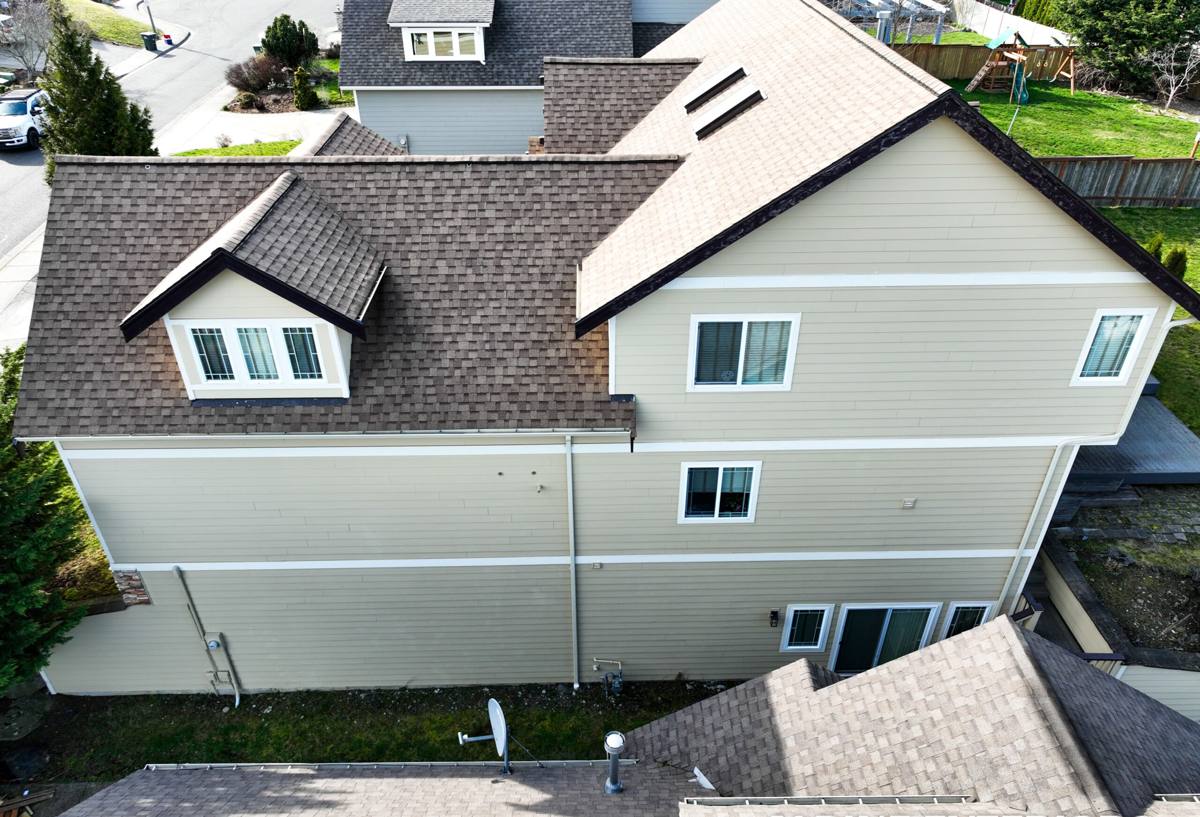
What Driving Rain, Moss, and Salt Air Actually Do to a Deck
Each of these stressors attacks a deck differently, and understanding the mechanism is how you avoid paying for the same repair twice.
Driving Rain
Wind-driven rain doesn't just fall on a deck — it gets pushed sideways into ledger boards, post bases, and stair stringers. Any gap in flashing or any fastener without a sealed washer becomes an entry point. Once water gets behind a ledger board or into end-grain, it doesn't dry out quickly in our climate, and that's when rot starts.
Moss and Algae
Moss needs shade and moisture to establish, and Rainier Valley yards with tree cover or north-facing exposures give it both for much of the year. Beyond looking bad, a moss mat holds water against the decking surface constantly, which accelerates wood decay and makes composite and wood surfaces alike genuinely slick and dangerous underfoot.
Salt Air and General Marine Moisture
Properties closer to the water in the greater Puget Sound area deal with airborne moisture and mild corrosive exposure that speeds up rust on lower-grade fasteners and hardware. Even where salt exposure is modest, the general humidity keeps everything on a deck — wood, metal, and even some composite cores — wetter for longer stretches than in a drier climate.
None of these problems are dealbreakers. They're design inputs. A deck built with the right drainage, the right fasteners, and the right material choices in the right spots will handle King County weather for decades. One built without those things will need real repair work inside five to eight years.
Choosing the Right Decking Material for This Climate
There's no single "best" decking material — there's a best material for your budget, your sun exposure, and how much upkeep you actually want to do. Here's how the common options compare for a Rainier Valley setting:
| Material | Moisture Performance | Maintenance | Typical Lifespan Here |
|---|---|---|---|
| Pressure-treated wood | Good if sealed regularly; end-grain and fastener points are the weak spots | Annual cleaning, re-sealing every 1-2 years | 10-15 years |
| Cedar | Naturally rot-resistant but still needs finish maintenance in wet shade | Cleaning and oil/stain every 1-2 years | 15-20 years |
| Composite decking | Excellent — doesn't absorb water into the board itself | Periodic washing to prevent moss/algae film | 25-30+ years |
| PVC/capped polymer | Best moisture resistance of the common options | Lowest maintenance; occasional cleaning | 25-30+ years |
We don't push composite or PVC on every job — a well-built cedar deck with proper maintenance still looks great and performs well in this climate, and it costs less up front. What we do push back on is undersized or untreated lumber used in ground-contact or low-clearance spots, because that's where our wet season causes the fastest failure regardless of what species it is.
Where Material Choice Matters Most
- Shaded, low-airflow areas under mature trees — composite or PVC reduces the moss and rot cycle significantly
- Full-sun sections — wood species and finish choice matter more than moisture resistance here
- Stair treads and any surface near grade — this is where standing water and splash-back do the most damage over time
- Ledger and rim joist framing — always structural-grade lumber with proper flashing, regardless of what decking goes on top
What a Correct Deck Build Actually Involves
A deck is only as good as what you can't see once it's finished. The visible decking boards get all the attention, but the framing and connections underneath are what determine whether the deck is still solid — and safe — in fifteen years.
Ledger Attachment and Flashing
Where a deck attaches to the house is the single most common failure point we find on older Rainier Valley homes. A ledger board needs proper flashing that directs water away from the house sheathing, not just caulk and lag bolts. This is also a documented cause of deck collapses nationally when done wrong, which is why building code is specific about it.
Post Bases and Footings
Posts need to sit on bases that keep the wood off standing water, footings need to reach below frost depth and bear on undisturbed soil, and every connection point needs corrosion-resistant hardware rated for treated lumber — standard hardware corrodes faster than the wood around it in our wet climate.
Fasteners and Hardware
Hot-dip galvanized or stainless hardware isn't optional in a climate this wet. Mismatched metals between the fastener and the treated lumber's chemical treatment cause accelerated corrosion — a detail that's easy to get wrong if a crew isn't paying attention to compatibility.
Drainage and Airflow Underneath
Low decks with poor airflow underneath are where we see the worst moss and rot problems in King County. Proper joist spacing, grading beneath the deck so water doesn't pool, and enough clearance for air movement all extend the life of the structure significantly.
Our Process, Start to Finish
We keep the process straightforward because most homeowners just want to know what's happening and when.
- On-site assessment — we look at sun/shade exposure, existing structure (for replacements), soil and drainage, and how you actually plan to use the space
- Design and material selection — sized to your yard and budget, with honest trade-offs explained for each material option
- Permitting — we handle the permit application and inspections required for your project
- Framing — footings, posts, ledger flashing, and joists built to code, not just to pass a quick look
- Decking, railing, and finish work — installed per manufacturer spec so warranties stay valid
- Final walkthrough — we go over care and maintenance specific to the material you chose
Permits and Code in King County
Most new decks and many deck replacements in King County require a permit, and the threshold depends on height, size, and whether the structure attaches to the house. Ledger attachment, guardrail height, baluster spacing, and stair geometry are all governed by code specifically because they're the details that cause injuries when skipped. We pull the required permits and build to the inspected standard — it's not extra paperwork for its own sake, it's what keeps the deck insurable and safe, and it protects you if you sell the house later and a buyer's inspector looks underneath.
Maintenance That Actually Extends Deck Life Here
Every material benefits from a little seasonal attention in this climate. This is the realistic version, not a full weekend project list:
- Sweep leaves and debris off the deck regularly in fall — trapped organic matter is what feeds moss growth
- Clean the surface at least once a year with a deck-safe cleaner, more often in shaded areas prone to moss
- Check and re-seal wood decking every 1-2 years; composite and PVC don't need sealing but still benefit from washing
- Inspect the ledger flashing and post bases annually for gaps, rust streaks, or soft spots
- Keep gutters and downspouts clear so roof runoff isn't dumping extra water onto or near the deck
- Trim back vegetation that's shading the deck and keeping it damp longer than it needs to be
Why a Crew That Already Works Rainier Valley Matters
Deck-building fundamentals are the same everywhere, but the details that make a deck last — how much shade a given lot gets, how long moss season really runs on the west side of a house versus the east, what the local permitting process looks like in practice — are things you learn by working in an area repeatedly, not by reading a spec sheet once. We're not guessing at how King County's wet season treats a deck; we're building around it every job.
If you're planning a new deck or replacing one that's showing its age, we'll come take a look, talk through what your yard and budget call for, and give you a straightforward estimate — no pressure, no upsell on materials you don't need. Use the form below to get started.