 King County
 Sammamish's Climate Is Tough on Decks — Just Not the Way Most People Expect
Contractors who work the Puget Sound shoreline talk a lot about salt air eating through hardware and finishes. Sammamish doesn't have that problem — it sits up on the plateau east of Lake Sammamish, well away from saltwater. But that doesn't mean the climate goes easy on a deck. What Sammamish has instead is dense evergreen canopy, long stretches of driving rain from fall through spring, and yards that stay shaded and damp for months at a time. That combination is its own kind of hard on wood, fasteners, and footings, and it's the reason a deck built the same way you'd build one in a sunny, open lot in Eastern Washington often struggles here within a few years.
King County's wet season isn't a short shoulder period. Rain that falls steadily, combined with tree cover that blocks sun and wind from drying surfaces back out, means deck boards, ledger connections, and framing lumber can stay damp for days after a storm passes. Add in the needle and leaf litter that collects between boards on a wooded lot, and you've got a setup that speeds up rot and encourages moss and algae growth long before a deck is old enough to need replacing.
Sammamish also sits higher and further from the moderating effect of Puget Sound than lowland King County communities, so it sees a few more frost mornings and occasional snow each winter on top of the long rainy stretches. None of that is severe by Northwest standards, but it's one more reason to build with materials and hardware that won't react badly to a freeze-thaw cycle stacked on top of months of dampness.
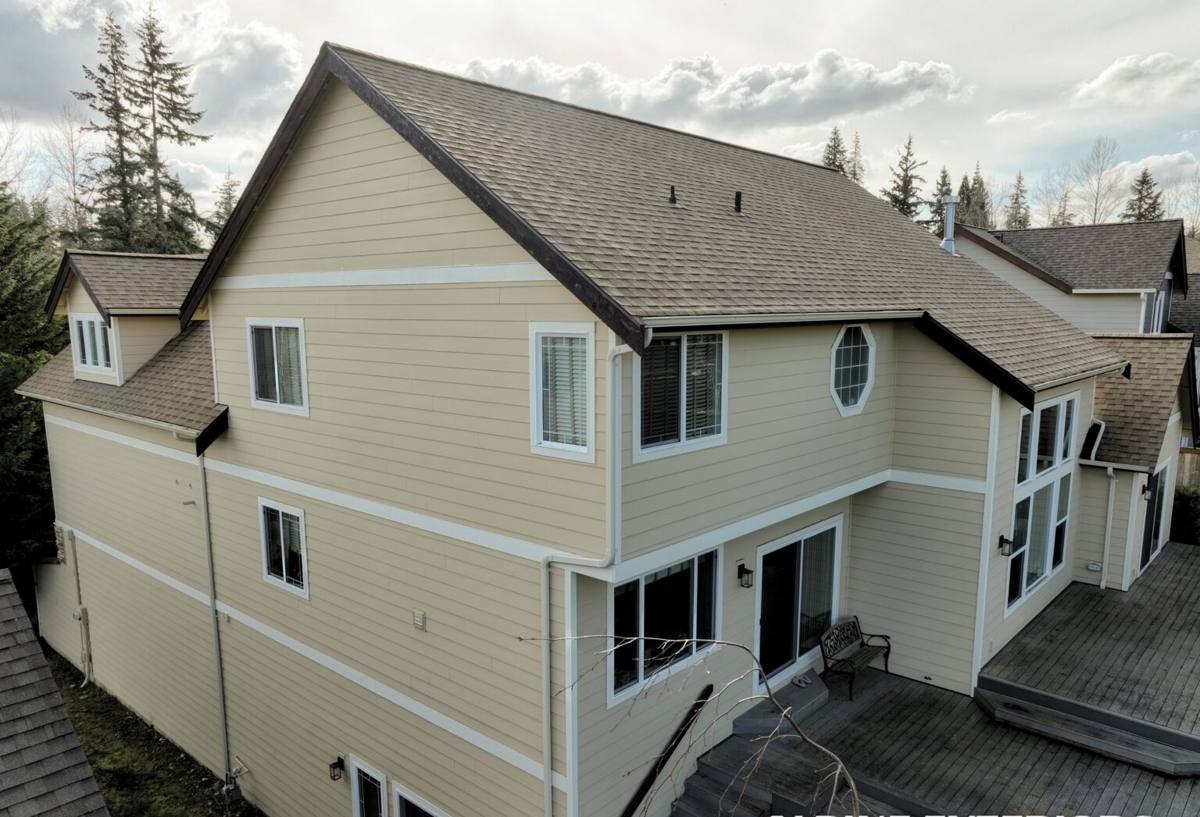
What Happens to a Deck That Wasn't Built for This
Rot at the Framing, Not Just the Surface
The visible decking is usually the last thing to fail. The framing underneath — ledger boards, joists, beams, and post bases — is where moisture actually does its damage, and it's hidden until a board feels spongy or a railing starts to wobble. A ledger board attached without proper flashing, or joists sitting in standing water because there's no gap for drainage, can be rotting for years before it shows on the surface.
Moss, Algae, and Slip Hazards
Shaded decks in wooded Sammamish neighborhoods grow moss and algae faster than decks in open, sunny yards elsewhere in King County. Beyond looking neglected, a mossy deck surface gets genuinely slick in the rain, and moss holds moisture against the wood or composite surface, which accelerates whatever decay process is already underway underneath.
Corroding Hardware
Fasteners and connectors matter more here than people expect. Standard hardware that isn't rated for treated lumber or constant moisture exposure will corrode, stain the wood around it, and eventually lose holding strength. On a structure that's supporting people, furniture, and sometimes hot tubs, that's not a cosmetic issue — it's a structural one.
Choosing Decking Material for a Shaded, Wet Lot
There's no single right answer for every yard, but the shade and moisture pattern common across Sammamish lots should factor into the decision. Here's how the common options compare for this specific climate:
| Material | Upfront Cost | Moss & Moisture Resistance | Maintenance | Realistic Lifespan Here |
|---|---|---|---|---|
| Pressure-treated wood | Lowest | Fair — needs sealing to perform | Annual cleaning and resealing | 10–15 years with upkeep |
| Cedar | Moderate | Good natural resistance, but surface still needs care in shade | Regular cleaning, periodic staining | 15–20 years with upkeep |
| Capped composite | Higher | Very good — won't rot, but still needs surface cleaning | Occasional washing, no sealing/staining | 25+ years |
| PVC/vinyl decking | Highest | Excellent — fully synthetic, immune to rot | Occasional washing | 25–30+ years |
We'll be honest about trade-offs rather than pushing whatever has the best margin. Wood costs less to install but asks more of the homeowner every year, especially on a shaded lot where it never fully dries between rains. Capped composite and PVC cost more upfront but hold up on their own in exactly the conditions Sammamish throws at a deck — which is why we recommend them for lots with heavy tree cover, even though we're glad to build a quality wood deck for homeowners who prefer the look and are ready for the maintenance.
Framing and Structure: The Part Nobody Sees But Everyone Depends On
A deck is only as good as what's underneath it, and this is where a lot of corner-cutting happens because it's invisible once the decking goes down. On a Sammamish job, we pay particular attention to a few things that matter more here than in a drier climate:
Ledger Attachment and Flashing
Where the deck attaches to the house is the single most common failure point in decks anywhere, and it's the connection that carries the most structural load. Proper flashing that sheds water away from the house band board, rather than trapping it against the wood, is not optional in a climate that sees this much rain.
Footings and Post Bases
King County soils and the freeze-thaw cycles we do get in a cold snap mean footings need to be sized and set to local frost depth requirements, not guessed at. Post bases should hold posts up off the concrete and decking surface, not bury the end grain where water collects.
Joist Spacing and Drainage
Joist spacing depends on the decking material — composite and PVC often require tighter spacing than wood — and the whole frame should be built with enough slope and gap for water to actually drain instead of pooling under the boards where nobody sees it happening.
Sizing for Real-World Loads
A deck also has to carry real weight on top of everything the weather throws at it — furniture, a crowd at a barbecue, sometimes a hot tub — and that live load has to be accounted for in how the framing is sized, not just in how it looks once the boards are down. We size joists, beams, and footings for the actual intended use of the space, and we'll flag it up front if a hot tub or similar load is part of the plan so the structure underneath is built for it from day one.
Railings, Fasteners, and the Details That Prevent Callbacks
Railings take direct weather exposure and constant physical stress, so the hardware and fastening method matter as much as the material itself. We use fasteners and structural connectors rated for treated lumber and exterior exposure, not general-purpose hardware that will corrode and streak the wood within a couple of seasons. Hidden fastener systems on composite and PVC decking keep the surface free of exposed screw heads, which also means fewer places for moisture and moss to take hold. Every railing post connection gets checked for the kind of positive attachment that will still be solid in ten years, not just on install day.
Guard railings on any deck with a meaningful drop also need to meet minimum height requirements and have baluster spacing tight enough that a small child can't fit through or climb it — a standard that applies across Washington and isn't something we treat as optional or negotiable on a design.
Permits and Site Considerations Specific to Sammamish
Sammamish is its own incorporated city within King County, and most decks above a certain height or size need a permit through the city before work starts — this covers the structural framing, footings, and railing height, not just the finished look. Many Sammamish neighborhoods are also part of planned communities with their own architectural review or HOA guidelines that can affect decking color, railing style, or even whether composite decking is allowed at all. We check both before we finalize a design, so you're not stuck redoing work after the fact. Lots with steep grades, ravines, or proximity to wetlands — not uncommon on the Sammamish plateau — can also trigger additional site review, which is worth confirming early rather than after a permit application stalls. Some site plans also call out protection zones around significant trees, which can affect where footings can go relative to root systems; we account for that in the design rather than finding out mid-excavation.
How We Build a Deck, Start to Finish
Every deck we build in Sammamish follows the same sequence, adjusted for the specific lot:
- Site visit and design. We look at sun exposure, tree cover, drainage patterns, and how the deck connects to the house before recommending materials or layout.
- Permit and HOA coordination. We handle the paperwork with the city and, where applicable, confirm the design meets community guidelines before we order materials.
- Demolition or prep. If we're replacing an existing structure, we remove it and inspect the ledger area and any framing that will be reused.
- Footings and framing. Footings are set to proper depth, and the frame is built with correct spacing, slope, and flashing at the ledger.
- Decking and railings. Boards and railings go in per manufacturer specs, with fastening methods matched to the material.
- Final walkthrough. We check every railing connection, fastener, and drainage detail with you before we call the job done.
Keeping a Sammamish Deck in Good Shape
A well-built deck still needs some attention in this climate, and most of it is simple if you stay ahead of it:
- Sweep needles and leaf litter out of board gaps regularly, especially in fall — trapped debris holds moisture against the surface.
- Rinse the deck surface at least once a year to knock back moss and algae before they get established, more often on heavily shaded sections.
- Keep sprinkler heads and downspouts from spraying directly onto deck boards or pooling water near footings.
- Check railing posts and stair connections annually for movement or corrosion at the hardware.
- Reseal or restain wood decking on the schedule the product calls for — skipping a year in this climate shows up fast.
- Look underneath the deck once a year for signs of moisture staining, soft spots, or pest activity around the ledger and framing.
Why Hire a Crew That Already Works in Sammamish
A deck built to a generic national standard isn't necessarily built for a shaded, wet King County lot. Crews who work Sammamish regularly know which details actually matter here — the flashing at the ledger, the drainage gap under the boards, the hardware that won't corrode under a fir canopy — because they've seen what happens when those details get skipped. We're also familiar with the city's permit process and the kind of HOA guidelines common in Sammamish's planned neighborhoods, which keeps a project moving instead of stalling on paperwork nobody anticipated. That local familiarity is worth more than it sounds like on paper: it's the difference between a deck that needs real work again in five years and one that just needs the simple upkeep above.
If you're planning a new deck or replacing one that's showing its age, we're happy to walk the site with you and talk through materials, layout, and what it would actually take for your yard. Use the form below to request a free, no-pressure estimate.