 King County
 Why Metal Roofing Makes Sense for Seattle Homes
Seattle sits in one of the wetter corners of the country, and that changes what "a good roof" actually means here. A roofing material that performs fine in a dry climate can struggle under the Pacific Northwest's combination of near-constant drizzle, occasional driving rain off the Sound, heavy tree cover, and long stretches of shade that never let a roof fully dry out. Metal roofing has become a popular answer for homeowners in King County who are tired of replacing asphalt shingles every fifteen to twenty years or scrubbing moss off their roof every spring.
A properly installed metal roof sheds water fast, doesn't absorb moisture the way organic shingle materials do, and holds up to wind-driven rain without granule loss or curling edges. It's not the right fit for every home or every budget, and we'll say so plainly during an estimate if that's the case. But for a lot of Seattle roofs, especially steeper pitches, homes with a lot of overhead tree canopy, or owners planning to stay put for decades, metal is worth a serious look.
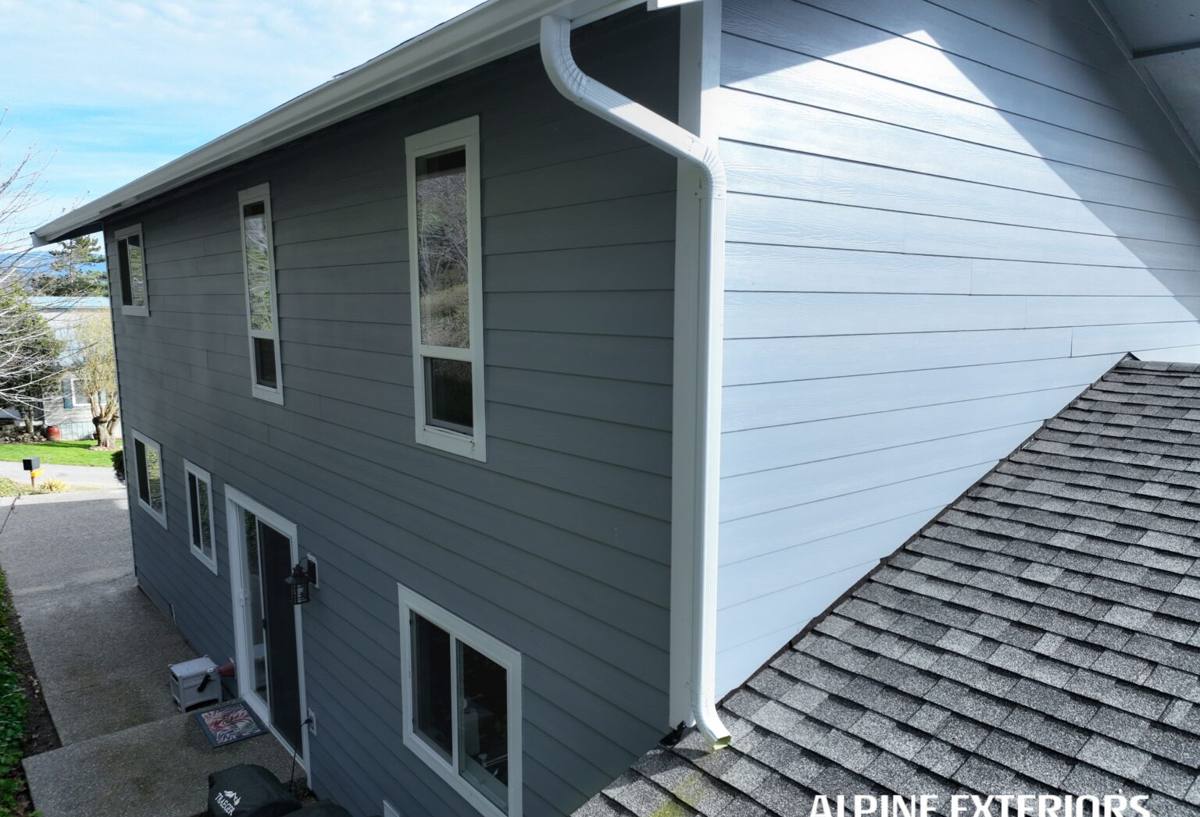
What Seattle's Climate Demands From a Metal Roof
King County doesn't get roof damage from any one dramatic event most years — it gets slow, cumulative wear from moisture that never really leaves. A few specific conditions shape how we spec and install metal roofing here:
Salt Air and Corrosion
Homes closer to Puget Sound and the Sound-adjacent neighborhoods deal with a low but steady dose of salt in the air. Over years, that accelerates corrosion on unprotected or poorly coated metal, and it's harder on cheap fasteners than most homeowners realize. Material choice and fastener quality matter more here than they would fifty miles inland.
Driving Rain and Wind-Driven Water
Seattle rain is rarely a downpour, but it's frequent and often comes sideways in a windstorm. Water finds its way into any roof system through the edges — laps, seams, flashing, penetrations — not usually through the field of the panel. That's where most metal roof failures actually start, and it's almost always an installation issue, not a material one.
Moss, Algae, and Shade
King County's tree cover keeps a lot of roofs shaded and damp for large parts of the year, which is exactly what moss and algae need to take hold. Moss doesn't just look bad — on shingle roofs it lifts material and holds water against the surface, shortening the roof's life. Metal panels give moss and algae far less to grip onto, which is one of the bigger practical advantages homeowners notice within a few years of switching.
Steel, Aluminum, and Panel Styles: Choosing the Right System
"Metal roofing" covers a range of products, and the right one depends on your home, your budget, and how long you plan to own it. Broadly, King County homeowners are choosing between a few categories:
- Standing seam panels — Long, vertical panels with raised, interlocking seams and no exposed fasteners on the finished surface. This is the cleanest-looking option and generally the most watertight, since fasteners are hidden under the seam rather than punched through the panel face.
- Exposed-fastener metal panels — A more budget-friendly option where screws go directly through the panel, typically with a rubber washer. It costs less up front but every one of those fastener points is a potential leak path over time as washers age, so it demands more long-term maintenance attention.
- Steel — Strong, relatively affordable, and widely available in a range of coatings and gauges. Needs a quality protective coating to hold up against our moisture and, closer to the water, salt exposure.
- Aluminum — Naturally corrosion-resistant, which makes it a strong choice for homes nearer Puget Sound or other salt-influenced air. Lighter weight, typically a step up in cost over steel.
We don't push one system on every job. A rambler in a shaded, tree-heavy lot inland has different priorities than a view home closer to the water. Part of our estimate is walking through which system actually fits your house instead of defaulting to whatever's easiest to sell.
Coatings and Finish
The paint or coating system on a metal panel does most of the work of keeping it looking good and resisting fade, chalking, and corrosion over the decades. Higher-grade PVDF-type coatings hold color and gloss longer than basic polyester coatings, which matters more in a climate that never really gives a roof a rest from moisture. We'll walk you through the coating options and warranty terms for whatever product you're considering rather than letting that get glossed over.
What a Correct Metal Roof Installation Actually Involves
Almost every metal roof problem we get called out to inspect in King County traces back to installation shortcuts, not the panel itself. A correct job includes a handful of steps that are easy to skip and hard to see once the roof is finished:
Underlayment and Ice/Water Protection
Metal panels aren't the only waterproofing layer — a synthetic or self-adhering underlayment underneath does critical backup work, especially at eaves, valleys, and low-slope transitions where wind-driven rain is most likely to work its way underneath. Skipping or skimping on underlayment is one of the most common corners cut on lower-bid jobs.
Fastening and Panel Movement
Metal expands and contracts with temperature swings, and panels need to be fastened in a way that allows for that movement without stressing seams or fastener holes over time. Over-tightened or incorrectly spaced fasteners are a slow, quiet cause of leaks that shows up years after installation, well outside a rushed crew's attention span.
Flashing Details
Chimneys, skylights, roof-to-wall transitions, and valleys are where roofs actually fail. Custom-fabricated, properly lapped flashing at every one of these points matters more to a roof's long-term performance than the panel choice itself.
Ventilation
A well-ventilated attic keeps moisture from building up underneath the roof deck, which protects both the roof structure and the underside of the panels. In a climate as damp as ours, ventilation isn't optional — it's part of what keeps a metal roof system performing for its full lifespan.
Our Process, Start to Finish
We keep the process straightforward and give you real information at each step instead of surprises:
- Inspection and consultation — We look at your existing roof, deck condition, ventilation, and any problem areas (moss buildup, past leaks, tree overhang) before recommending anything.
- System recommendation — Based on your home's exposure, pitch, and budget, we'll recommend a panel type, gauge, and finish, and explain the trade-offs honestly.
- Tear-off or overlay decision — In some cases metal can go over an existing roof deck with the right underlayment; in others, especially where there's existing moisture damage, a full tear-off is the right call. We'll tell you which applies and why.
- Installation — Deck inspection and repair as needed, underlayment, panel installation, custom flashing, and ridge/edge detailing.
- Final walkthrough and cleanup — We walk the finished roof with you, confirm everything meets spec, and clear the site of debris and fasteners.
Cost Factors to Expect
Metal roofing costs more up front than asphalt shingles, and the final number depends on several variables specific to your home. Rather than quote a number that doesn't apply to your situation, here's what actually drives the cost up or down:
| Factor | How It Affects Cost |
|---|---|
| Panel type | Standing seam runs higher than exposed-fastener panel systems due to material and labor complexity |
| Material (steel vs. aluminum) | Aluminum typically costs more than steel but resists corrosion better near the water |
| Roof pitch and complexity | Steep pitches, multiple valleys, dormers, and roof penetrations add labor time |
| Tear-off vs. overlay | Removing an old roof and repairing the deck adds cost but is sometimes unavoidable |
| Coating/finish grade | Higher-end coatings cost more but hold up longer against fade and corrosion |
| Access and site conditions | Tree cover, tight lots, and difficult staging areas around King County homes can affect labor |
We give a firm, itemized estimate after seeing the actual roof — not a ballpark over the phone — because so much of the final cost depends on conditions specific to your home.
Maintenance: What Metal Roofing Still Needs From You
Metal roofing is lower-maintenance than shingles, not maintenance-free. A few simple habits keep it performing for the long haul in our climate:
- Clear leaves, needles, and debris from valleys and gutters at least once or twice a year, more often under heavy tree cover
- Keep overhanging branches trimmed back to reduce debris buildup and scratching on panel finishes
- Have fasteners on exposed-fastener systems checked periodically, since washers and screws can loosen or wear over many years
- Watch for and clean off any moss or algae starting to build in shaded, low-airflow areas rather than letting it establish
- After major windstorms, do a visual check (or have us check) for lifted panels, damaged flashing, or debris impact
- Keep gutters and downspouts clear so water has a clear path off the roof edge instead of backing up
Why a Crew That Already Works Seattle Roofs Matters
Metal roofing done right requires attention to details that generic, out-of-area crews often miss: how to detail flashing for our rain patterns, when a King County home's tree exposure calls for extra ventilation or debris management, and how to fasten and lap panels so they hold up through decades of Pacific Northwest weather rather than just looking good on installation day. It also means knowing the permitting and inspection expectations that apply to roofing work in this area, so your project doesn't stall waiting on paperwork nobody anticipated.
We work on homes across King County and Seattle's surrounding neighborhoods, which means we've seen how different lots, tree cover, and exposure to the Sound affect roofing decisions in this specific area — not a generic climate zone. That local, repeated experience is what separates a roof that looks right at handoff from one that's still performing correctly ten and twenty years later.
Is Metal Roofing Right for Your Home?
Metal roofing isn't automatically the right call for every house. Homes with unusual roof geometry, certain budget constraints, or specific aesthetic goals sometimes are better served by other materials, and we'll tell you that honestly rather than steering every conversation toward metal. What we won't do is install any roofing system, metal or otherwise, without doing the underlayment, flashing, and ventilation work that our climate actually requires.
If you're weighing metal roofing for a Seattle-area home, we're happy to take a look and walk you through what makes sense for your specific roof, no pressure and no obligation. Use the form below to request a free estimate, and we'll get back to you to schedule a time that works.