 King County
 Siding Replacement Built for How Woodinville Actually Weathers
Woodinville sits inland from the Sound, but that doesn't spare it from the same wet-weather cycle that wears down siding across King County. What makes Woodinville distinct is the tree cover. Many lots here are wooded or sit along shaded slopes near the Sammamish River valley, which means siding on these homes deals with prolonged dampness, filtered sunlight that never quite dries a wall the way full sun would, and a moss season that can run most of the year on north-facing and shaded elevations. Add in driving rain that blows sideways during winter storms and finds its way into any gap in the weather barrier, and you have a climate that punishes siding installed without real attention to moisture management.
A siding replacement here isn't just a cosmetic swap. Done right, it's a chance to correct whatever moisture path caused the original siding to fail in the first place, and to put a product on the wall that's actually engineered for this kind of exposure.
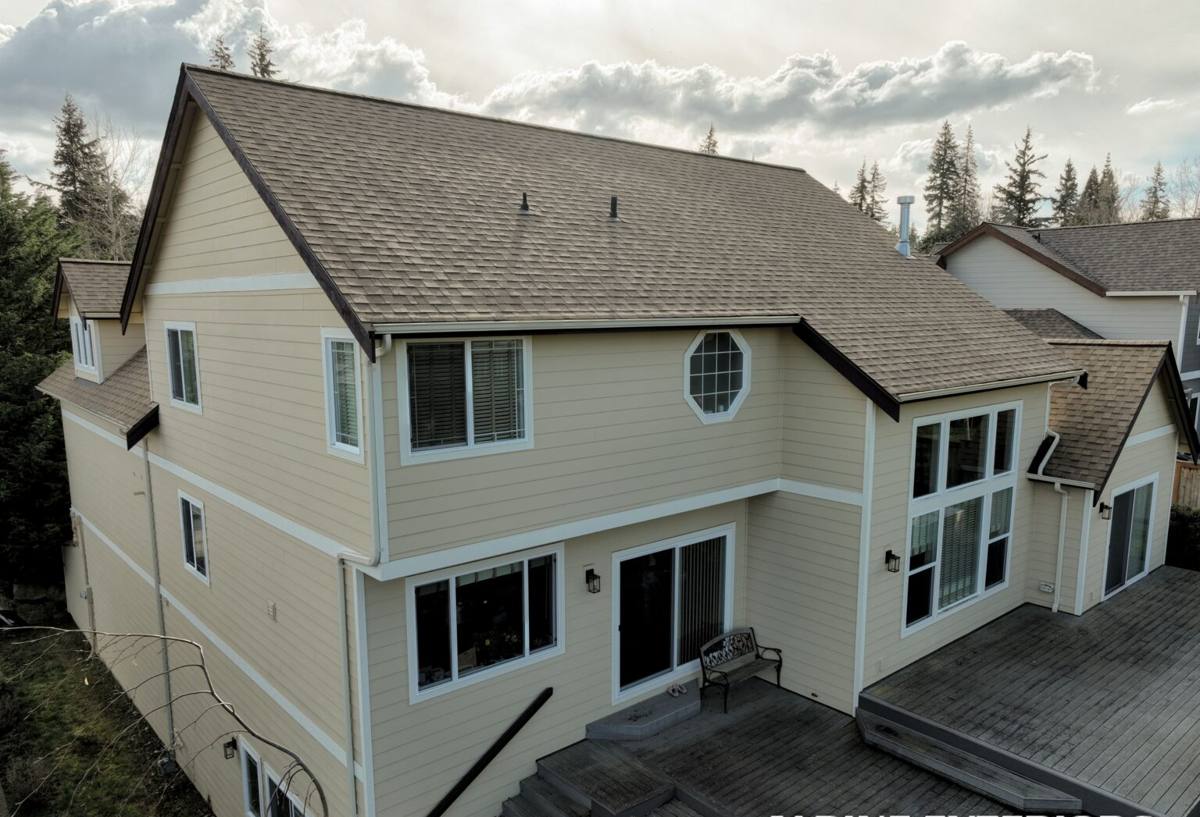
Signs a Woodinville Home Needs Replacement, Not Repair
Not every siding problem calls for a full tear-off. But when the damage is widespread or the underlying materials are compromised, patching just delays a bigger repair bill. Here's what tells us replacement is the right call:
- Soft, spongy, or crumbling siding when pressed, especially near the bottom courses or under windows
- Persistent moss or algae staining that returns within weeks of cleaning, even on non-shaded walls
- Paint that won't hold — bubbling, peeling, or flaking within a year or two of a repaint
- Visible warping, cupping, or delamination across multiple boards or panels
- Interior signs like musty smells, discolored drywall, or trim rot near exterior walls
- Siding older than its expected service life for the material it's made from
- Gaps, cracked caulk joints, or missing flashing that let water track behind the cladding
If you're seeing two or more of these, especially on a shaded or tree-covered elevation, it's worth having someone look at what's happening behind the siding, not just at the surface.
What a Correct Replacement Actually Involves
The siding itself is only part of the job. Most siding failures we find in King County trace back to what was done — or skipped — underneath it. A replacement done to spec includes:
Full Tear-Off, Not Cover-Over
We remove the old siding entirely rather than installing new material over it. Covering over old siding traps whatever moisture problems already exist and hides them for the next owner to discover.
Sheathing Inspection
Once the old siding is off, the wall sheathing gets inspected for rot, soft spots, or water staining. In a climate like Woodinville's, this step matters more than in drier regions — water damage behind siding often spreads further than the visible symptoms suggest.
Weather-Resistive Barrier and Flashing
A new weather-resistive barrier goes on correctly lapped, with flashing detailed around every window, door, and penetration so water sheds outward instead of tracking behind the cladding. This is the single most common shortcut we see in failed installations, and it's the reason so much "siding failure" is really "flashing failure."
Manufacturer-Spec Installation
Proper fastener placement, clearances at grade and roof lines, and joint treatment all follow the manufacturer's published instructions. Skipping these details is often what voids a warranty even when the product itself is sound.
Why We Only Install James Hardie Fiber Cement
We get asked why we won't install vinyl, LP SmartSide, or the other fiber cement brands on the market. It's a fair question, and the honest answer is that we've standardized on one product because it holds up to this climate with the fewest compromises.
Vinyl siding is inexpensive and low-maintenance in mild climates, but it expands and contracts with temperature swings, can crack in cold snaps, and doesn't hold paint if a homeowner ever wants to change color. LP SmartSide and other engineered wood products perform well when kept dry, but they're wood-based, which means sustained moisture exposure — exactly what shaded, tree-covered Woodinville lots deliver — is their weak point over time. Other fiber cement brands exist and some are reasonable products, but we've chosen to standardize on one system so our crews install it the same correct way on every job, every time, rather than juggling different manufacturer specs across products.
James Hardie's fiber cement is non-combustible, doesn't swell or rot when it takes on moisture the way wood-based products can, and comes with a factory-applied ColorPlus finish that resists fading and holds paint far longer than field-applied paint jobs. Hardie also engineers specific product lines for different climate zones, and the Pacific Northwest's wet, moderate-temperature conditions fall squarely into the range those products are built for. The backed warranty is transferable, which matters to homeowners who plan to sell.
| Factor | What It Means for Woodinville Homes |
|---|---|
| Moisture exposure | Shaded and tree-covered lots stay damp longer; siding needs to shed water, not absorb it |
| Moss and algae | Factory-cured, dense fiber cement resists the surface breakdown that lets organic growth take hold |
| Temperature swings | Fiber cement doesn't expand/contract as dramatically as vinyl, reducing gapping and buckling |
| Finish longevity | Factory ColorPlus finish outlasts field-applied paint, especially under filtered tree-cover light |
| Fire exposure | Non-combustible material adds a margin of protection relevant to Eastside wildfire-smoke seasons |
Our Replacement Process
Every project follows the same sequence, whether it's a small elevation or a full re-side:
- On-site assessment of existing siding, sheathing condition, and problem areas specific to your home's exposure and tree cover
- Written estimate detailing scope, product line, color, and timeline — no vague allowances
- Permitting, handled based on whether your address falls under City of Woodinville or unincorporated King County jurisdiction
- Full tear-off and disposal of old siding
- Sheathing repair where needed, documented and discussed with you before covering it back up
- Weather-resistive barrier and flashing installed to manufacturer spec at every window, door, and penetration
- James Hardie siding installed per manufacturer fastening and clearance requirements
- Final walkthrough and cleanup
Cost Factors on a Woodinville Siding Replacement
Every home is different, and we won't quote a number without seeing the site, but the factors that move a project's cost the most are consistent:
| Factor | Why It Matters |
|---|---|
| Sheathing condition | Hidden rot found during tear-off adds material and labor to repair before new siding goes on |
| Home size and stories | More square footage and taller walls mean more material, staging, and labor time |
| Siding profile chosen | Lap, shingle, and panel Hardie profiles carry different material and install costs |
| Access and lot conditions | Steep, wooded, or tight-access lots common around Woodinville can add setup time |
| Trim and detail work | Homes with more windows, dormers, and architectural detail require more precise flashing and cutting |
Why a Crew That Already Works Woodinville Matters
Siding installation isn't just about the product — it's about reading a specific site correctly. A crew that regularly works Woodinville knows to look harder at north- and east-facing walls where moss and moisture linger, understands how tree cover changes drying time after a job, and is used to navigating permitting through either the City of Woodinville or King County depending on where a property sits. That familiarity shows up in fewer surprises mid-project and a finished install that accounts for how your specific lot behaves, not a generic checklist.
It also matters for warranty follow-through. A local crew that stands behind its own installation is far more useful to you five or ten years from now than a company that isn't reachable once the invoice is paid.
After the Install: What Woodinville Homeowners Should Expect
James Hardie siding installed correctly requires very little upkeep, but a few habits extend its life even further in this climate:
- Rinse siding annually, more often on shaded elevations where moss and algae build up faster
- Keep gutters clear so overflow doesn't run down the wall face during heavy rain events
- Trim back vegetation and tree limbs that keep a wall section shaded and damp longer than the rest of the house
- Inspect caulk joints around windows and trim every couple of years and re-caulk as needed
- Repaint on the manufacturer's recommended cycle if you choose a field-applied color rather than factory ColorPlus
If your siding is showing its age, or you're just trying to figure out whether repair or full replacement makes more sense for your home, we're happy to take a look and give you a straight answer. Fill out the form below for a free, no-pressure estimate.