 King County
 Why Woodinville Roofs Take a Different Kind of Beating
Woodinville sits in a part of King County where tree cover, valley moisture, and Puget Sound weather systems all combine against a roof. The tall fir and cedar canopy that makes so many Woodinville properties feel private and wooded also means constant shade on large sections of most roofs, along with a steady rain of needles, cones, and leaf litter that collects in valleys and behind chimneys. Add in marine air moving through from the Sound and a long stretch of wet months, and you get the conditions that drive moss growth, slow-drying roof decks, and roofing materials that stay damp far longer than they would in a drier climate.
Storms compound that baseline stress. Fall and winter windstorms moving through King County can gust hard enough to lift shingle edges, snap smaller branches loose from overhanging trees, and drive rain sideways under flashing that would otherwise shed water fine. None of that is unusual for this area — it's just the normal cost of living somewhere this green. The problem is that storm damage on a Woodinville roof often hides in places homeowners don't look: under moss mats, behind gutters clogged with debris, or in a valley that never fully dries out between storms.
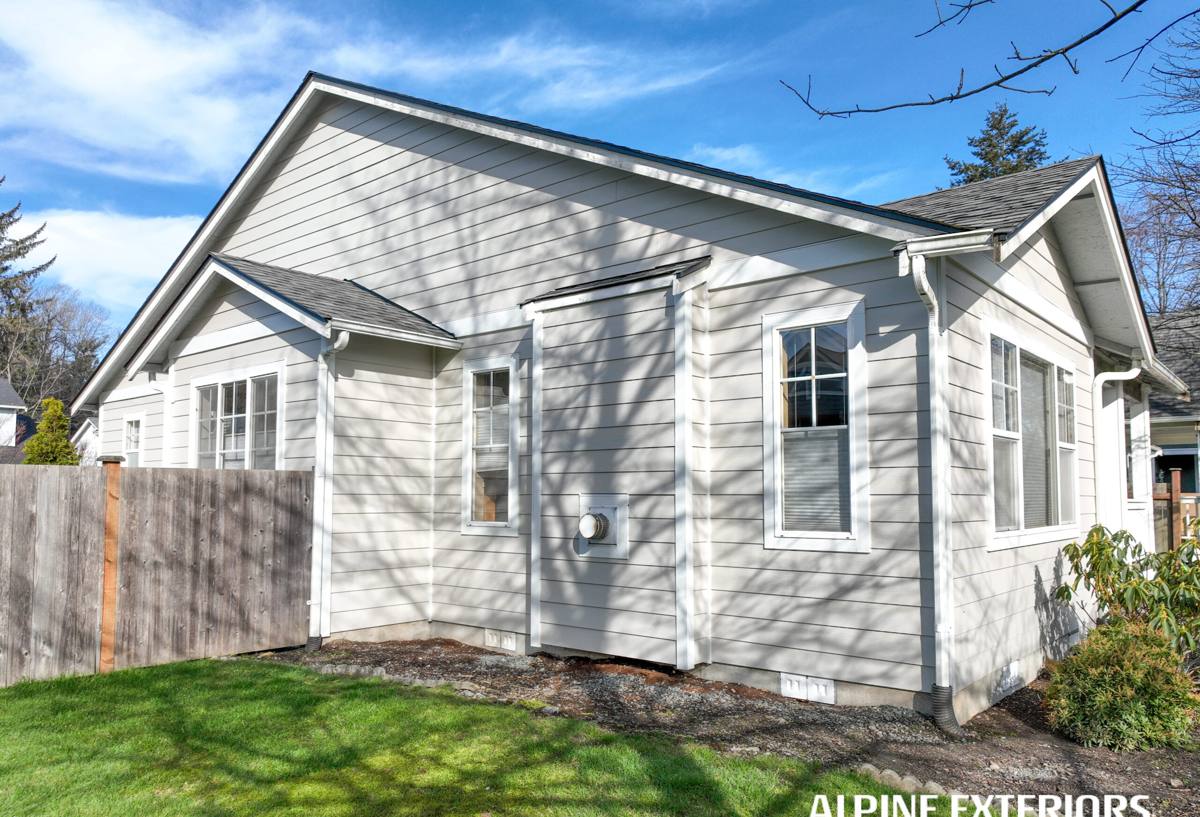
What Actually Counts as Storm Damage
Not every roof problem that shows up after a windy night is technically "storm damage," and that distinction matters — especially if you're filing an insurance claim. We draw the line honestly:
- Storm-caused: shingles physically torn, creased, or lifted by wind; punctures or bruising from falling branches or debris; flashing pulled loose or bent; a gutter or downspout knocked off its line by impact.
- Pre-existing, just newly visible: granule loss and brittleness from age; moss and moisture damage that's been developing for seasons; nail pops or sealant failure from normal wear.
A lot of roofs have both at once — real storm damage layered on top of an aging roof that was already due for attention. Part of our job is separating the two clearly, in writing, so you know exactly what happened in the storm versus what was already a maintenance item.
Our Storm Damage Repair Process
1. Inspection, Not Guesswork
We walk the roof itself when it's safe to do so, not just the ground. Wind and impact damage is often small and localized — a single lifted shingle tab, a cracked pipe boot, a dented vent cap — and it's easy to miss from a ladder or binoculars. We check the field of the roof, all flashing points, valleys, and the gutter line, since debris and water backup at the edges can cause damage that looks unrelated to the storm itself.
2. Photo Documentation
Every repair starts with photos of the damage as we find it, before anything is touched. This protects you if you end up filing an insurance claim, and it gives you an honest record of what was actually wrong — not just a verbal description.
3. Temporary Protection, If Needed
If a section of roof deck is exposed or actively leaking, we get it covered and weathertight before we worry about anything else. A tarp or temporary patch buys time to plan the permanent repair correctly instead of rushing it.
4. The Repair Itself
We match materials as closely as possible, tie new flashing and underlayment into the existing roof system correctly, and reseal or replace anything the storm compromised — not just the piece that's visibly broken. A shingle that's cracked usually means the ones around it took stress too.
5. Cleanup and Follow-Up
We clear debris, check gutters and downspouts are running clean, and leave you with a plain explanation of what we did and why — no jargon, no upsell list.
Common Storm Damage Repairs We Handle in Woodinville
Most of the calls we get after a windstorm in this part of King County fall into a handful of categories:
- Wind-lifted or torn shingles — especially on roof edges and ridges, where wind uplift is strongest.
- Branch and debris impact — punctures, cracked shingles, or dented metal flashing from limbs coming down in wooded yards.
- Flashing failure — around chimneys, skylights, and vent pipes, where wind-driven rain finds the smallest gap.
- Valley damage — where debris buildup meets water flow and accelerates wear.
- Gutter and downspout damage — bent hangers or disconnected sections that let water dump against the fascia instead of draining away, which becomes a roof-edge problem fast if it's not corrected.
- Ridge cap displacement — cap shingles are the most exposed part of the roof and often the first thing wind takes.
Repair vs. Replace: How We Make That Call
Storm damage doesn't automatically mean a new roof, and it doesn't automatically mean a quick patch either. We look at the whole picture before recommending either direction.
| Factor | Points Toward Repair | Points Toward Replacement |
|---|---|---|
| Age of roof | Under roughly 12-15 years, materials still supple | Near or past expected material lifespan |
| Extent of damage | Isolated to one section or a few spots | Spread across multiple slopes or the whole roof |
| Underlying condition | Deck and underlayment sound elsewhere | Widespread moss undermining, soft decking, or prior leaks found during inspection |
| Material availability | Matching shingles or material still obtainable | Discontinued product, visible mismatch unavoidable |
| Insurance scope | Adjuster scope supports targeted repair | Adjuster or inspection supports full replacement due to damage extent |
We'll tell you plainly which category your roof falls into and why, including when a repair is genuinely the right call rather than the cheaper one.
Working With Your Insurance Claim
If your storm damage is significant enough to involve your homeowner's insurance, our documentation is built to support that process rather than complicate it. We provide clear photos, a written scope of the actual storm-related damage, and we're available to walk an adjuster through what we found. We don't inflate a scope to chase a bigger payout, and we don't downplay damage to make a job look simpler than it is — our goal is an accurate picture so you get what the damage actually warrants, and a repair that will hold up through the next King County storm season.
After the Repair: Keeping Moss and Debris From Coming Back
A storm repair fixes what the wind and rain did. It doesn't fix the underlying conditions — shade, moisture, and tree debris — that make Woodinville roofs prone to moss and premature wear in the first place. A few habits go a long way between now and the next inspection:
- Clear gutters and valleys of needles and leaf litter at least twice a year, more often on heavily wooded lots
- Trim back branches that overhang the roofline to reduce both debris and impact risk in future windstorms
- Have moss physically removed rather than just chemically treated on heavy growth, since moss mats hold moisture against the roofing material
- Check attic ventilation — poor airflow keeps the underside of the deck damp and accelerates moss and rot from below
- Walk the yard after any significant windstorm and look up for obvious damage: missing shingle pieces, bent flashing, or a downspout knocked loose
- Schedule a roof check before the wet season ramps up each fall, not after the first big storm already found the weak spot
Why Hiring a Crew That Already Works Woodinville Matters
Storm damage repair isn't just a roofing skill — it's a familiarity skill. A crew that regularly works Woodinville and the surrounding King County communities already knows how the tree cover, terrain, and weather patterns here behave differently from a drier or more open part of the county. We know what moss-related damage tends to look like versus true storm impact, we know how local permitting and inspection expectations work, and we can usually respond faster because we're already working in the area rather than driving in from across the county for a single job.
That familiarity also means straighter answers. We're not guessing at how your roof will hold up through the next windstorm season — we've seen how roofs like yours perform through several of them, and we build the repair with that in mind rather than treating it as a one-time patch.
Get a Straight Answer About Your Roof
If a recent storm left you with a lifted shingle, a leak you can't place, or just a nagging feeling something's not right up there, we're glad to take a look. Use the form below to request a free, no-pressure estimate — we'll give you an honest read on what the storm actually did, what it will take to fix it correctly, and what you can safely leave alone.