 King County
 The Mercer Island Roofing Challenge
Mercer Island sits low in the tree canopy, surrounded by water, with weather patterns that push driving rain sideways as often as straight down. That combination is hard on a roof in ways that homeowners in drier climates never have to think about. Constant moisture, deep shade from mature trees, and a marine-influenced climate that keeps humidity high for months at a time all add up to a roofing environment that punishes shortcuts.
A roof built for a hot, dry region simply doesn't hold up the same way here. In King County, the roofs that last are the ones installed with moss resistance, proper drainage, and real ventilation in mind from day one — not retrofitted after problems show up.
What the Local Climate Actually Does to a Roof
Rain that never really stops from fall through spring keeps roofing materials saturated far more often than manufacturer specs assume. Overhanging trees drop needles and debris into valleys and gutters, which traps moisture against the roof surface. That trapped moisture is exactly what moss needs to establish itself, and once moss takes hold under shingles or shakes, it lifts material and creates channels for water to work its way underneath. A long moss season in this part of King County means moss isn't a once-a-year cleaning problem — it's a design consideration for the whole roof system.
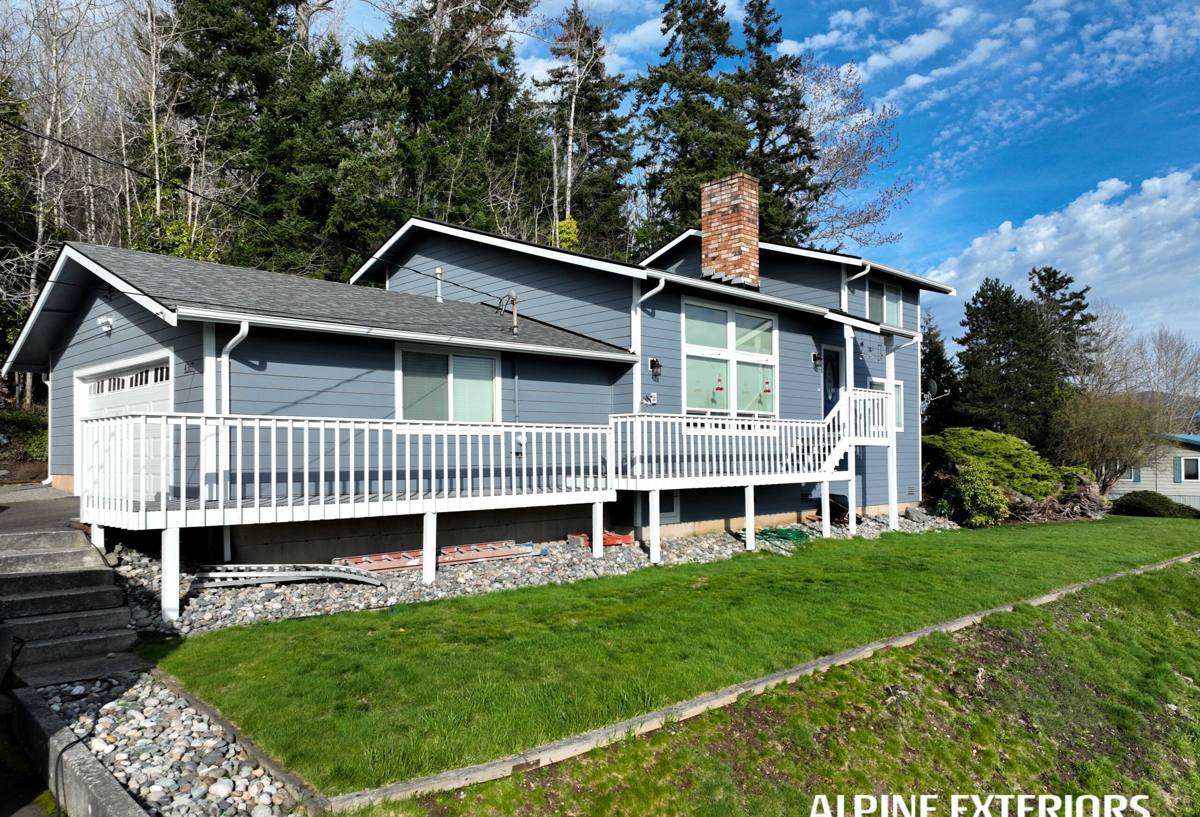
Repair or Replace: Signs Your Roof Is on Borrowed Time
Not every roofing problem means a full replacement, but on Mercer Island, roofs age faster than a warranty label suggests once moss, moisture, and shade get involved. Here's what typically signals it's time to stop patching and start planning a new roof:
- Shingles that are cupping, curling at the edges, or missing granules in patches
- Moss or dark streaking that comes back within a season or two of cleaning
- Soft spots in the roof deck when walked on, or sagging visible from the ground
- Daylight visible through the attic, or damp insulation after a heavy rain
- Multiple past repairs in different areas rather than one isolated issue
- A roof that's 20+ years old (asphalt) or 25-30+ years old (wood shake) without a full tear-off
If you're seeing two or more of these at once, that's usually the roof telling you it's dealing with more moisture than it can shed, not just a few bad shingles.
What a Correct New Roof Installation Actually Involves
A new roof is only as good as what's underneath the visible surface. In a climate like this one, the layers most homeowners never see are the ones that determine whether the roof lasts 10 years or 30.
Tear-Off and Deck Inspection
We remove the old roofing down to the deck rather than layering over it. That lets us actually see the plywood or plank sheathing underneath, which is where moisture damage hides on older Mercer Island homes. Any soft, delaminated, or rotted deck sections get replaced before anything new goes down — installing new shingles over a compromised deck just guarantees an early failure.
Underlayment and Ice-and-Water Protection
Given how much rain this roof will see, underlayment isn't a formality. We use synthetic underlayment across the field of the roof and self-adhering ice-and-water membrane at the eaves, valleys, and around every penetration — chimneys, vents, skylights — where water pressure builds up during heavy or wind-driven rain.
Flashing
Flashing failures, not shingle failures, are the most common source of roof leaks. Every wall intersection, chimney, and roof-to-roof transition gets new metal flashing, properly stepped and sealed, rather than relying on old flashing or caulk to bridge the gap.
Ventilation
A roof deck that can't breathe traps moisture from inside the house against the underside of the sheathing, which accelerates rot and can void material warranties. We check intake at the soffits and exhaust at the ridge and bring both up to what the attic actually needs, not just what was there before.
Roofing Material Options for King County Homes
There's no single "best" roofing material — the right choice depends on your home's style, your budget, and how much moss and moisture resistance you want built in from the start.
| Material | Typical Lifespan | Moss/Moisture Resistance | Maintenance |
|---|---|---|---|
| Architectural asphalt shingle | 25-30 years | Good with proper ventilation and periodic cleaning | Low to moderate |
| Standing seam metal | 40-50+ years | Excellent — moss struggles to gain a foothold on smooth metal | Low |
| Cedar shake | 20-30 years | Requires diligent upkeep; naturally moisture-absorbent | High |
| Synthetic/composite shake | 30-50 years | Very good, without the moisture uptake of real wood | Low |
We're honest with clients about the trade-offs. Cedar shake has real curb appeal and is common on older Mercer Island homes, but it demands consistent maintenance to manage moisture in this climate — skip a few years of upkeep and it shows. Synthetic shake products have closed much of that gap, giving a similar look with less long-term moisture exposure and a more predictable maintenance schedule, which is why we recommend them as an alternative on homes where the wood-shake aesthetic matters but the upkeep commitment doesn't fit the homeowner's plans.
Ventilation and Moss Prevention Built Into the Install
Most moss problems aren't a cleaning failure — they're a design failure. A roof with poor airflow underneath stays cooler and damper longer than one that's properly ventilated, and moss spores take advantage of exactly that. When we install a new roof, moss prevention isn't an add-on service, it's part of how the roof is built:
- Balanced intake and exhaust ventilation sized to the attic, not guessed at
- Zinc or copper strips at the ridge on request, which release trace metals that inhibit moss regrowth over time
- Steeper-pitch valleys detailed to shed debris rather than collect it
- Gutter and downspout tie-ins checked so water actually leaves the roof instead of backing up under the eaves
None of this eliminates the need for occasional roof cleaning under heavy tree cover, but it stretches the time between cleanings and keeps moss from getting under the material in the first place.
Our Process, From First Call to Final Inspection
We keep the process straightforward, because a roof replacement is disruptive enough without added guesswork.
- On-site assessment — we inspect the current roof, deck, ventilation, and any problem areas, and walk the property with you.
- Written estimate — a clear scope of work and material options, so you know what you're comparing if you're getting more than one quote.
- Scheduling and material delivery — timed around weather windows, since a roof deck should never sit exposed to rain longer than necessary.
- Tear-off and deck repair — old material removed, deck inspected and repaired as needed.
- Underlayment, flashing, and new roofing installed — following manufacturer specs to keep material warranties intact.
- Cleanup and final walkthrough — magnetic sweep for nails, debris hauled off, and a walkthrough so you can see the finished work firsthand.
Permits and Neighborhood Considerations on Mercer Island
Roofing work on Mercer Island typically requires a building permit through the city, and some neighborhoods carry their own design or HOA guidelines around visible exterior materials and colors. We handle the permit application and make sure the installation meets code, and we'll flag it early if your neighborhood has design review requirements so there are no surprises partway through the project. Every property is different, so we confirm the specifics for your address before work begins rather than assuming.
Why Hiring a Crew That Already Works Mercer Island Matters
Mercer Island has its own logistics — bridge access, narrower streets in some areas, tree cover that affects staging and material drop-off, and a housing stock that mixes older homes with newer construction. A crew that regularly works on the island already knows how to plan around those factors instead of learning on your job.
More importantly, we've seen how King County's rain and moss season actually plays out on real roofs over multiple seasons, not just on installation day. That experience shapes decisions a newcomer contractor might skip — where extra ice-and-water membrane earns its keep, which valleys need more attention, and when a homeowner's cedar shake preference needs an honest conversation about long-term upkeep before signing off.
Checklist Before You Sign a Roofing Contract
- Is the contractor licensed and bonded to work in Washington State?
- Does the estimate specify underlayment type and where ice-and-water membrane will be used?
- Is ventilation being assessed and addressed, not just assumed to be adequate?
- Does the quote separate tear-off, deck repair, and new roofing as distinct line items?
- Who pulls the permit, and is that included in the price?
- What does the workmanship warranty cover, separate from the manufacturer's material warranty?
If a contractor can't answer these clearly before you sign, that's worth noticing before the tear-off starts, not after.
If your roof is showing its age or you're just weighing options before it becomes an emergency, we're happy to take a look. Reach out for a free, no-pressure estimate using the form below — we'll walk the roof, answer your questions honestly, and give you a clear picture of what your home actually needs.