 King County
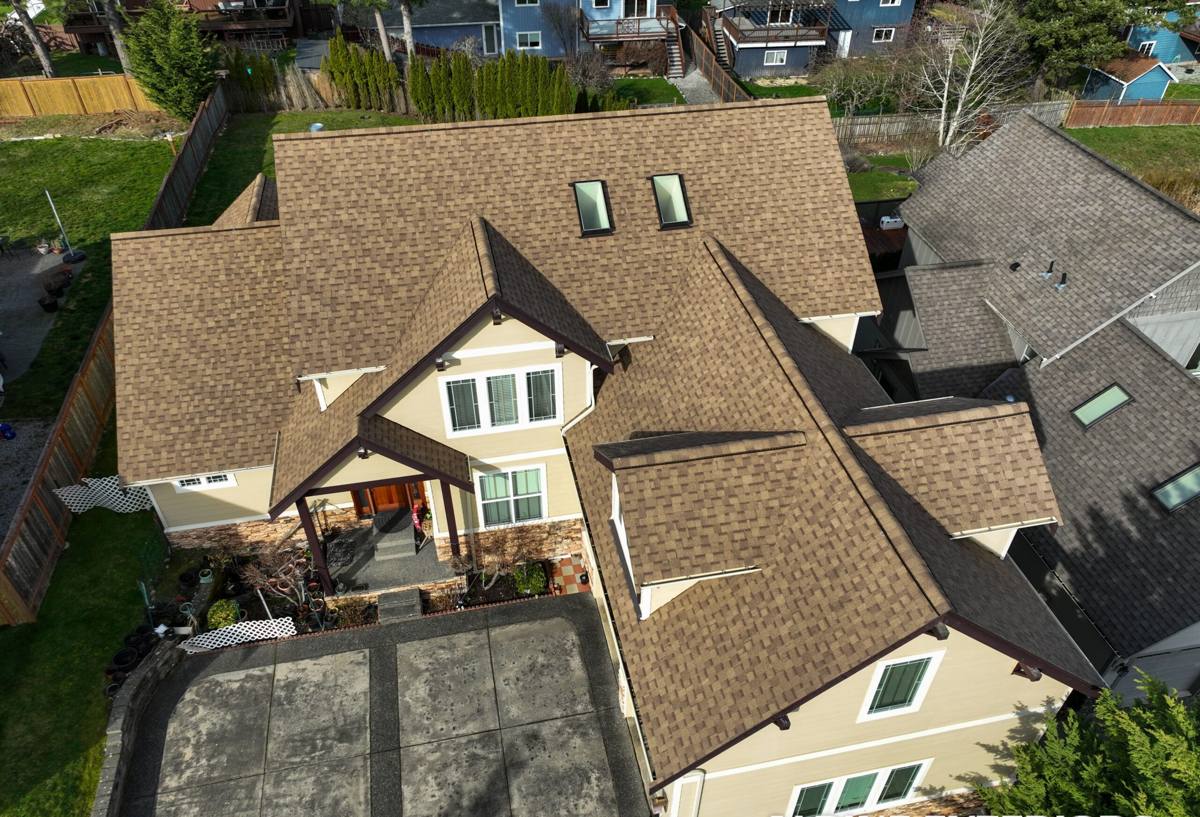
 Asphalt Shingle Roofing Built for Rainier Valley's Climate
Rainier Valley homes sit under a mature tree canopy and see the full range of what King County weather throws at a roof: long stretches of driving rain from fall through spring, salt-laden air drifting in off Puget Sound and Lake Washington, and short, low-angle winter sun that leaves shaded roof planes damp for days at a time. That combination is hard on asphalt shingles in ways that don't show up on a roof in a drier climate. Moss gets a foothold in shaded valleys and north-facing slopes, granule loss accelerates where water sits instead of shedding, and flashing details that are "close enough" in a mild climate eventually leak here.
An asphalt shingle roof done right for this neighborhood isn't just about nailing shingles to a deck. It's about ventilation, underlayment, flashing, and material choice all working together so the roof sheds water fast, dries out between storms, and resists the moss and algae growth that's practically guaranteed under Rainier Valley's tree cover. This page covers what that actually looks like.
Why the Regional Climate Changes the Job
Driving Rain and Wind-Driven Water
Storms coming off the Sound don't just fall straight down — wind pushes rain sideways under shingle tabs, into exposed nail heads, and up under poorly lapped flashing. A roof built for occasional light rain doesn't hold up here. Underlayment overlaps, flashing laps, and starter course placement all have to assume water is being pushed uphill and sideways, not just falling straight.
A Long Moss Season
Between the tree cover common in Rainier Valley and the extended damp season, moss has months to establish itself on shaded roof planes. Once moss roots into the granule layer, it holds moisture against the shingle surface and lifts tabs, which is when small leaks start. Roofs facing north or shaded by mature trees need shingles and details that account for this from day one, not moss treatment as an afterthought.
Salt Air and Granule Wear
Homes closer to the water pick up salt-laden air that speeds up wear on exposed metal — nail heads, flashing, vent caps — and can accelerate granule loss on lower-grade shingles over time. It's not dramatic, but it's steady, and it's one more reason we don't cut corners on flashing metal or fastener quality on King County roofs.
Signs a Rainier Valley Roof Needs Attention
Most asphalt shingle roofs don't fail all at once — they show warning signs for months or years first. Worth checking for, especially before the wet season:
- Granules collecting in gutters or at downspout outlets, a sign shingles are wearing thin
- Dark streaking or a green-black cast on shaded slopes — early algae or moss growth
- Shingle tabs that look cupped, curled, or lifted at the edges
- Moss visible at ridge lines, valleys, or anywhere water naturally slows down
- Soft or discolored ceiling patches inside, especially near chimneys, skylights, or valleys
- Visible daylight or gaps at flashing around vents, chimneys, or wall intersections
- A roof approaching 18-20 years old with no major work done since installation
Any one of these on its own might just mean routine maintenance. Several together, or anything showing up inside the house, usually means it's time for a proper inspection rather than a guess.
What a Correct Asphalt Shingle Installation Involves
A roof that's going to hold up under King County's weather depends on details that aren't visible once the job is finished. This is what we treat as non-negotiable on every asphalt shingle roof we install:
Deck and Underlayment
The sheathing gets inspected and repaired before anything else goes down — old shingles hide soft spots and rot that have to be dealt with, not covered over. From there, a synthetic underlayment goes down as the roof's real waterproofing layer, with ice-and-water shield at eaves, valleys, and around every penetration where water is most likely to back up or pool.
Flashing
Flashing around chimneys, skylights, walls, and vent pipes is where most roof leaks actually start, not in the field of the shingles themselves. We use new, properly lapped metal flashing rather than re-using old pieces or relying on sealant to bridge gaps — sealant fails over time, correctly lapped metal doesn't.
Ventilation
A roof that can't breathe traps moisture in the attic, which shortens shingle life from underneath and feeds moss and mold. Balanced intake and exhaust ventilation matters as much as anything on the outside of the roof, especially on homes with lower-pitch sections that hold heat and moisture longer.
Nailing and Exposure
Every shingle gets nailed to the manufacturer's pattern and exposure, not "close enough." Under-nailing or high-nailing is a common shortcut that voids manufacturer warranties and shows up later as blow-offs during the first real windstorm.
Choosing the Right Shingle for This Climate
Not every asphalt shingle is built the same, and in a climate with this much moisture and shade, the differences matter more than they would in a drier region.
| Shingle Type | Typical Lifespan | Moss/Algae Resistance | Best Fit |
|---|---|---|---|
| 3-tab (standard) | 15-20 years | Lower unless treated | Budget-driven projects, secondary structures |
| Architectural (laminated) | 25-30 years | Moderate to good with algae-resistant granules | Most Rainier Valley homes, best overall value |
| Algae-resistant (AR) granule shingles | 25-30 years | Best available for shaded, damp roofs | North-facing slopes, heavily treed lots |
| Impact-rated / high-wind rated | 25-30+ years | Varies by product line | Exposed roofs, homes wanting stronger warranty terms |
For most homes in this neighborhood, we recommend a laminated architectural shingle with algae-resistant granules as the baseline — the added upfront cost over a basic 3-tab is modest, and the extended lifespan and moss resistance pay for themselves well before a standard shingle would need replacing. We'll walk through the real trade-offs for your roof's specific exposure and pitch during the estimate rather than pushing one product line.
Our Process, Start to Finish
- On-site inspection. We walk the roof (not just the ground), check the attic for ventilation and moisture issues, and document the deck condition.
- Written estimate. A clear scope covering tear-off, deck repair allowance, underlayment, flashing, shingle option, and ventilation — no vague line items.
- Scheduling around the weather. We plan installation around King County's forecast windows rather than racing a storm; a rushed roof in the rain is how corners get cut.
- Tear-off and deck repair. Old roofing comes off completely, the deck is inspected, and any soft or damaged sheathing is replaced before underlayment goes down.
- Installation. Underlayment, flashing, ventilation, and shingles installed to manufacturer spec, with daily site cleanup for jobsite safety.
- Final walkthrough. We review the finished roof with you, confirm ventilation and flashing details, and go over basic maintenance expectations for your specific roof and tree cover.
Moss, Moisture, and Long-Term Roof Care
Even a well-built roof needs some ongoing attention in a climate like this. A little maintenance goes a long way toward reaching the full lifespan of the shingle you paid for:
- Keep gutters and downspouts clear so water isn't backing up under the eave line
- Have moss physically removed rather than just chemically treated once it's established — chemicals alone don't remove the root structure holding moisture against the shingle
- Trim back overhanging branches where practical to reduce shade and debris buildup on north-facing slopes
- Have zinc or copper strips considered at the ridge on heavily shaded roofs to slow future moss growth
- Get an annual or biannual visual check, especially after major windstorms, rather than waiting for an interior leak to prompt an inspection
None of this replaces a correctly installed roof, but it's the difference between a shingle roof that reaches its full rated lifespan and one that needs premature repair because moisture and moss were left unmanaged.
What Affects the Cost
Every roof is different, but the main variables that move the price on an asphalt shingle roofing project in this area are consistent:
| Factor | Why It Matters |
|---|---|
| Roof size and number of planes | More cuts, valleys, and hips mean more labor and material waste |
| Deck condition | Rot or soft sheathing found at tear-off adds repair cost not visible from the ground |
| Pitch and access | Steep or hard-to-access roofs take longer and require more safety setup |
| Number of penetrations | Chimneys, skylights, and vent pipes each need individual flashing work |
| Shingle grade chosen | 3-tab, standard architectural, and premium AR shingles carry different material costs |
| Ventilation upgrades | Adding or correcting intake/exhaust venting is sometimes needed on older homes |
We won't quote a roof from a photo or a square-footage guess — an accurate number depends on actually seeing the deck, the pitch, and the penetrations up close.
Why Local Rainier Valley Experience Matters
A crew that works this specific part of King County regularly knows which slopes in this neighborhood hold moss longest, how the tree canopy on a given street affects a roof's drying time, and which flashing details actually hold up against wind coming off the water versus what looks fine on paper. That's not something a crew passing through the area for a single job picks up. We also know the local permitting process and inspection expectations, so there are no surprises partway through the project.
If your Rainier Valley roof is showing wear, due for replacement, or you just want an honest read on where it stands, we're happy to take a look. Use the form below to request a free, no-pressure estimate — we'll walk the roof, answer your questions, and give you a straight assessment either way.